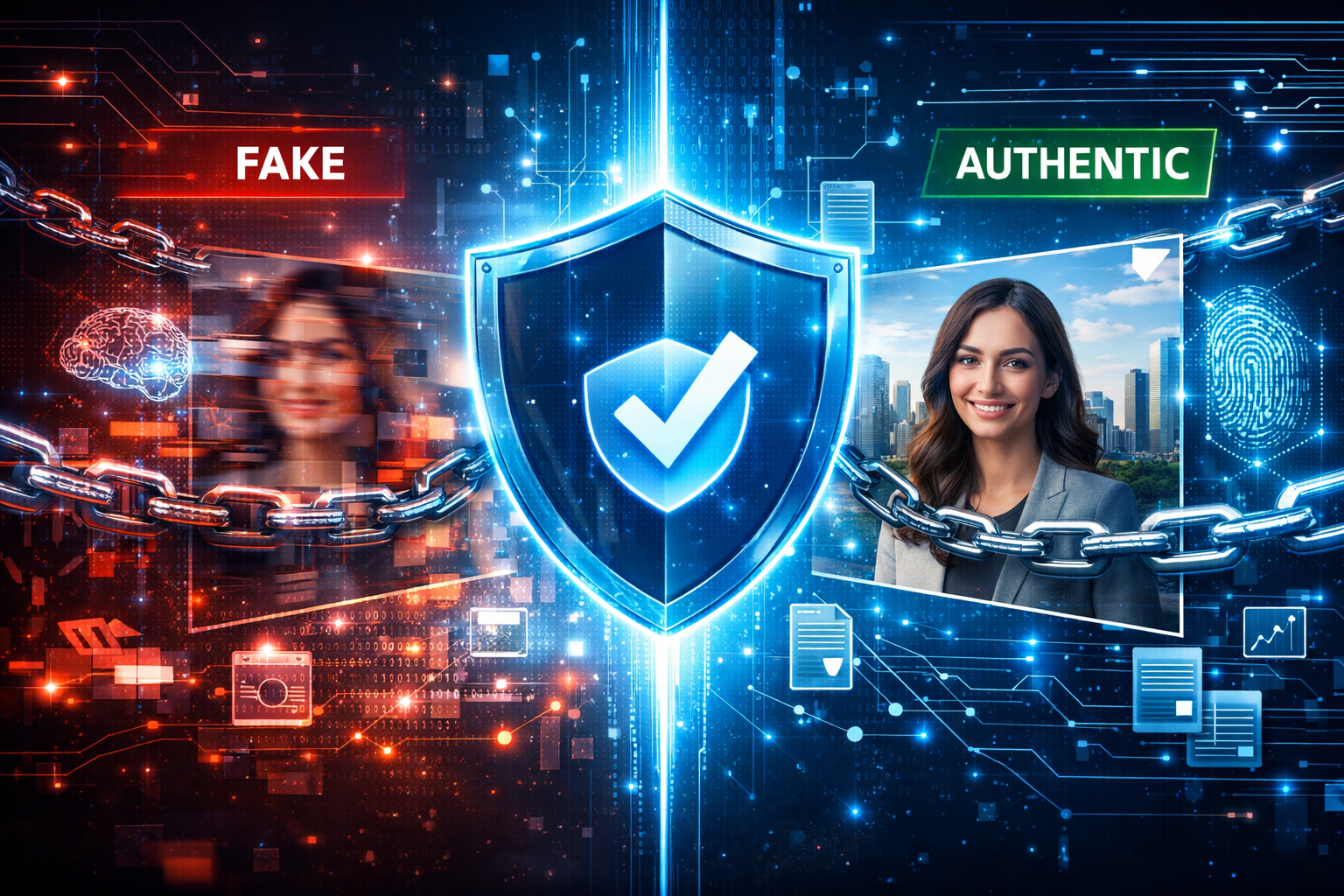
The Problem We See Online Today
owadays, when we scroll social media or read news online, we see a lot of content. But the problem is, not all of it is real. Fake news, edited photos, and AI-generated videos are everywhere. Sometimes fake content looks so real that people easily believe it. Because of this, trust on the internet is slowly going down.
What Digital Provenance Actually Is
Digital provenance is a simple concept. It helps us know where a piece of content came from and what changes were made to it.
For example, if you see an image or video, digital provenance can show:
who created it, when it was created, and whether it has been edited or not.
It works like a background history of the content that follows it everywhere.
Why This Matters in Real Life
This technology is important because it helps people make better decisions online.
When you know the source of content, you can avoid fake news. It also helps stop the spread of wrong information. People can trust what they see, and original creators get proper credit for their work.
In simple words, it brings honesty and clarity to the internet.
How This Technology Works Behind the Scenes
Even though it sounds complex, the idea is simple.
Whenever content is created, a digital record is attached to it. This record stores important details like time, creator, and edits. Secure systems make sure this information cannot be easily changed.
Some tools also use AI to check if the content looks fake or edited. All these things together help verify whether the content is real or not.
A Simple Example to Understand
Imagine you see a viral video online. Normally, you just watch it and believe it.
But with digital provenance, you can check its full history. You can see who uploaded it first, whether it was edited, and if it is original.
This makes it much easier to decide whether you should trust it or not.
Current Challenges
Digital provenance is useful, but it is still growing.
Not all websites and apps support it yet. Older content does not have this tracking system. Also, many people don’t know about this technology, so they don’t use it.
Over time, these problems will slowly get solved.
What We Can Expect in the Future
In the coming years, digital provenance will become more common.
We may see labels on images and videos showing if they are real or edited. Social media platforms may highlight trusted content. AI-generated content might be clearly marked.
All this will help create a safer and more reliable digital world.
Final Thoughts
Fake content is a big problem today, but digital provenance gives us a strong solution. It helps us understand what is real and what is not.
In simple words, it helps us trust what we see online again.
As technology improves, this will become a normal part of our daily digital life.
