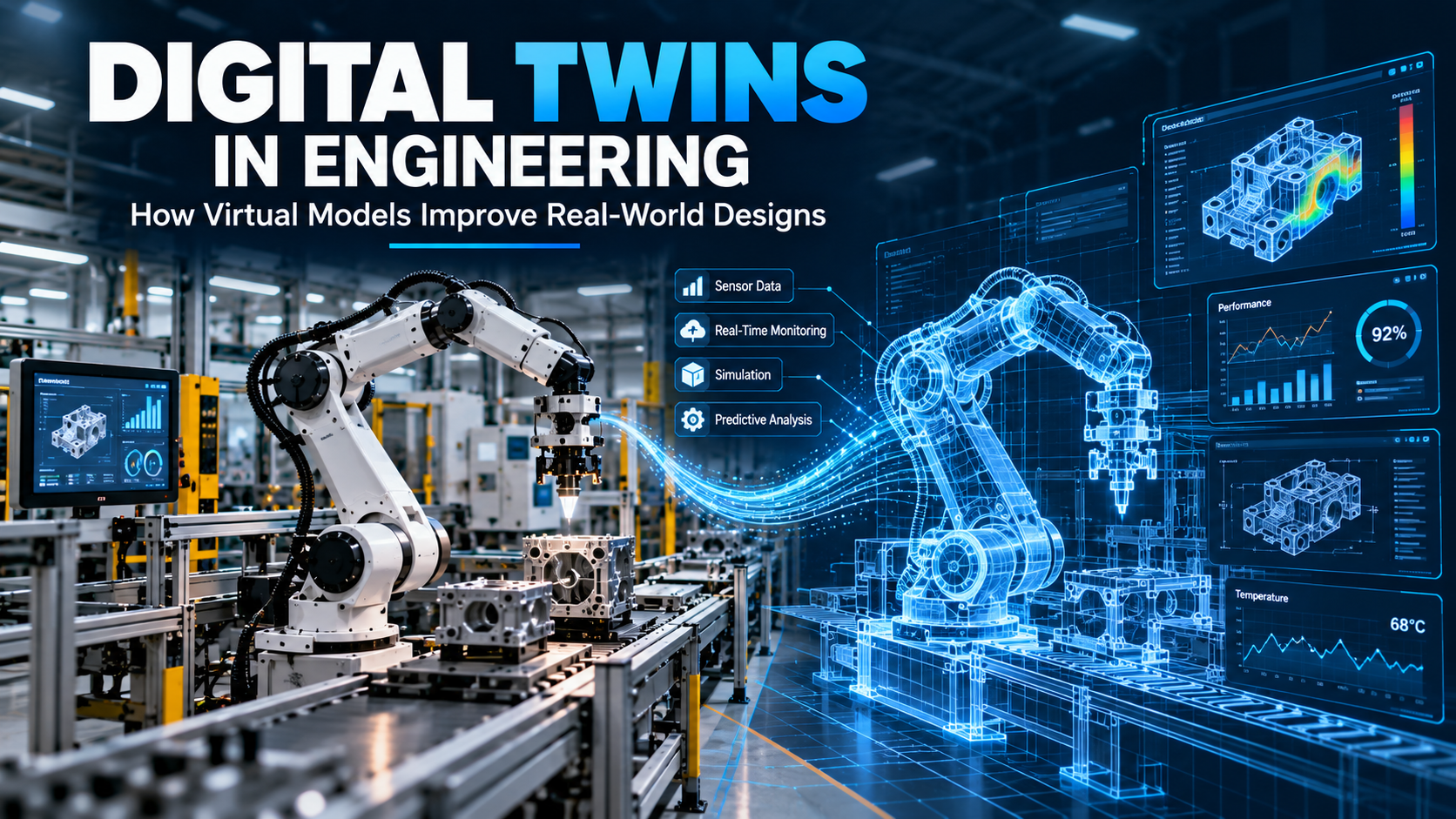
Imagine testing a new machine, building, or aircraft without having to create a physical version first. Engineers could study its performance, identify possible problems, and improve its design using a virtual model. This is one of the main ideas behind digital twin technology.
Digital twins in engineering are changing how engineers design, test, monitor, and maintain real-world products and systems. A digital twin is a virtual representation of a physical object, process, or system. Depending on its purpose, it can use real-world data to reflect the condition and performance of its physical counterpart.
From manufacturing plants and construction projects to aircraft engines and energy systems, digital twins help engineers make informed decisions, reduce unnecessary testing, and understand how designs may perform under different conditions.
In this article, we will explore what digital twins are, how they work, their key benefits, their applications in engineering, and the challenges businesses should consider before adopting this technology.
What Is a Digital Twin in Engineering?
A digital twin is a virtual model of a physical object, machine, product, or system. It can represent the design, behavior, operating conditions, and performance of the real-world asset.
Unlike a basic 3D model, a digital twin may be connected to real-time or regularly updated data from sensors, control systems, and other sources. This connection allows engineers to compare the virtual model with actual performance and understand what is happening in the physical environment.
For example, an engineering team designing an industrial pump could create a digital twin to study pressure, temperature, vibration, and energy consumption. When operating data becomes available, engineers can use it to investigate performance issues and identify potential improvements.
A digital twin can be as simple or advanced as the engineering task requires. Not every digital twin uses real-time data, artificial intelligence, or a continuously synchronized model.
How Does Digital Twin Technology Work?
Digital twin technology combines engineering models, data, and software to represent and analyze a physical asset.
1. Create a Virtual Model
Engineers begin by developing a digital representation of the product, machine, building, or system. Depending on the project, this may involve computer-aided design (CAD), 3D modeling, engineering simulations, and information about the asset’s components.
2. Collect Real-World Data
Sensors and connected devices can collect information such as temperature, pressure, vibration, speed, and energy usage. Other data may come from manufacturing systems, maintenance records, or operational databases.
3. Connect the Model to Data
The collected information is integrated into the digital twin. In advanced implementations, data updates the model continuously or at regular intervals, helping it reflect the current condition of the physical asset.
4. Analyze and Simulate Performance
Engineers can use simulations and analytical tools to study how a product or system may behave under different conditions. They can examine possible design changes, operating limits, and potential failure scenarios without testing every possibility physically.
5. Improve the Real-World System
The findings can help engineering teams adjust designs, improve operating procedures, schedule maintenance, or make informed decisions about performance. Any changes to the physical asset must still be reviewed and implemented through appropriate engineering and safety processes.
7 Key Benefits of Digital Twins in Engineering
Digital twins can provide several advantages when they are designed around a clear engineering objective and supported by reliable data.
1. Better Product Design
Engineers can use digital twins and simulation tools to evaluate different design options before manufacturing a physical prototype. They can study factors such as structural strength, heat transfer, fluid flow, and energy consumption.
This can help teams identify design weaknesses earlier and improve product performance before production begins.
2. Reduced Testing Costs
Physical prototypes and repeated tests can require significant time, materials, and money. Digital simulations allow engineers to investigate many design scenarios virtually.
Although physical testing is still important, combining simulations with real-world testing can reduce unnecessary iterations and help teams use their resources more efficiently.
3. Predictive Maintenance
Industrial machines often produce data that indicates changes in their operating condition. A digital twin can help engineers compare current performance with expected behavior and investigate unusual patterns.
When combined with suitable monitoring and predictive analytics, this information can support earlier maintenance planning and help reduce unexpected downtime.
4. Improved Manufacturing Efficiency
Manufacturers can create digital twins of individual machines, production lines, or entire factories. These models can help teams study production bottlenecks, equipment utilization, workflow problems, and energy consumption.
Engineers can evaluate possible process improvements virtually before introducing changes to the actual production environment.
5. Enhanced Safety and Risk Analysis
Digital twins can help engineers examine how systems may behave under demanding conditions. For example, they can simulate equipment loads, temperature changes, or different operating scenarios to investigate possible risks.
These insights support risk assessment and engineering decisions, but they do not replace physical safety inspections, regulatory compliance, or required testing.
6. Improved Collaboration
Engineering projects often involve designers, manufacturing teams, maintenance specialists, and project managers. A shared digital representation can help these teams understand the same system and discuss design changes using consistent information.
This can improve communication and make it easier to identify issues before they affect project schedules or operations.
7. Better Lifecycle Management
A digital twin can support multiple stages of an asset’s lifecycle, including design, production, operation, and maintenance.
When relevant information is maintained over time, engineering teams can use it to understand performance history, plan upgrades, investigate recurring problems, and make better decisions about repairs or replacement.
Real-World Applications of Digital Twins in Engineering
Digital twin technology can be used across several engineering disciplines.
1. Mechanical Engineering
Mechanical engineers can use digital twins to study machines, motors, pumps, turbines, and other mechanical systems.
For example, a digital twin of an industrial motor can help engineers analyze temperature, vibration, speed, and energy consumption. This information can support performance optimization and maintenance planning.
2. Civil and Structural Engineering
In civil engineering, digital twins can represent buildings, bridges, roads, and other infrastructure.
When connected to appropriate monitoring systems, these models can help engineers understand structural behavior, inspect changes over time, and plan maintenance activities. They can also combine design information with operational data to support building management.
3. Manufacturing and Industrial Engineering
Manufacturing is one of the important application areas for digital twins. Companies can model machines, production lines, and complete factory processes.
These models can help engineers test production layouts, identify bottlenecks, analyze equipment performance, and explore ways to improve productivity.
4. Aerospace Engineering
Aircraft and spacecraft involve complex systems that must operate under demanding conditions. Digital twins can help aerospace engineers model components, evaluate performance, and analyze information collected during operation.
Depending on the implementation, these models may support engine monitoring, maintenance planning, and investigations into component behavior.
5. Automotive Engineering
Automotive engineers can use digital twins to evaluate vehicle components, manufacturing processes, and system performance.
For example, engineers can simulate thermal behavior in an electric vehicle’s battery system or examine how design changes affect a vehicle component before committing to physical production.
6. Energy and Power Systems
Digital twins can represent wind turbines, power plants, electrical equipment, and other energy infrastructure.
When connected to operational data, they can help teams study energy performance, monitor equipment conditions, and plan maintenance. The quality of the results depends on the accuracy of the model and the data available.
Digital Twin vs. Traditional Simulation: What Is the Difference?
Digital twins and traditional simulations are related, but they are not exactly the same.
A traditional simulation uses a model to study how a product or system may behave under selected conditions. Engineers can use simulations during design and testing without maintaining a connection to a physical asset.
A digital twin may combine a virtual model with data from a specific real-world asset. This connection can allow engineers to compare actual behavior with the model’s predictions and update their analysis as new data becomes available.
For example, a simulation might estimate how a pump performs at different pressures. A digital twin of an operating pump could also use sensor readings to help engineers understand its current performance.
The distinction depends on the implementation: a digital twin may include simulations, while a simulation alone is not necessarily a digital twin.
Digital Twins vs. 3D Models
A 3D model mainly represents the shape, structure, or appearance of an object. It may be used for visualization, design reviews, and manufacturing preparation.
A digital twin can include a 3D model, but it may also incorporate operational data, engineering calculations, historical records, and analytical tools.
For example, a 3D model of a factory shows the layout of its machines. A digital twin of the factory may additionally represent machine performance, production flow, energy consumption, and operating conditions.
The main difference is that a digital twin is intended to represent and analyze the behavior or condition of a real-world asset, not just its physical appearance.
Challenges of Implementing Digital Twins
Although digital twins offer important benefits, organizations should consider several challenges before adopting them.
High Initial Investment
Developing a useful digital twin may require sensors, software, data infrastructure, skilled engineers, and integration with existing systems. Organizations should identify a clear business or engineering objective before investing in a large implementation.
Data Quality and Accuracy
A digital twin is only as useful as its underlying model and data. Inaccurate sensor readings, missing information, or outdated engineering assumptions can lead to misleading results.
Regular validation and data-quality checks are therefore essential.
Integration With Existing Systems
Companies may use different software platforms, machine controllers, databases, and communication protocols. Connecting these systems can be technically challenging and may require additional development work.
Cybersecurity and Data Privacy
Connected engineering systems can introduce cybersecurity risks. Organizations should apply appropriate access controls, network security, monitoring, and data protection practices to safeguard sensitive information and operational technology.
Shortage of Skilled Professionals
Building and maintaining digital twins may require expertise in engineering, simulation, software development, data analysis, and industrial systems. Training existing employees and bringing together the right specialists can help organizations overcome this challenge.
The Future of Digital Twins in Engineering
Digital twins are likely to become more capable as engineering software, connected sensors, cloud computing, and artificial intelligence continue to develop.
Artificial intelligence can help analyze large volumes of operational data, identify patterns, and support predictions about system behavior. When combined with a suitable digital twin, these capabilities may help engineers detect performance changes and evaluate possible improvements.
The technology may also become more useful for connected factories, smart buildings, infrastructure monitoring, and energy management. Advances in simulation and computing could make it easier to model increasingly complex systems.
However, successful adoption will depend on more than advanced software. Reliable data, validated engineering models, appropriate cybersecurity, and clear business goals will remain essential.
Conclusion
Digital twins in engineering provide a way to connect virtual models with real-world products, machines, and systems. By combining engineering models with operational data, organizations can better understand performance, test design alternatives, support maintenance planning, and improve decision-making.
From manufacturing and mechanical engineering to aerospace, construction, and energy, digital twins can help engineers identify potential problems and explore improvements before making changes to physical systems.
While implementation requires investment, reliable data, and technical expertise, a well-planned digital twin can become a valuable tool throughout an asset’s lifecycle.
As engineering becomes increasingly connected and data-driven, digital twin technology will remain an important approach for designing, operating, and maintaining modern systems.
