Introduction
Engineering teams today face more challenges than ever before. They need to manage complex systems, handle large amounts of data, maintain equipment, improve efficiency, and complete projects on time.
While traditional automation has helped businesses improve productivity, it still depends on predefined rules and human supervision. This is where Agentic AI is making a real difference.
Agentic AI is a new type of artificial intelligence that can understand goals, make decisions, solve problems, and take action with very little human involvement. Instead of simply following instructions, it can think about the best way to achieve a result and adjust its actions when situations change.
As industries continue to become smarter and more connected, Agentic AI is helping engineering teams work faster, reduce costs, and improve overall performance.
Understanding Agentic AI
Agentic AI is an advanced form of artificial intelligence designed to work toward a goal rather than simply complete a task.
Think of it as an intelligent assistant that doesn’t need constant instructions. It can analyze information, evaluate different options, and decide what actions should be taken to achieve the desired outcome.
For example, if a company wants to reduce machine downtime, Agentic AI can monitor equipment, identify warning signs, schedule maintenance, and recommend solutions before a breakdown happens.
Instead of waiting for commands, the system actively works to solve problems and improve results.
Why Engineering Operations Are Becoming More Complex
Modern engineering operations generate huge amounts of information every day. Machines, sensors, software systems, and connected devices constantly produce data that needs to be monitored and analyzed.
Engineers often spend hours reviewing reports, tracking equipment performance, managing workflows, and solving unexpected issues.
As businesses grow, these responsibilities become harder to manage manually.
Agentic AI helps by taking over many routine monitoring and decision-making tasks. This allows engineers to focus more on innovation, planning, and solving higher-level challenges.
Making Equipment Maintenance Smarter
Equipment breakdowns can be expensive and disruptive for any business.
Traditionally, maintenance is performed on a fixed schedule or after a machine fails. Both approaches can lead to unnecessary costs and downtime.
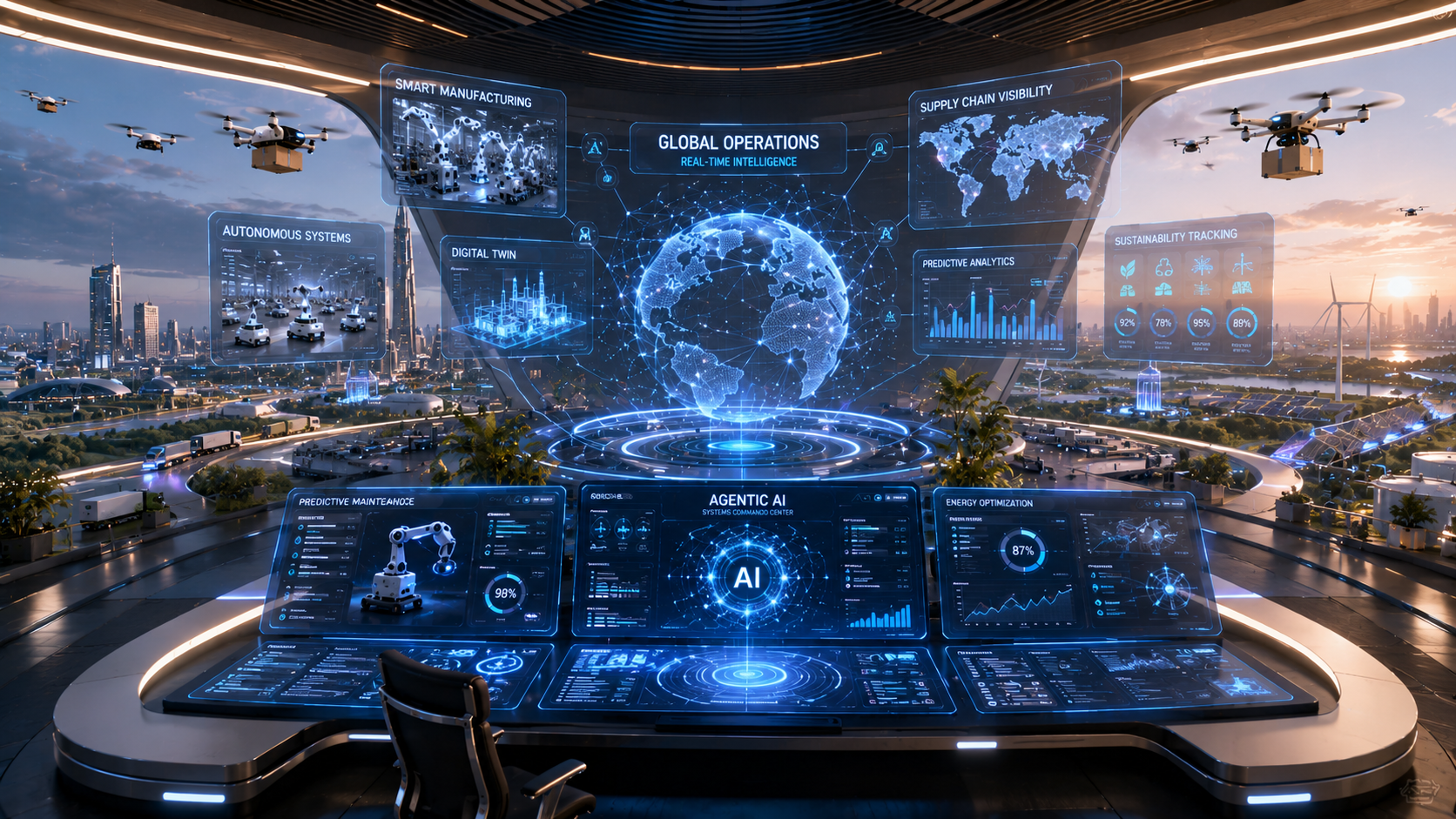
Agentic AI changes this by continuously monitoring equipment in real time. It looks for unusual patterns, detects early warning signs, and predicts potential failures before they occur.
This approach helps businesses fix problems before they become serious, reducing downtime and improving equipment reliability.
As a result, operations run more smoothly and maintenance costs are often lower.
Improving Production Efficiency
Every engineering operation aims to increase productivity while reducing waste.
Agentic AI can analyze production data and identify areas where processes can be improved. It can spot bottlenecks, adjust schedules, and recommend better ways to use resources.
For example, if demand suddenly increases, the AI can help optimize production schedules to meet customer needs without sacrificing quality.
Because it can adapt to changing conditions in real time, Agentic AI helps businesses maintain efficiency even in fast-moving environments.
Helping Engineers Make Better Decisions
Engineering decisions often require analyzing large amounts of information from different sources.
Agentic AI can process this information quickly and identify patterns that might be difficult for humans to notice.
By providing useful insights and recommendations, the technology helps engineers make faster and more informed decisions.
Whether it’s choosing the best production strategy, planning a project, or identifying risks, Agentic AI supports smarter decision-making throughout the organization.
Simplifying Project Management
Managing engineering projects can be challenging, especially when multiple teams and deadlines are involved.
Agentic AI can help track project progress, monitor resources, identify delays, and suggest ways to keep projects on schedule.
Instead of spending hours manually reviewing timelines and reports, project managers can rely on AI-powered insights to make adjustments when needed.
This improves productivity and helps teams deliver projects more efficiently.
Supporting Digital Twin Technology
Digital twins are virtual versions of real-world machines, systems, or facilities.
These digital models allow engineers to test ideas, monitor performance, and predict outcomes without affecting actual operations.
Agentic AI makes digital twins even more powerful by analyzing data, running simulations, and recommending improvements automatically.
For example, engineers can test different production scenarios in a digital environment before making changes in a real factory.
This reduces risk and helps businesses make more confident decisions.
Reducing Energy Consumption
Energy costs are a major concern for many engineering organizations.
Agentic AI can monitor how energy is being used across facilities and identify opportunities to improve efficiency.
The system can automatically adjust operations, optimize machine performance, and reduce unnecessary energy usage.
This not only lowers operating costs but also supports sustainability goals and environmental responsibility.
Improving Product Quality
Delivering high-quality products is essential for customer satisfaction and business success.
Agentic AI can monitor production processes and identify defects before products reach customers.
Because the system learns from past data, it becomes more accurate over time and can detect issues that might be missed by traditional quality control methods.
This helps businesses reduce waste, improve consistency, and maintain higher quality standards.
Benefits of Agentic AI in Engineering Operations
Businesses that adopt Agentic AI often experience significant improvements across their operations.
Some of the most important benefits include improved productivity, reduced downtime, better equipment performance, faster decision-making, lower operational costs, stronger quality control, and improved energy efficiency.
Because the technology can continuously learn and adapt, its value often grows over time.
Challenges Businesses Should Consider
Like any advanced technology, Agentic AI comes with challenges.
Organizations need reliable data, strong cybersecurity measures, and proper infrastructure to get the best results.
Employees may also need training to understand how AI systems work and how to use them effectively.
Businesses should focus on transparency and ensure that AI-generated decisions can be understood and trusted by engineers and managers.
When implemented correctly, these challenges can be managed successfully.
The Future of Engineering Operations
The future of engineering is becoming more intelligent, automated, and connected.
Agentic AI is expected to play a major role in smart factories, autonomous production systems, digital engineering platforms, and advanced infrastructure management.
As technology continues to evolve, engineering operations will become more predictive, efficient, and capable of solving problems with minimal human intervention.
Companies that adopt Agentic AI today will be better prepared for the future of engineering innovation.
Conclusion
Agentic AI is transforming engineering operations by helping businesses move beyond traditional automation.
Instead of simply following instructions, it can understand goals, analyze situations, make decisions, and take action independently.
From predictive maintenance and project management to quality control and energy optimization, Agentic AI is helping engineering teams work smarter and achieve better results.
As organizations continue to embrace intelligent technologies, Agentic AI is becoming one of the most important innovations shaping the future of engineering.
