Introduction
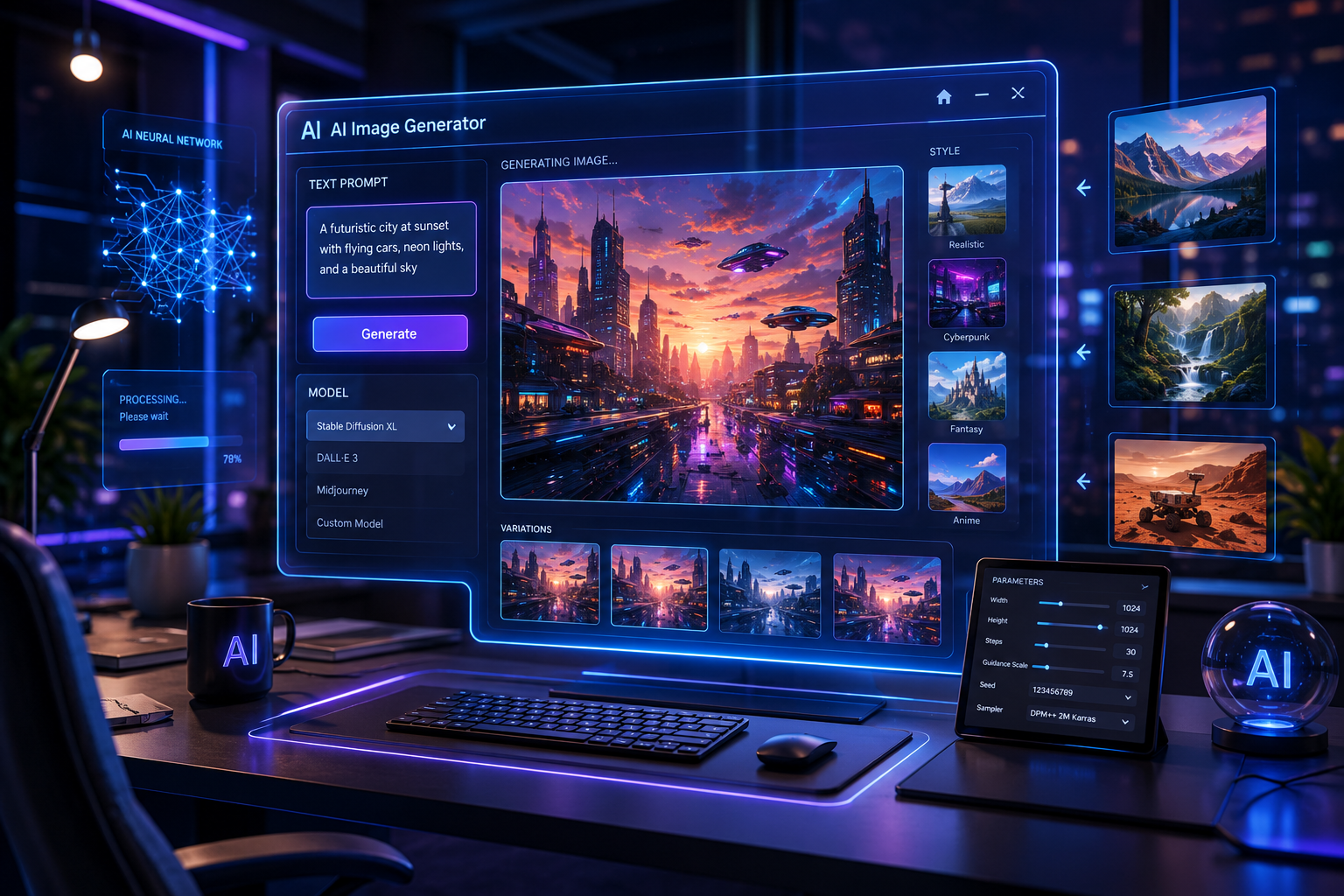
Artificial Intelligence (AI) is changing the way we create digital content, and one of its most exciting features is Text-to-Image AI. Instead of using complicated design software, you can simply type a description, and AI will create an image based on your words.
For example, if you type:
“A beautiful mountain landscape at sunrise with a crystal-clear lake and colorful flowers.”
Within a few seconds, AI can generate an image that matches your description.
This technology is becoming popular among content creators, marketers, bloggers, businesses, students, and designers because it makes creating high-quality images faster and easier than ever before.
What Is Text-to-Image AI?
Text-to-Image AI is a type of Generative AI that creates images from written text.
Instead of drawing or designing an image yourself, you simply tell the AI what you want to see. The AI reads your description, understands the objects, colors, style, lighting, and background, then creates a completely new image.
Think of it like talking to an artist. Instead of explaining your idea to a person, you explain it to an AI model, and it creates the artwork for you.
How Does Text-to-Image AI Work?
Although the technology behind it is very advanced, the basic idea is actually simple.
Understanding Your Prompt
Everything starts with a text prompt. A prompt is simply the description you give to the AI.
For example:
“A white cat sitting on a wooden chair near a window during sunset.”
The AI reads every part of the sentence and understands:
- The main subject is a white cat.
- The cat is sitting on a wooden chair.
- The location is near a window.
- The lighting should look like sunset.
The more details you provide, the better the final image usually looks.
Creating the Image
After understanding your prompt, the AI begins creating the image from scratch.
It doesn’t search the internet for an existing picture. Instead, it uses what it learned from millions of image and text examples during training to generate a brand-new image.
The AI carefully adds colors, objects, lighting, textures, and other details until the image matches your description.
Improving the Final Result
Modern AI models continue refining the image until it looks realistic or matches the style you requested.
Depending on your prompt, the AI can create:
- Realistic photographs
- Digital paintings
- Cartoon illustrations
- Anime artwork
- Watercolor paintings
- 3D renders
- Fantasy art
Why Is Text-to-Image AI Becoming So Popular?
One of the biggest reasons is that it saves a lot of time.
Creating professional graphics normally requires design software and creative skills. With AI, anyone can create beautiful images in just a few seconds.
It also helps people who don’t have any graphic design experience.
Whether you’re writing a blog, posting on social media, creating advertisements, or designing presentations, AI makes the process much faster.
Where Is Text-to-Image AI Used?
Text-to-Image AI is now being used in many different industries.
Content Creation
Bloggers, YouTubers, and social media creators use AI to create:
- Blog featured images
- YouTube thumbnails
- Instagram posts
- Social media graphics
Digital Marketing
Marketing teams use AI for:
- Advertisement banners
- Promotional posters
- Product campaigns
- Landing page visuals
This helps businesses create fresh content quickly without spending hours on design.
E-commerce
Online stores use AI to create:
- Product mockups
- Lifestyle product images
- Marketing banners
- Promotional graphics
This helps businesses showcase products in creative ways.
Education
Teachers and students use AI to create educational illustrations, science diagrams, history scenes, and visual learning materials.
Complex topics become much easier to understand with custom images.
Entertainment and Gaming
Game developers, writers, and artists use AI to create:
- Character designs
- Fantasy worlds
- Background environments
- Story concepts
This speeds up the creative process during game and movie development.
Benefits of Text-to-Image AI
Text-to-Image AI offers many advantages for both individuals and businesses.
Saves Time
Images that once took hours to design can now be created within seconds.
Easy to Use
You don’t need any graphic design experience. If you can describe your idea, you can create an image.
Encourages Creativity
AI allows you to experiment with ideas that might be difficult or impossible to create manually.
Reduces Design Costs
Small businesses and startups can create professional visuals without hiring a designer for every project.
Creates Unique Images
Each image is generated based on your prompt, making it different from traditional stock photos.
Challenges of Text-to-Image AI
Even though the technology is impressive, it isn’t perfect.
Sometimes the AI may misunderstand your prompt and generate incorrect objects or details.
It can also struggle with creating readable text inside images.
Another important concern is copyright. Since AI models learn from large datasets, discussions continue about ownership and the ethical use of AI-generated content.
Like any technology, Text-to-Image AI should be used responsibly.
Tips for Writing Better AI Prompts
The quality of your image depends heavily on the prompt you write.
Here are some simple tips:
- Describe the main subject clearly.
- Mention the background.
- Add lighting details.
- Include colors if they matter.
- Specify the art style.
- Mention image quality like “4K”, “8K”, or “ultra realistic”.
Example Prompt
“A futuristic smart city at night with glowing buildings, flying cars, cinematic lighting, ultra realistic, 8K, highly detailed.”
Clear and detailed prompts usually produce better images.
The Future of Text-to-Image AI
Text-to-Image AI is improving very quickly.
Future AI models are expected to create even more realistic images, understand complex instructions better, and generate images much faster.
We can also expect better image editing, improved consistency, and easier integration with video generation tools.
As AI continues to evolve, creating professional-quality visuals may become as simple as writing a single sentence.
Conclusion
Text-to-Image AI is changing the way people create images. Instead of spending hours designing graphics, anyone can simply describe an idea and let AI generate it in seconds.
From blogging and digital marketing to education, e-commerce, and entertainment, this technology is helping people save time, reduce costs, and unlock new creative possibilities.
Although there are still challenges such as copyright and image accuracy, the future of Text-to-Image AI looks very promising. As AI tools continue to improve, they will become an essential part of everyday content creation for businesses, creators, and individuals alike.
