🌟 Introduction
Technology is changing very fast, and robots are becoming smarter every day. Earlier, robots were only able to follow fixed instructions. But now, they can think, learn, and make decisions on their own.
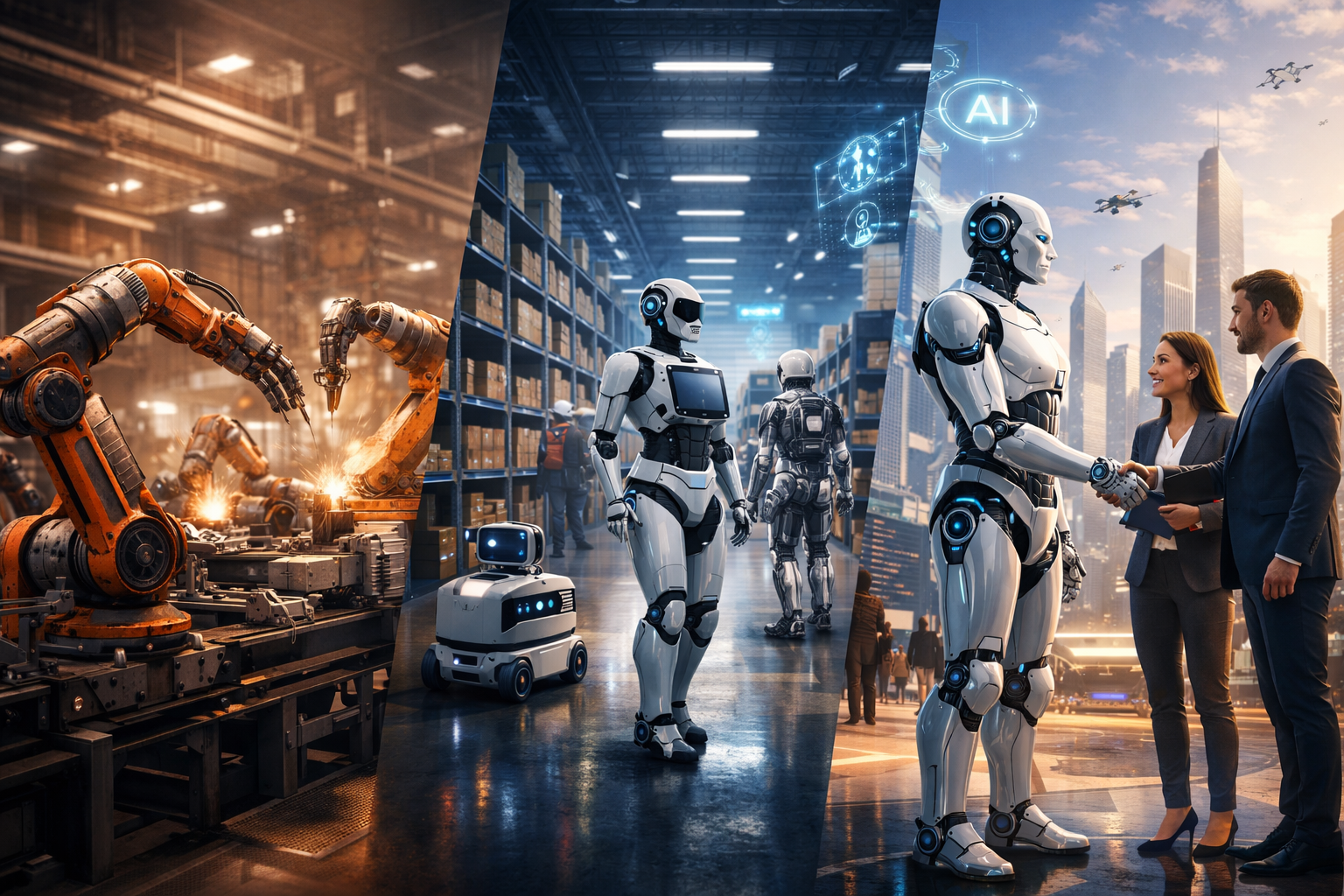
This shift from automation to autonomy is one of the biggest changes in modern engineering. Today’s robots are not just machines—they are becoming intelligent partners that help humans in many industries.
⚙️ What is Automation in Simple Words
Automation means a robot does a task based on instructions given by humans. It does not think or decide anything by itself. It just repeats the same work again and again.
For example, in factories, robotic arms assemble products in the same way every time. They are fast and accurate, but they cannot handle unexpected changes.
Automation is useful, but it works best only in fixed and controlled environments.
🧠 What is Autonomy in Simple Words
Autonomy means a robot can understand, decide, and act on its own. It uses technologies like AI, sensors, and cameras to see what’s happening around it.
For example, a warehouse robot can move around, avoid obstacles, and choose the best path without human help.
Autonomous robots are more flexible because they can adapt to new situations instead of following only fixed instructions.
🔄 Difference Between Automation and Autonomy
The main difference is simple:
- Automation follows rules
- Autonomy makes decisions
Automation needs human control, while autonomy reduces human effort. Autonomous robots can also learn and improve over time, which makes them more powerful.
📈 How Robots Are Evolving
Robots have improved step by step over time.
At first, they were simple machines doing repetitive work. Then, sensors were added so they could respond to small changes. Today, robots use AI to understand their environment and make decisions.
In the future, robots may become fully independent and work alongside humans in everyday life.
🌍 Where We See Autonomous Robots Today
Autonomous robots are already being used in many industries.
In factories, they help in smart manufacturing. In warehouses, they manage goods and deliveries. In transportation, self-driving vehicles are becoming more common. In healthcare, robots assist doctors and take care of patients. Even in agriculture, robots help in farming and monitoring crops.
This shows how robotics is becoming part of our daily lives.
⚡ Technologies Behind Smart Robots
Smart robots are possible because of modern technologies.
Artificial Intelligence helps them think and learn. Machine Learning allows them to improve with experience. Sensors and cameras help them understand their surroundings. Internet of Things connects them with other systems.
All these technologies together make robots intelligent and independent.
⚠️ Challenges of Autonomous Robots
Even though autonomous robots are powerful, there are still some challenges.
Safety is a major concern because robots must make correct decisions. There are also questions about ethics and responsibility. Building such robots is expensive, and they must be protected from cyber attacks.
Because of these challenges, development is still ongoing.
🔮 Future of Smart Robots
The future of robotics looks very exciting.
We will see more collaboration between humans and robots. Robots may become part of our daily lives, helping in homes, offices, and public spaces. Industries will become more efficient with fully autonomous systems.
Instead of replacing humans, robots will mostly assist and support us.
🧩 Conclusion
The journey from automation to autonomy is changing the way we use technology. Robots are no longer just tools—they are becoming smart systems that can think and act independently.
Understanding this evolution is important for anyone interested in engineering and future technologies. As robots continue to improve, they will play a bigger role in shaping our world.
