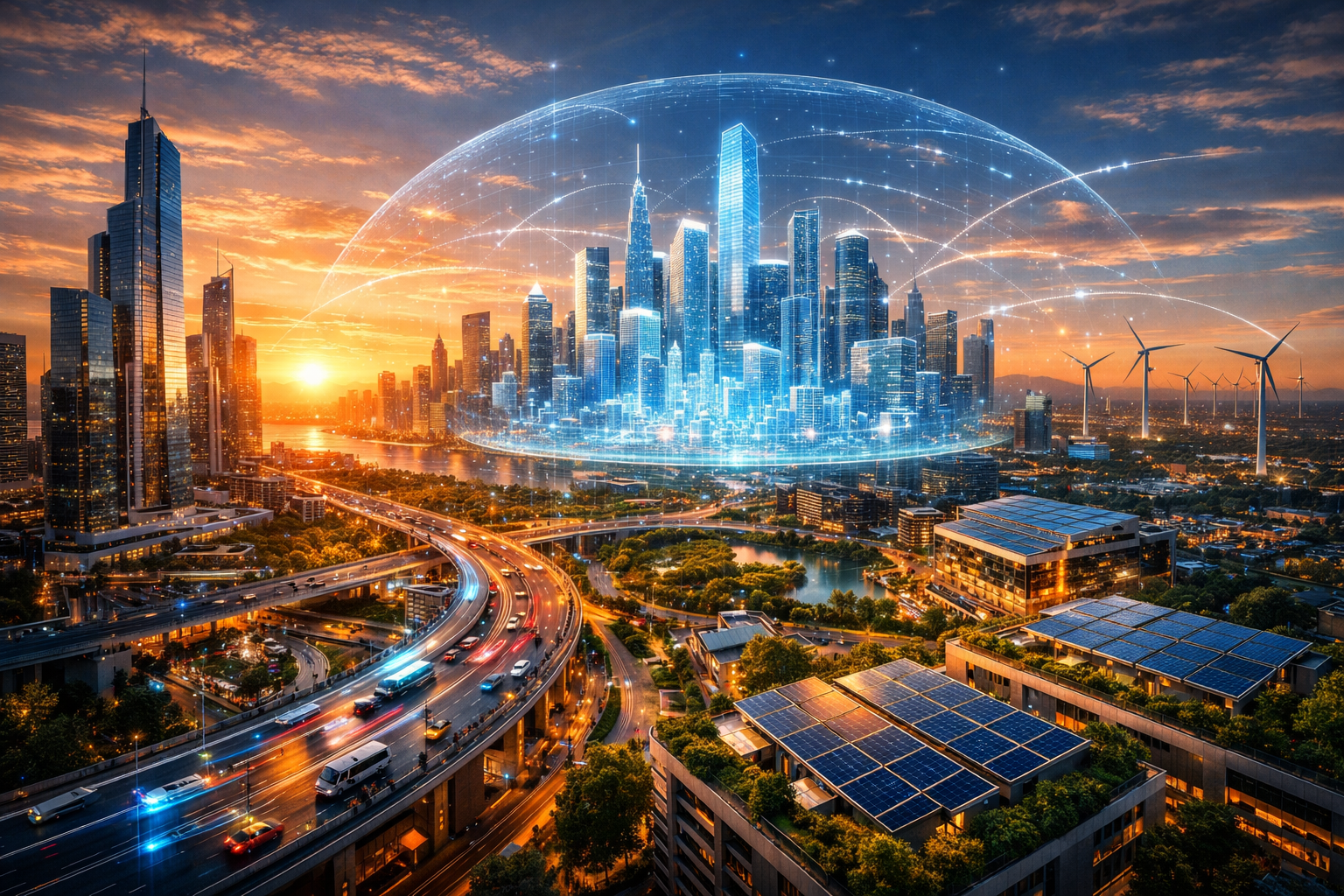
Introduction to Smart and Resilient Cities
Today, cities are growing very fast. More people, more vehicles, more buildings — and more challenges like pollution, traffic, floods, and power problems. To manage all this, cities are becoming smarter.
Smart urban systems use modern technology to make cities work better. A resilient city is one that can handle problems like natural disasters or system failures and recover quickly. When we combine both ideas, we get cities that are not only smart but also strong and future-ready.
What Are Smart Urban Systems?
Smart urban systems are technology-based solutions that help cities run smoothly. These systems collect real-time data and use it to improve daily operations.
For example, sensors placed on roads can monitor traffic. Smart meters can track electricity and water usage. Cameras and AI systems can improve safety. All this information helps city officials make better and faster decisions.
The main goal is simple: improve efficiency, reduce waste, and make life easier for citizens.
What Makes a City Resilient?
A resilient city is prepared for unexpected problems. These problems may include floods, earthquakes, cyberattacks, power cuts, or heavy pollution.
Instead of collapsing under pressure, a resilient city adapts and recovers quickly. For example, early warning systems can alert people before floods. Backup power systems can keep hospitals running during outages. Strong digital security can protect city data from cyber threats.
Resilience means being prepared and staying strong during difficult times.
Technologies That Power Smart Cities
Modern cities depend on advanced technologies to function efficiently.
Artificial Intelligence helps analyze large amounts of city data. It can control traffic signals, predict maintenance needs, and improve energy use.
Internet of Things devices, also known as IoT, collect real-time data from different parts of the city like roads, buildings, and utilities.
Digital twins create virtual models of cities. Planners can test new ideas in the virtual model before applying them in real life.
Smart energy systems such as solar panels and microgrids reduce dependency on traditional power sources and make cities more sustainable.
Benefits for Citizens and Governments
Smart urban systems make daily life more comfortable and safe. Traffic congestion can be reduced with intelligent signal systems. Smart waste management keeps streets cleaner. Energy-efficient buildings reduce electricity bills.
Governments also benefit by reducing operational costs and improving public services. Businesses are attracted to cities with advanced infrastructure, leading to economic growth.
Real-World Examples of Smart Cities
Many countries are already working on smart and resilient city projects.
Singapore uses smart traffic control and digital governance systems to improve city life.
United Arab Emirates is investing heavily in AI-based city planning and sustainable infrastructure.
Several European cities are adopting green energy systems and smart public transport networks.
These examples show that smart urban development is already happening around the world.
Challenges in Building Smart Cities
Even though the benefits are huge, building smart cities is not easy.
High installation costs can be a barrier. Data privacy is another major concern because smart systems collect large amounts of personal information. Cybersecurity risks also increase as more systems become connected.
In addition, cities must upgrade old infrastructure to support modern technologies.
Future of Smart Urban Engineering
The future looks even more advanced. Autonomous public transportation, AI-based governance systems, and high-speed connectivity like 6G will change urban living further.
Climate-adaptive buildings and renewable energy systems will make cities more environmentally friendly.
In the coming years, cities may become self-learning systems that automatically adjust traffic, energy, and public services based on real-time data.
Conclusion
Smart Urban Systems and Resilient Cities are shaping the future of urban life. By using technologies like AI, IoT, digital twins, and renewable energy, cities can become safer, cleaner, and more efficient.
The goal is not just to build smart cities, but to create cities that are prepared for the future and capable of handling any challenge that comes their way.
