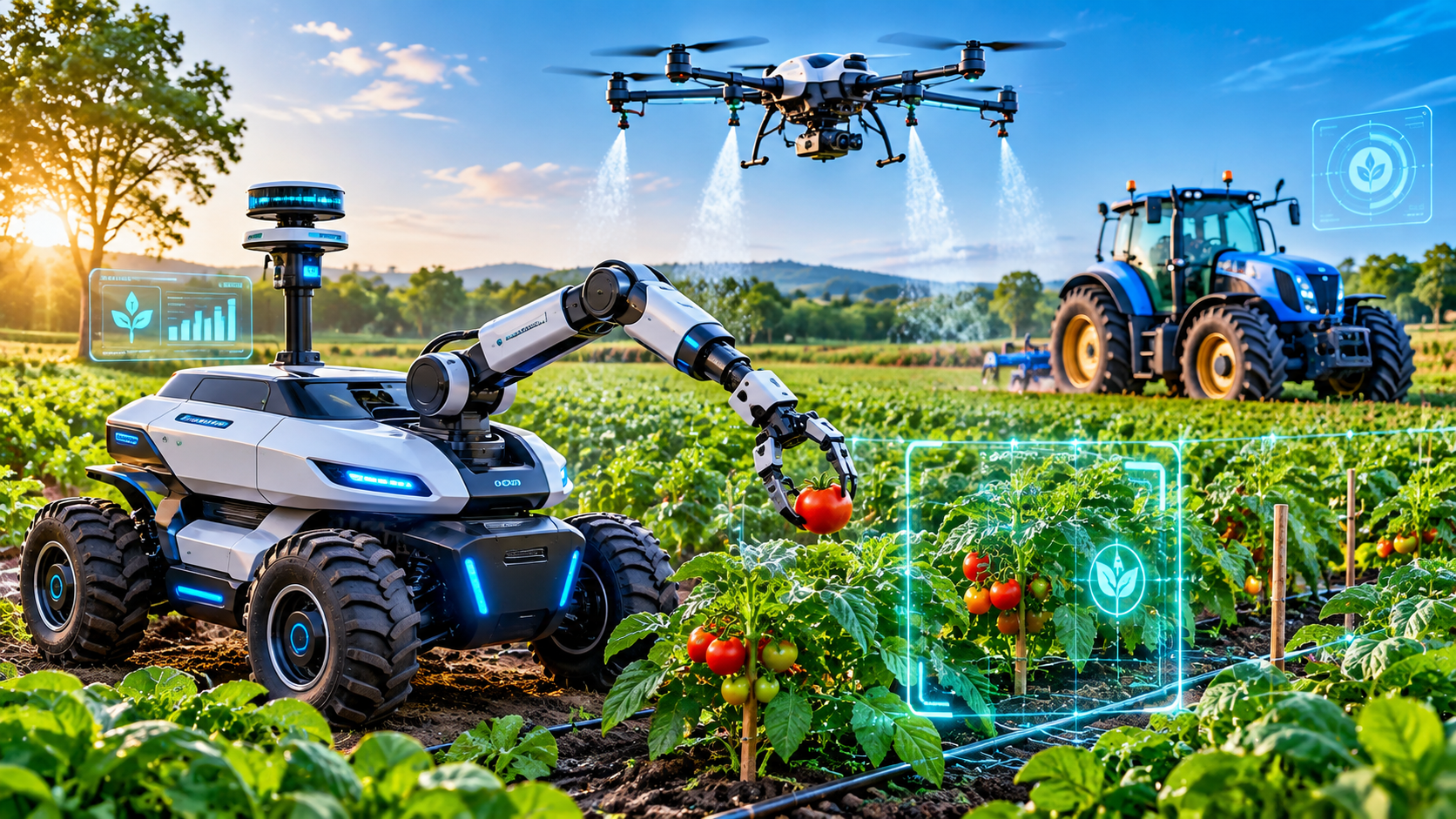
Farming is one of the most important activities in the world. Farmers grow food for people, but farming is not always easy. Planting seeds, removing weeds, watering crops, and harvesting fruits and vegetables can take a lot of time and hard work.
Today, technology is making farming easier. Farmers are starting to use robots, artificial intelligence (AI), drones, and smart machines to complete different farming activities.
These machines are called agricultural robots. They help farmers save time, reduce hard work, and manage their farms more easily.
1. What Are Agricultural Robots?
Agricultural robots are smart machines that help farmers perform different farming activities. They can work automatically or with some help from humans.
For example, some robots can plant seeds, remove unwanted plants, spray water or chemicals, and collect fruits from trees.
These robots use cameras, sensors, GPS, and artificial intelligence to understand their surroundings and complete tasks.
In simple words, agricultural robots are machines that help farmers do their work faster and more accurately.
2. How Are Agricultural Robots Used in Farming?
Agricultural robots can help with many farming activities. Let’s understand some of their important uses.
2.1 Automatic Seed Planting
Planting seeds is the first important step in growing crops. Traditionally, farmers plant seeds by hand or use machines that need human control.
Robotic planting machines can place seeds in the soil at the correct distance and depth. This helps farmers plant seeds in an organized way.
Example: A robotic machine can move through a field and plant seeds in different rows without requiring a farmer to place every seed by hand.
Main benefits:
- Saves time and effort.
- Helps maintain proper distance between seeds.
- Makes planting more organized.
- Reduces repetitive manual work.
2.2 Smart Weed Removal
Weeds are unwanted plants that grow near crops. They take water, sunlight, and nutrients from the soil, which can affect crop growth.
Agricultural robots use cameras and AI technology to identify weeds. After finding them, some robots can remove them using special tools or targeted treatments.
Example: A smart weeding robot can move between crop rows, recognize unwanted plants, and remove them without damaging nearby crops.
Main benefits:
- Reduces manual weed removal.
- Helps protect crops.
- Can reduce unnecessary chemical use.
- Saves farmers time.
2.3 Automatic Crop Spraying
Farmers spray pesticides and fertilizers to protect crops and support healthy plant growth. However, spraying an entire field can sometimes waste chemicals.
Smart agricultural robots use cameras and sensors to identify the areas that need spraying. They can apply treatments to selected plants or specific parts of a field.
Some agricultural drones can also spray crops from above.
Example: If a particular area of a farm needs treatment, a smart spraying system can focus on that area instead of spraying the entire field.
Main benefits:
- Helps reduce chemical wastage.
- Supports accurate spraying.
- Saves time during farm operations.
- Reduces direct human exposure to chemicals.
2.4 Robotic Fruit and Vegetable Harvesting
Harvesting means collecting fruits and vegetables when they are ready. This work often requires a lot of time because farmers must carefully check and collect each crop.
Robotic harvesting machines use cameras and robotic arms to identify and pick suitable fruits and vegetables.
Example: A fruit-picking robot can identify ripe strawberries and use a robotic arm to collect them carefully.
Main benefits:
- Helps with repetitive harvesting work.
- Saves time for suitable crops.
- Supports careful fruit collection.
- Reduces some manual labour.
2.5 Smart Crop Monitoring
Farmers need to check their crops regularly to make sure plants are growing properly.
Agricultural robots can move around fields and use cameras and sensors to collect information about plants. AI software can study this information and help identify possible diseases, pests, or water problems.
Example: A crop-monitoring robot can capture pictures of plant leaves. Software can analyze these pictures and highlight signs of possible disease.
Main benefits:
- Helps farmers find crop problems early.
- Makes field checking easier.
- Supports better crop management.
- Helps farmers make informed decisions.
2.6 Smart Watering and Irrigation
Plants need the right amount of water to grow. Giving too much or too little water can damage crops.
Smart irrigation systems use soil sensors and weather information to help farmers understand when crops need water.
Some automated machines can control the water supply based on the information collected by these sensors.
Example: If soil sensors show that the soil is too dry, an automated irrigation system can start watering the crops.
Main benefits:
- Helps save water.
- Reduces unnecessary watering.
- Makes irrigation easier.
- Supports healthy crop growth.
3. Technologies Used in Agricultural Robots
Agricultural robots use different modern technologies to perform their work. Here are some important examples.
3.1 Artificial Intelligence (AI)
Artificial intelligence helps robots understand information and make decisions.
For example, AI can help a robot recognize weeds, identify ripe fruits, and find possible signs of crop diseases.
3.2 GPS Technology
GPS helps robots understand their location in a field. It allows them to follow planned routes and reach specific areas.
For example, an agricultural robot can use GPS to move through crop rows without repeatedly covering the same area.
3.3 Cameras and Computer Vision
Cameras capture pictures of plants, fruits, soil, and other objects. Computer vision helps robots understand what they see.
For example, a robot can use a camera to identify the difference between a crop plant and a weed.
3.4 Internet of Things (IoT)
IoT connects smart devices, sensors, and machines through the internet or local networks.
Farmers can use connected sensors to check soil moisture, temperature, and other farm conditions from a computer or mobile phone.
3.5 Sensors and Robotic Arms
Sensors help robots collect information about their surroundings. Robotic arms help them perform physical activities such as picking fruits, handling plants, and moving objects.
Together, these technologies allow agricultural robots to perform different farming tasks.
4. Benefits of Agricultural Robots
Agricultural robots offer many benefits to farmers. Some of the most important advantages are explained below.
4.1 Saves Time
Robots can perform repetitive farming activities automatically. This helps farmers complete certain tasks faster and spend more time managing other farm activities.
4.2 Reduces Hard Work
Activities such as planting, spraying, and removing weeds can require a lot of physical effort. Robots can help reduce some of this manual work.
4.3 Improves Accuracy
Robots use cameras, sensors, and GPS to perform tasks at specific locations. This can make activities such as planting and spraying more accurate.
4.4 Saves Water and Chemicals
Smart irrigation and targeted spraying systems help farmers use water and chemicals more carefully. This can reduce unnecessary usage and wastage.
4.5 Helps Monitor Crop Health
Robots can regularly collect information about crops. This helps farmers notice possible problems and take action when needed.
4.6 Supports Better Farming Decisions
Agricultural robots collect useful information about soil, plants, and weather conditions. Farmers can use this information to plan their farming activities.
5. Challenges of Agricultural Robots
Although agricultural robots are useful, there are some challenges that farmers should understand before using them.
5.1 High Cost
Advanced agricultural robots can be expensive to purchase. Small farmers may find it difficult to afford these machines.
5.2 Maintenance Problems
Robots need regular maintenance, repairs, and software updates. Farmers may also need technical support when something goes wrong.
5.3 Need for Technical Knowledge
Some agricultural robots are difficult to operate without proper training. Farmers may need to learn how to use the machines and their software.
5.4 Weather and Field Conditions
Farms have different types of soil, uneven surfaces, dust, mud, and changing weather conditions. These things can make it difficult for robots to work properly.
5.5 Limited Use for Some Crops
Not every agricultural robot can work with every type of crop. Some machines are designed for specific farming activities or particular fruits and vegetables.
6. Agricultural Robots in India
India is one of the major agricultural countries in the world. Many farmers depend on farming for their income and daily needs.
Modern technologies such as agricultural drones, smart irrigation systems, crop-monitoring sensors, and robotic machines are creating new opportunities for Indian agriculture.
For example, farmers can use drones to monitor large fields, smart sensors to check soil moisture, and automated machines to perform selected farming activities.
However, advanced agricultural robots can be expensive for many small farmers.
Affordable machines, equipment rental services, government-supported technology programs, and proper training can help more Indian farmers use modern farming technology.
7. Future of Agricultural Robots
Agricultural robotics is developing quickly. In the future, robots may become smarter, more affordable, and more useful for different farming activities.
Here are some developments to watch.
7.1 More Intelligent Farming Robots
Future robots may use advanced AI to understand field conditions and complete more tasks with less human assistance.
7.2 Self-Driving Tractors
Autonomous tractors can follow planned routes and perform selected farming activities with limited human control. This technology may help farmers manage large fields more efficiently.
7.3 Multi-Purpose Agricultural Robots
Instead of using separate machines for every activity, future robots may support different tasks by changing their tools.
For example, one robot could be used for monitoring crops, removing weeds, and spraying selected areas.
7.4 Advanced Fruit-Picking Robots
Future harvesting robots may become better at identifying ripe fruits and collecting them without causing damage.
7.5 Connected Smart Farms
In the future, robots, drones, sensors, and automated machines may work together. Farmers could monitor different farming activities through connected digital systems.
These developments could make farming more efficient, but their success will depend on cost, reliability, and real-world performance.
Conclusion: Are Agricultural Robots the Future of Farming?
Agricultural robots are bringing important changes to modern farming. They help farmers with activities such as planting seeds, removing weeds, spraying crops, harvesting fruits, and monitoring plant health.
By using AI, GPS, cameras, sensors, and automation, these machines can save time and reduce repetitive work.
However, high costs, maintenance, and technical challenges still make agricultural robots difficult to access for some farmers.
As technology improves, agricultural robots may become more affordable and easier to use. They will not replace farmers completely, but they can become useful tools that support farmers and improve the future of agriculture.
