Introduction
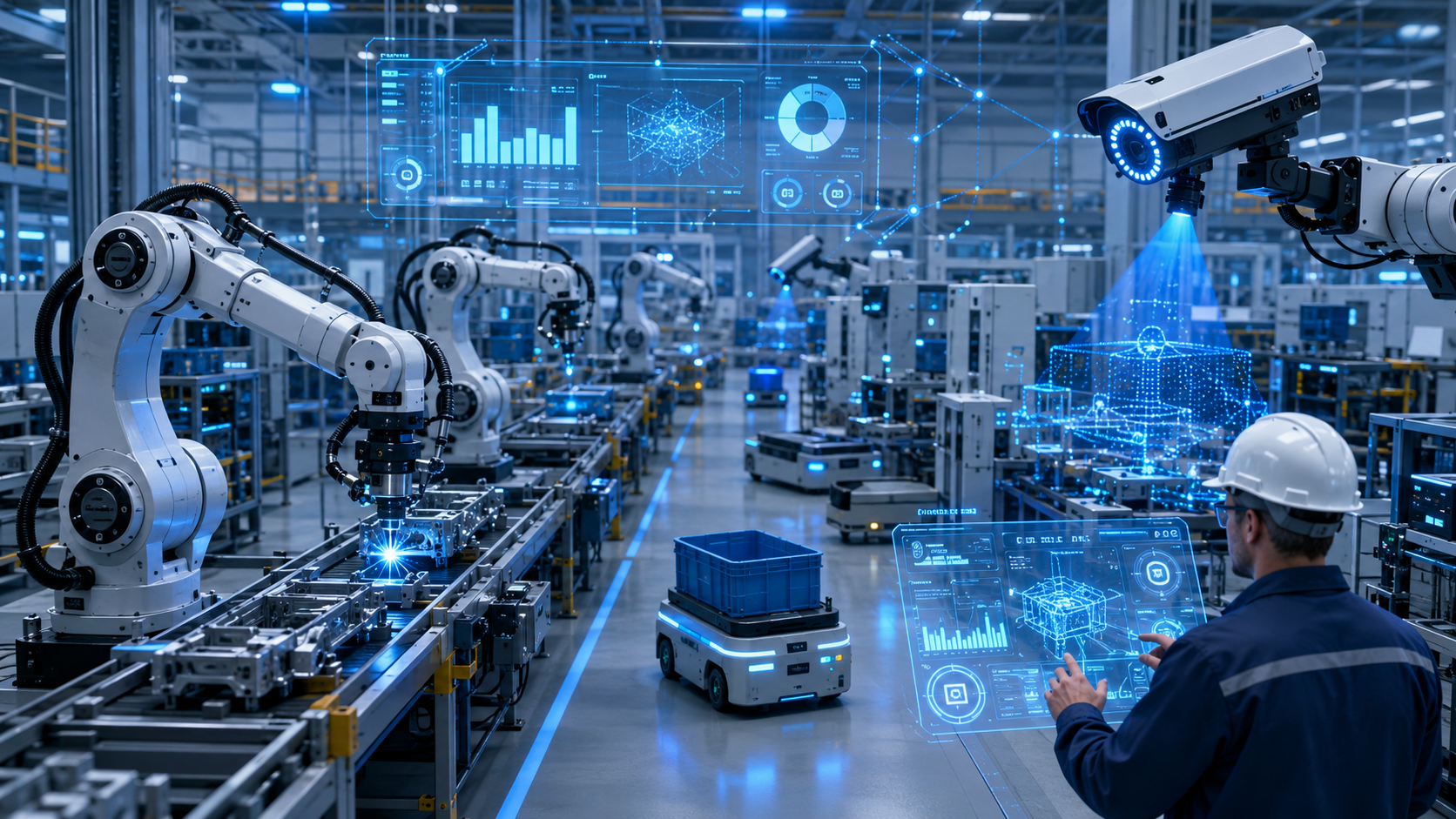
Manufacturing is changing faster than ever. Today’s factories are filled with smart machines, robots, sensors, and connected devices that generate huge amounts of data every second. This data helps manufacturers understand how machines are performing, detect problems, and improve production.
But there is one challenge. Sending all this information to the cloud takes time. Even a small delay can affect production, especially when machines need to make decisions instantly.
This is where Edge AI makes a big difference. Instead of sending data to a cloud server, Edge AI processes information directly inside the factory. This allows machines to react immediately, helping businesses save time, reduce costs, and improve productivity.
In this blog, you’ll learn what Edge AI is, how it works, why manufacturers are using it, and how it is shaping the future of smart factories.
What is Edge AI?
Edge AI is a technology that combines Artificial Intelligence (AI) with Edge Computing.
In simple words, it means that data is processed close to where it is created instead of being sent to a distant cloud server.
For example, imagine a smart camera checking products on a production line. Instead of uploading every image to the cloud for inspection, the camera analyzes the images itself using AI. If it finds a defective product, it immediately alerts the machine or removes the product from the line.
This makes decisions much faster because everything happens locally.
Why Do Manufacturers Need Edge AI?
Factories today produce a huge amount of information every second. Machines constantly collect data such as temperature, pressure, vibration, speed, and product quality.
If every piece of this data is sent to the cloud, it can create delays, increase internet usage, and slow down important decisions.
Edge AI solves this problem by analyzing the data inside the factory itself. As a result, machines can respond instantly without waiting for data to travel over the internet.
This is especially useful for production lines where even a few seconds of delay can lead to defects, downtime, or safety risks.
How Does Edge AI Work?
The process is quite simple.
First, sensors, cameras, and machines collect information while production is running.
Next, an Edge AI device processes that information immediately using trained AI models.
If the AI detects a problem, it can instantly take action. For example, it can stop a machine, reject a faulty product, or notify the maintenance team.
Finally, only important data is sent to the cloud for storage, reports, or long-term analysis.
This approach makes the entire manufacturing process faster and more efficient.
Faster Decisions on the Factory Floor
One of the biggest advantages of Edge AI is speed.
Since data is processed directly inside the factory, machines don’t have to wait for responses from cloud servers. Decisions can be made within milliseconds.
This helps manufacturers quickly respond to changing production conditions and avoid unnecessary delays.
Whether it’s adjusting machine settings or identifying a faulty product, Edge AI helps factories keep production running smoothly.
Better Product Quality
Maintaining consistent product quality is one of the biggest goals in manufacturing.
Edge AI helps by using smart cameras and computer vision technology to inspect products in real time.
It can quickly identify scratches, cracks, missing parts, incorrect labels, or assembly mistakes before products reach customers.
Because defects are detected immediately, manufacturers can reduce waste, improve customer satisfaction, and maintain high-quality standards.
Less Machine Downtime
Unexpected machine failures can stop an entire production line and increase operating costs.
Edge AI continuously monitors machine performance by checking vibration, temperature, and other operating conditions.
If the AI notices unusual behavior, it warns the maintenance team before the machine breaks down.
This is called predictive maintenance, and it helps companies avoid costly repairs and unplanned downtime.
Lower Operating Costs
Edge AI not only improves production but also helps businesses save money.
Since only useful information is sent to the cloud, companies use less internet bandwidth and spend less on cloud storage.
Better machine performance also reduces maintenance expenses, energy consumption, and production waste.
Over time, these savings can make a significant difference for manufacturers.
Improved Workplace Safety
Keeping workers safe is always a top priority.
Edge AI can monitor factory environments using smart cameras and sensors.
For example, it can detect if workers are not wearing safety helmets, if someone enters a restricted area, or if a machine is operating unsafely.
Because alerts are generated instantly, companies can respond quickly and reduce workplace accidents.
Real-Life Uses of Edge AI in Manufacturing
Edge AI is already being used in many industries around the world.
Manufacturers use it to inspect products automatically, predict equipment failures, monitor energy consumption, guide industrial robots, and improve production efficiency.
Food processing companies use Edge AI to check packaging quality, while automotive manufacturers use it to inspect vehicle parts before assembly.
Electronic manufacturers also use AI-powered cameras to detect tiny defects that are difficult for humans to notice.
These real-world applications help businesses produce better products with greater efficiency.
Edge AI and Cloud AI: What’s the Difference?
Although both technologies use artificial intelligence, they work differently.
Cloud AI processes data on remote servers, which is useful for large-scale analysis and storing information.
Edge AI processes data locally, making it much faster for real-time decision-making.
Many manufacturers use both technologies together. Edge AI handles immediate decisions inside the factory, while the cloud stores data, creates reports, and provides deeper business insights.
This combination offers the best of both worlds.
Challenges of Using Edge AI
Like any technology, Edge AI also comes with some challenges.
Setting up AI-powered devices requires an initial investment, and businesses need quality data to train AI models.
Older factory equipment may also need upgrades before it can work with modern AI systems.
In addition, companies must protect edge devices from cyber threats by using secure networks and regular software updates.
Even with these challenges, the long-term benefits often outweigh the initial investment.
The Future of Edge AI in Manufacturing
Edge AI is expected to become an essential part of future smart factories.
As AI technology becomes more advanced, factories will become more automated, connected, and intelligent.
Future manufacturing systems will be able to predict equipment failures more accurately, optimize production automatically, reduce energy usage, and improve product quality with very little human intervention.
Combined with technologies like Industrial IoT, 5G, robotics, and digital twins, Edge AI will help manufacturers build faster, safer, and more sustainable factories.
Conclusion
Edge AI is changing the way modern factories operate. By processing data directly where it is created, manufacturers can make faster decisions, improve product quality, reduce downtime, and increase overall efficiency.
Instead of waiting for cloud-based responses, machines can react instantly to changing conditions, making production smarter and more reliable.
As industries continue to embrace digital transformation, Edge AI will become one of the most important technologies driving the future of manufacturing. Businesses that invest in Edge AI today will be better prepared for tomorrow’s smart factory environment.
