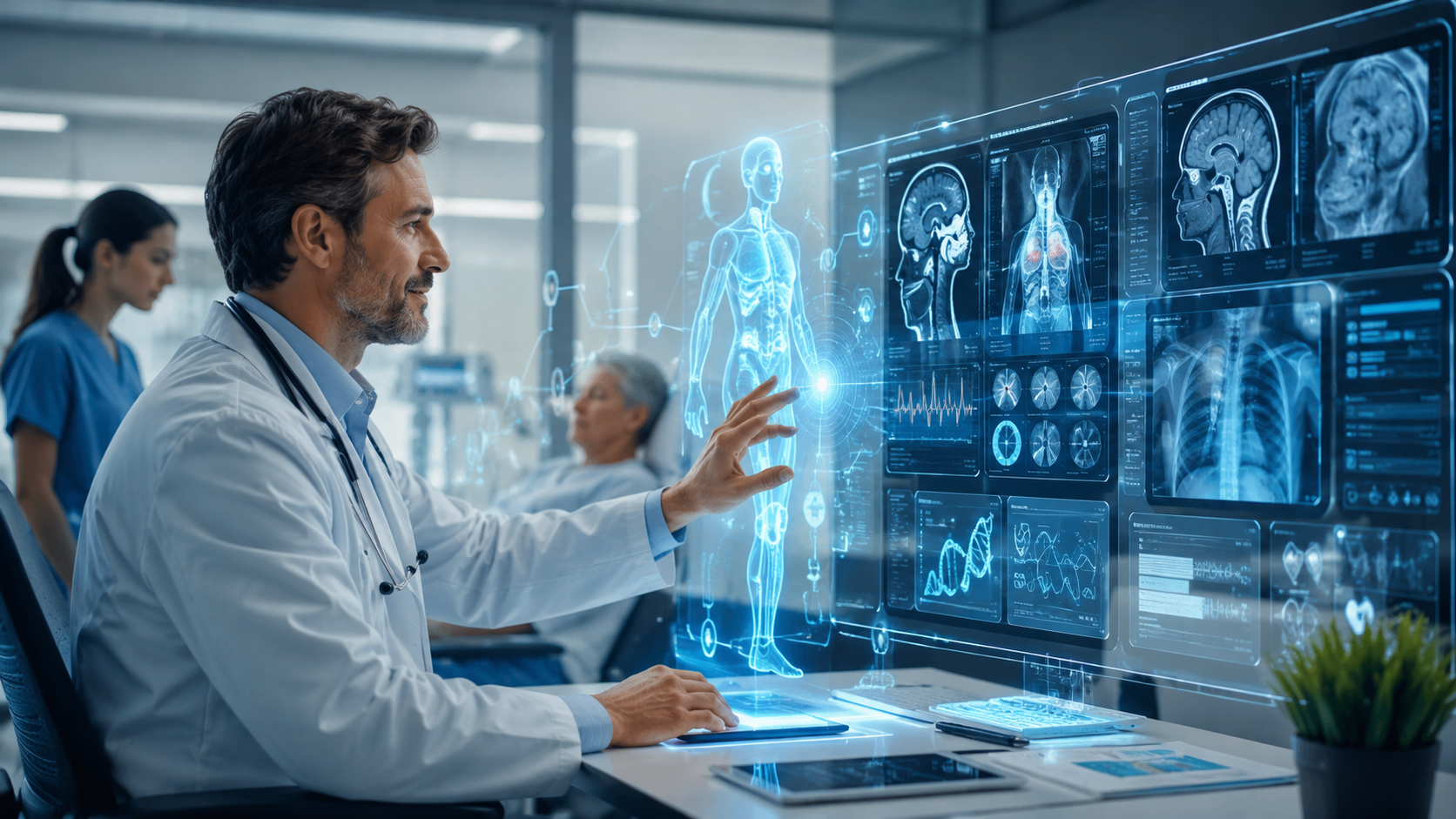
Healthcare is changing faster than ever, and Artificial Intelligence (AI) is playing a major role in that transformation. Hospitals, clinics, pharmaceutical companies, and healthcare professionals are using AI to improve patient care, reduce errors, and make medical services more efficient.
From helping doctors diagnose diseases to assisting researchers in developing new medicines, AI is becoming an important part of modern healthcare. As technology continues to advance, AI is helping healthcare providers deliver better treatment and improve patient outcomes.
Understanding AI in Healthcare
Artificial Intelligence in healthcare refers to the use of smart computer systems that can analyze medical data, identify patterns, and support healthcare professionals in making better decisions.
These AI systems can process large amounts of information in a short time. This helps doctors and medical staff save time, improve accuracy, and provide faster treatment to patients.
Instead of replacing healthcare professionals, AI works as a powerful assistant that helps them make informed decisions.
What is Multimodal AI?
Multimodal AI is a more advanced type of artificial intelligence that can understand and combine different types of information at the same time.
For example, it can analyze:
- Medical images such as X-rays and MRI scans
- Patient medical records
- Laboratory test results
- Doctor’s notes
- Genetic information
- Data from wearable devices
By bringing all this information together, multimodal AI can provide a more complete picture of a patient’s health. This helps doctors make more accurate diagnoses and create better treatment plans.
How AI Helps Detect Diseases Earlier
One of the biggest advantages of AI in healthcare is its ability to detect diseases at an early stage.
AI can analyze medical data and identify warning signs that might be difficult for humans to notice. Early detection allows doctors to start treatment sooner, which often improves recovery rates and reduces complications.
AI is already being used to help detect conditions such as cancer, heart disease, diabetes-related eye problems, and neurological disorders.
Improving Medical Imaging and Diagnosis
Medical imaging is an area where AI is making a significant impact.
Doctors rely on imaging tests such as X-rays, CT scans, and MRI scans to diagnose various health conditions. AI can quickly analyze these images and highlight areas that may require attention.
This helps healthcare professionals:
- Detect diseases faster
- Improve diagnostic accuracy
- Reduce human errors
- Save valuable time
As a result, patients can receive quicker diagnoses and begin treatment earlier.
Creating Personalized Treatment Plans
Every patient is different, and a treatment that works for one person may not work for another.
AI helps healthcare providers create personalized treatment plans by analyzing a patient’s medical history, lifestyle, genetics, and previous treatment responses.
This approach allows doctors to choose treatments that are more suitable for each individual, leading to better results and improved patient satisfaction.
Accelerating Drug Discovery
Developing new medicines can take many years and require significant investment.
AI is helping researchers speed up this process by analyzing large amounts of scientific and medical data. It can identify potential drug candidates, predict how they may work, and reduce the time needed for research.
This technology is helping pharmaceutical companies bring new treatments to patients faster than ever before.
Supporting Patients Through Virtual Health Assistants
AI-powered virtual assistants and healthcare chatbots are becoming increasingly popular.
These tools can help patients by:
- Scheduling appointments
- Sending medication reminders
- Answering common health questions
- Providing basic healthcare guidance
Virtual assistants improve patient engagement and make healthcare services more accessible, especially for people who need quick support.
Using Predictive Analytics to Prevent Health Problems
AI is not only helping doctors treat illnesses but also helping them predict future health risks.
By studying patient data and medical trends, AI can identify individuals who may be at higher risk of developing certain conditions.
This allows healthcare providers to take preventive action before a problem becomes serious, leading to better long-term health outcomes.
Benefits of AI in Healthcare
The growing use of AI offers many advantages for both patients and healthcare organizations.
Better Accuracy
AI can analyze large amounts of data and identify patterns that support more accurate diagnoses and treatment decisions.
Faster Healthcare Services
Medical professionals can access important insights more quickly, helping patients receive faster care.
Lower Healthcare Costs
Automation helps reduce administrative work and improves overall efficiency, which can lower operational costs.
Improved Patient Experience
Patients benefit from personalized care, better communication, and more effective treatment plans.
Increased Efficiency
Hospitals and healthcare facilities can streamline their operations and focus more on patient care.
Challenges of AI in Healthcare
While AI offers many benefits, there are still challenges that need to be addressed.
Data Privacy and Security
Healthcare data contains sensitive information, making privacy and security a top priority.
Regulatory Requirements
Healthcare organizations must follow strict regulations when implementing AI technologies.
Data Quality Issues
AI systems depend on high-quality data. Inaccurate or incomplete information can affect performance and results.
Technology Integration
Introducing AI into existing healthcare systems can require significant investment, training, and infrastructure upgrades.
The Future of AI in Healthcare
The future of healthcare will be increasingly connected to artificial intelligence.
Advanced AI systems will continue to improve disease detection, treatment planning, medical research, and patient monitoring. Emerging technologies such as AI-powered robotic surgery, precision medicine, and real-time health monitoring are expected to become more common in the coming years.
As healthcare organizations continue to adopt AI solutions, patients can expect faster diagnoses, more personalized treatments, and better overall healthcare experiences.
Final Thoughts
Artificial Intelligence is transforming healthcare by helping medical professionals deliver faster, smarter, and more effective care. From early disease detection and medical imaging to personalized treatments and drug discovery, AI is improving many aspects of modern medicine.
Although challenges such as data privacy and system integration remain, the benefits of AI in healthcare continue to drive innovation across the industry. As technology evolves, AI will play an even greater role in creating a healthier and more efficient future for patients around the world.
