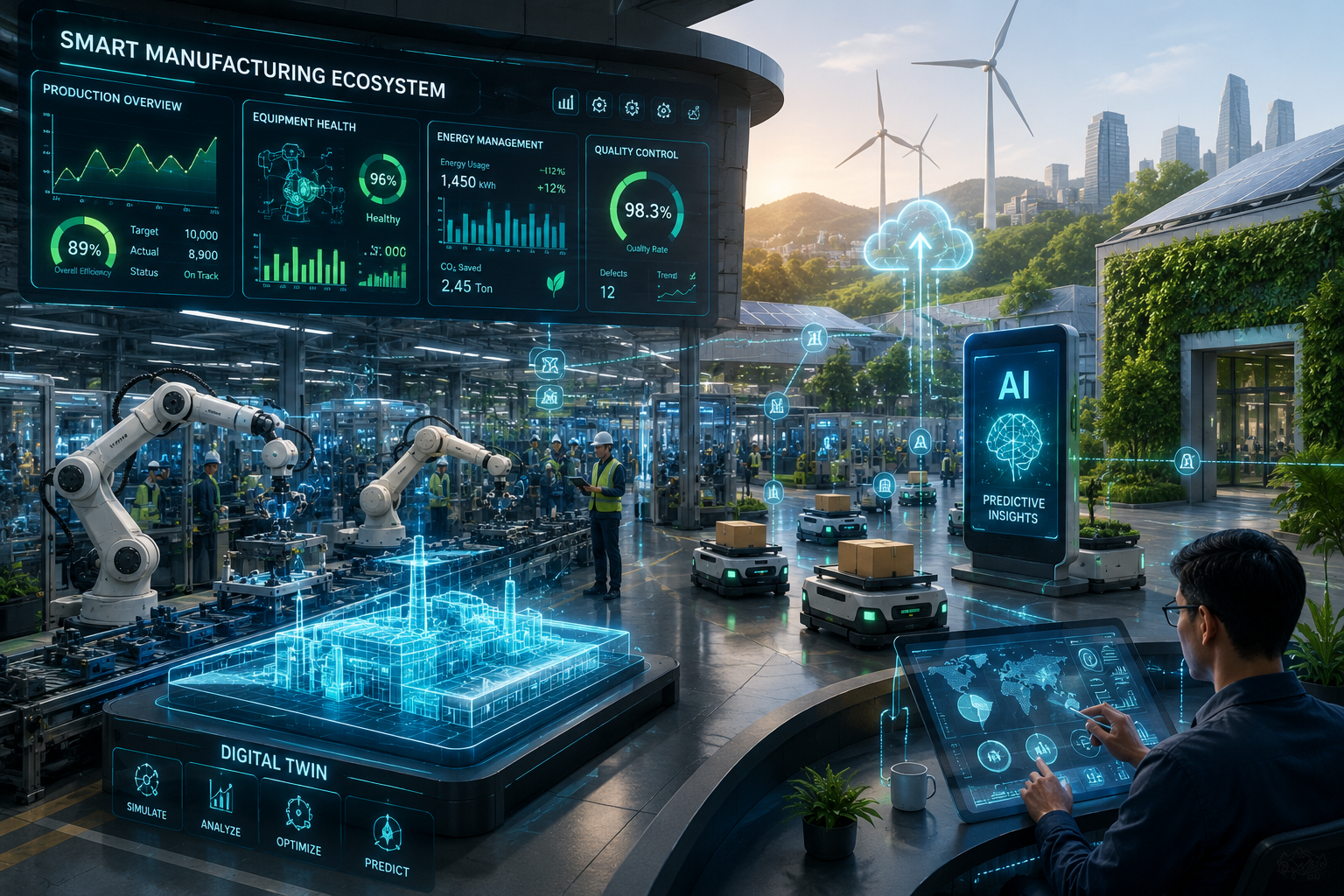
Manufacturing is changing faster than ever before. Factories are becoming smarter by using technologies like Artificial Intelligence (AI), Industrial Internet of Things (IIoT), robotics, cloud computing, and real-time data analytics. These technologies help businesses produce better products, reduce costs, improve quality, and make faster decisions.
In 2026, smart manufacturing is no longer just an idea for the future. It is becoming the new standard for industries around the world. Companies of all sizes are investing in digital technologies to improve productivity, increase efficiency, and stay competitive.
In this blog, we’ll explore the biggest smart manufacturing trends shaping the industry in 2026 and how they are helping businesses build the factories of tomorrow.
What Is Smart Manufacturing?
Smart manufacturing is the use of advanced digital technologies to improve the manufacturing process. Instead of relying only on machines and manual work, smart factories use connected devices, software, sensors, and data to make production faster, safer, and more efficient.
These systems can monitor machines, detect problems early, automate repetitive tasks, and provide real-time information that helps businesses make better decisions.
The goal of smart manufacturing is to improve productivity while reducing waste, downtime, and operating costs.
Artificial Intelligence Is Making Factories Smarter
Artificial Intelligence is becoming one of the most important technologies in modern manufacturing. AI can analyze huge amounts of production data, identify patterns, and make recommendations much faster than humans.
Manufacturers use AI to improve quality control, optimize production schedules, predict machine failures, and automate inspections. AI-powered systems also help reduce human error and improve overall efficiency.
As AI continues to evolve, factories will become even more intelligent and capable of making faster decisions.
Industrial IoT Is Connecting Every Machine
The Industrial Internet of Things (IIoT) allows machines, sensors, and equipment to communicate with each other through the internet.
Connected machines continuously collect valuable data such as temperature, vibration, energy usage, and machine performance. This information helps businesses monitor production in real time and quickly identify problems before they become serious.
IIoT also improves visibility across the entire factory, making operations more efficient and easier to manage.
Digital Twins Are Improving Decision Making
Digital twin technology creates a virtual copy of a physical machine, production line, or even an entire factory.
This digital model allows manufacturers to test new ideas, monitor equipment performance, and identify possible issues without interrupting actual production.
By using digital twins, businesses can improve product design, reduce maintenance costs, and make better operational decisions.
Collaborative Robots Are Working Alongside Humans
Collaborative robots, also known as cobots, are becoming increasingly common in modern factories.
Unlike traditional industrial robots, cobots are designed to work safely with people in the same workspace. They assist workers with repetitive tasks such as assembly, packaging, quality inspection, and material handling.
This improves productivity while allowing employees to focus on more skilled and creative work.
Predictive Maintenance Is Reducing Downtime
Unexpected machine failures can stop production and increase repair costs.
Predictive maintenance uses AI, sensors, and machine data to detect early signs of equipment problems before a breakdown occurs.
Instead of repairing machines only after they fail, manufacturers can schedule maintenance at the right time. This reduces downtime, extends equipment life, and lowers maintenance expenses.
Edge Computing Is Delivering Faster Results
Factories generate a huge amount of data every second. Sending all this information to cloud servers can sometimes create delays.
Edge computing solves this problem by processing data closer to the machines where it is generated.
This allows manufacturers to make faster decisions, improve automation, reduce network delays, and respond immediately to production issues.
Sustainable Manufacturing Is Becoming a Priority
More companies are focusing on reducing their environmental impact while improving efficiency.
Smart manufacturing technologies help businesses reduce energy consumption, minimize waste, optimize raw material usage, and lower carbon emissions.
Sustainability is no longer just about protecting the environment. It also helps companies reduce costs and meet customer expectations for environmentally responsible products.
Real-Time Data Is Improving Business Decisions
Modern factories collect information from machines, sensors, production lines, and employees throughout the day.
Real-time dashboards allow managers to monitor production performance, machine health, product quality, and inventory from one central location.
Having access to accurate, real-time information helps businesses solve problems quickly and make better strategic decisions.
Cybersecurity Is More Important Than Ever
As factories become more connected, protecting digital systems has become a top priority.
Manufacturers are investing in stronger cybersecurity solutions to protect production systems, sensitive business data, and connected devices from cyber threats.
A secure manufacturing environment helps prevent costly disruptions and keeps operations running smoothly.
Industry 5.0 Is Putting People First
While Industry 4.0 focused mainly on automation, Industry 5.0 emphasizes collaboration between humans and intelligent machines.
Instead of replacing workers, modern technologies are designed to support them. AI, robotics, and automation handle repetitive tasks, while people focus on creativity, innovation, and complex problem-solving.
This human-centered approach creates a safer and more productive workplace.
Benefits of Smart Manufacturing
Businesses that adopt smart manufacturing technologies enjoy many advantages.
Some of the biggest benefits include:
- Higher productivity
- Better product quality
- Reduced production costs
- Less machine downtime
- Faster decision-making
- Improved worker safety
- Lower energy consumption
- Increased customer satisfaction
- Better supply chain visibility
- Greater business flexibility
These benefits help manufacturers stay competitive in today’s fast-changing market.
Challenges Businesses Should Consider
Although smart manufacturing offers many advantages, implementing these technologies also comes with challenges.
Some common challenges include:
- High initial investment
- Employee training requirements
- Integration with existing systems
- Data security concerns
- Managing large amounts of production data
With proper planning and the right technology partners, these challenges can be successfully managed.
The Future of Smart Manufacturing
The future of manufacturing will become even more connected, intelligent, and automated.
Technologies like AI, digital twins, Industrial IoT, advanced robotics, edge computing, and 5G will continue to improve factory operations.
Manufacturers that invest in these innovations today will be better prepared to compete in the future and respond quickly to changing customer demands.
Final Thoughts
Smart manufacturing is transforming the way products are designed, produced, and delivered. In 2026, technologies such as Artificial Intelligence, Industrial IoT, digital twins, collaborative robots, predictive maintenance, and edge computing are helping businesses become more efficient, productive, and sustainable.
As industries continue to embrace digital transformation, smart manufacturing will play an even bigger role in shaping the future of production. Companies that adopt these technologies early will be well-positioned for long-term growth and success.
