Introduction
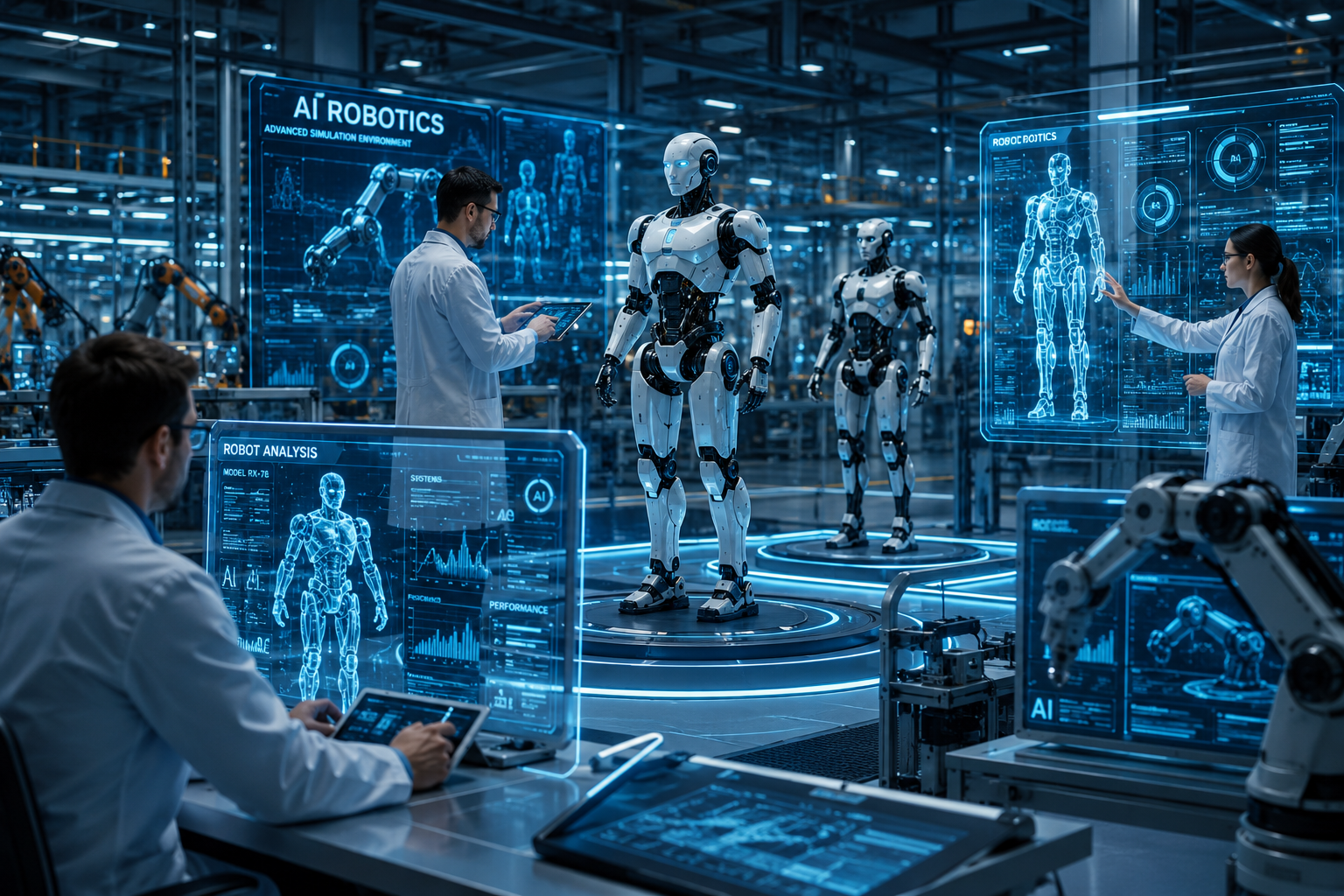
Robot simulation is helping companies build smarter robots faster. Instead of testing robots directly in the real world, engineers first test them in a virtual environment. This saves time, reduces costs, and improves robot performance.
What is Robot Simulation?
Robot simulation is a digital testing process where a virtual robot is created using software. Engineers use this virtual environment to test robot movement, sensors, AI behavior, and performance before building the real robot.
It works like a practice environment for robots.
Faster Robot Development
Simulation helps developers test robot designs quickly. Engineers can make changes instantly without rebuilding physical machines again and again.
This speeds up:
- Robot testing
- Product development
- Innovation
Companies can launch robotic solutions much faster.
Reduces Development Cost
Building physical robot prototypes is expensive. Simulation reduces costs because most testing happens digitally.
This helps companies save money on:
- Hardware
- Repairs
- Testing
- Manufacturing errors
Safe Testing Environment
Some robots work in dangerous places like factories, warehouses, and construction sites.
Simulation allows engineers to safely test robots without risking human safety or damaging machines.
For example, self-driving cars are first tested in virtual traffic environments.
AI Training for Robots
Modern robots use AI to make decisions. Simulation helps train AI robots using thousands of virtual scenarios.
Robots can learn:
- Navigation
- Object detection
- Obstacle avoidance
- Human interaction
This helps robots become smarter much faster.
Digital Twins in Robotics
A Digital Twin is a virtual copy of a real robot. It helps companies monitor robot performance in real time.
Digital twins help:
- Predict machine problems
- Improve efficiency
- Reduce downtime
This technology is widely used in smart factories.
Industries Using Robot Simulation
Many industries use robot simulation today, including:
- Manufacturing
- Healthcare
- Warehousing
- Logistics
- Autonomous vehicles
Simulation improves productivity, safety, and automation in these industries.
Future of Robot Simulation
The future of robot simulation looks very advanced. AI-powered simulations, cloud robotics, and humanoid robot testing are becoming more popular.
As robotics technology grows, simulation will become even more important in developing intelligent robots.
Conclusion
Robot simulation is changing the robotics industry by making robot development faster, safer, and more affordable.
It helps companies reduce costs, improve AI training, and build better robots efficiently. In the future, simulation will continue playing a major role in robotics and automation.
