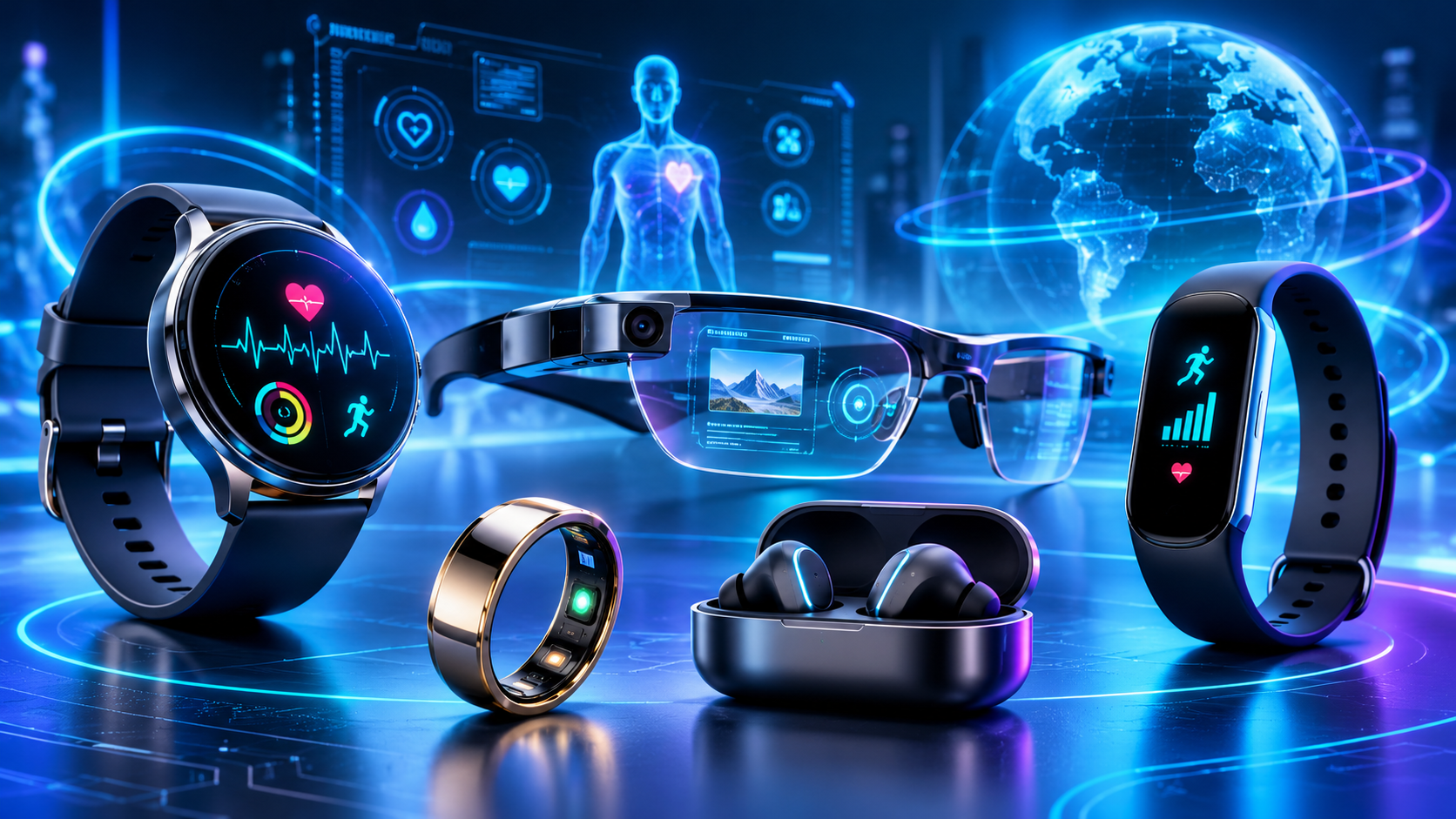
Technology is changing very quickly, and wearable devices are becoming an important part of our daily lives. Today, many people use smartwatches, fitness bands, wireless earbuds, and smart glasses to make their everyday activities easier.
Wearable technology is not just about checking the time or counting steps anymore. Modern devices can track physical activity, monitor sleep, display notifications, and help people stay connected.
As we move towards 2027, wearable technology is expected to become smarter and more useful. New technologies like Artificial Intelligence (AI), advanced sensors, and smart connectivity will bring exciting changes to wearable devices.
Let’s explore the most important wearable technology trends to watch in 2027.
1. AI-Powered Wearable Devices
Artificial Intelligence (AI) is becoming an important part of modern technology. It is also changing how wearable devices work.
Earlier, smartwatches and fitness trackers mainly collected basic information, such as steps, heart rate, and sleep time. Now, AI can help analyze this information and provide useful suggestions.
For example, an AI-powered smartwatch may study your daily activities and sleep patterns to suggest when you should exercise or take a rest. AI-powered earbuds can also help with voice commands and language translation.
In 2027, AI will make wearable devices more helpful by providing smarter features and personalized experiences.
2. Smart Glasses Will Become More Popular
Smart glasses are becoming one of the most interesting wearable technology products. They look similar to normal glasses but include useful electronic features.
Depending on the model, smart glasses can have cameras, microphones, speakers, and AI assistants. Users can take pictures, make calls, listen to audio, and access information without always using their smartphones.
For example, imagine walking in a new city and receiving navigation instructions through your smart glasses. Some devices may also help translate different languages.
In 2027, smart glasses could become more popular because of better designs, improved battery life, and smarter AI features.
3. Smart Rings for Health Tracking
Smart rings are small electronic devices that people wear on their fingers. They may look like normal rings, but they contain small sensors that collect health and activity information.
Depending on the product, smart rings can track sleep patterns, heart rate, daily activity, and body temperature changes.
One of the biggest advantages of smart rings is their small size. Unlike smartwatches, they do not need a large screen, making them comfortable for people who prefer simple wearable devices.
In the future, smart rings may offer better battery performance and more advanced health tracking features.
4. Better Health Monitoring Through Wearables
Health monitoring is one of the most useful features of wearable technology. Smartwatches and fitness trackers already help people understand their daily activity and some important health measurements.
For example, users can check their heart rate, monitor sleep, count steps, and track exercise activities.
In 2027, wearable devices may become better at analyzing health information and showing useful patterns. This can help people understand their daily habits and make better lifestyle decisions.
However, wearable devices cannot replace doctors or professional medical tests. Their measurements should be used as general health information.
5. Augmented Reality (AR) Wearable Devices
Augmented Reality, also known as AR, is a technology that adds digital information to the real world.
AR-enabled smart glasses can display useful information while users look at their surroundings. This may include navigation instructions, notifications, digital images, or helpful directions.
For example, a person visiting a new place could see navigation information through compatible smart glasses instead of checking their phone again and again.
AR technology may also be useful in education, shopping, gaming, and professional training.
In 2027, better displays and improved technology could make AR wearables more useful in everyday life.
6. Smart Clothing and Fitness Technology
Wearable technology is not limited to smartwatches and glasses. Smart clothing is another interesting area of development.
Smart clothing uses special sensors inside fabrics to collect information about body movement, posture, temperature, and physical activity.
For example, smart fitness shirts may help athletes understand their body movements during exercise. Smart shoes may also track walking patterns and running performance.
This technology can be useful for athletes, fitness lovers, and people who want to understand their physical activities better.
In the future, smart clothing may make fitness tracking easier by adding technology directly to everyday clothes.
7. AI-Powered Wireless Earbuds
Wireless earbuds are already popular for listening to music, watching videos, and making phone calls. However, new AI features are making them more advanced.
Some modern earbuds offer voice assistants, noise cancellation, and smart audio features. AI-powered earbuds may also support real-time language translation.
For example, imagine talking to someone who speaks another language. Compatible earbuds could help translate the conversation and make communication easier.
In 2027, wireless earbuds may become more useful for students, professionals, travelers, and everyday users.
8. Screenless Wearable Devices
Most smartwatches and smartphones use screens to display information. However, some wearable devices work without a traditional display.
These are called screenless wearable devices. Smart rings and some fitness trackers are examples of this technology.
Instead of showing information on a screen, these devices collect data and send it to a mobile application. Users can check their activity, sleep information, and other details through their smartphones.
Screenless devices are usually designed to be simple, lightweight, and easy to wear.
In the future, more people may choose these devices because they offer useful features without requiring constant screen interaction.
9. Longer Battery Life in Wearable Devices
Battery life is one of the biggest concerns when buying a wearable device. Nobody wants to charge their smartwatch or fitness tracker several times a day.
As wearable technology improves, manufacturers are working on better batteries, low-power processors, and more efficient software.
These improvements can help devices use less energy while performing daily tasks.
In 2027, better battery technology may allow wearable devices to run longer between charges. This will make them more convenient for people who want to track their activities throughout the day and night.
10. Connected Wearable Devices
In the future, wearable devices will not work only as separate products. They may become part of a connected technology system.
For example, a person could use a smartwatch to track daily activity, smart glasses to view information, and wireless earbuds to receive voice instructions.
All these devices could work together through a smartphone or connected applications.
This will help users access information more easily and enjoy a smoother technology experience.
In 2027, better connectivity between different wearable devices could become an important trend.
Benefits of Wearable Technology in 2027
Wearable technology offers many useful benefits for everyday life. It helps people stay connected, monitor their activities, and access information more conveniently.
Some important benefits include:
1. Easy Health Tracking: Users can monitor their daily steps, sleep, heart rate, and physical activity.
2. Better Convenience: Smart glasses and wireless earbuds allow people to access information without always holding their smartphones.
3. Personalized Suggestions: AI-powered devices can analyze user information and provide useful recommendations.
4. Improved Fitness: Fitness trackers and smartwatches help users understand their exercise activities and track their progress.
5. Hands-Free Communication: Smart glasses and earbuds make it easier to receive calls and use voice assistants.
6. Less Screen Time: Some screenless wearable devices allow users to access useful features without constantly looking at a display.
Challenges of Wearable Technology
Although wearable technology is becoming more advanced, it still has some challenges.
Privacy and Security: Wearable devices collect personal information, so companies must protect user data from unauthorized access.
Battery Problems: Advanced features and continuous tracking can use more battery power.
High Prices: Some smart rings, smart glasses, and advanced smartwatches are expensive, making them difficult for everyone to afford.
Accuracy: Sensors may sometimes provide incorrect measurements, so users should not depend on wearable devices for medical diagnosis.
Device Compatibility: Different brands may use different applications and software, making it difficult to connect all devices together.
Manufacturers will need to improve these areas to make wearable technology more reliable and accessible.
What Can We Expect From Wearable Technology After 2027?
The future of wearable technology looks exciting. In the coming years, devices may become smaller, faster, and more intelligent.
AI-powered personal assistants, advanced health sensors, smart clothing, and AR glasses could become more common.
Wearable devices may also provide more personalized information based on people’s daily activities and preferences.
However, these developments will depend on better technology, affordable prices, improved battery life, and strong data protection.
Conclusion
Wearable technology is changing the way people use technology in their daily lives. From smartwatches and fitness trackers to AI-powered smart glasses and smart rings, these devices are becoming more useful and intelligent.
In 2027, AI, health monitoring, smart clothing, augmented reality, and connected devices could play an important role in the future of wearable technology.
As technology continues to improve, wearable devices may become an important part of communication, fitness, productivity, and everyday activities.
The future is not just about wearing smart devices. It is about making technology more helpful, comfortable, and connected to our everyday lives.
