Introduction
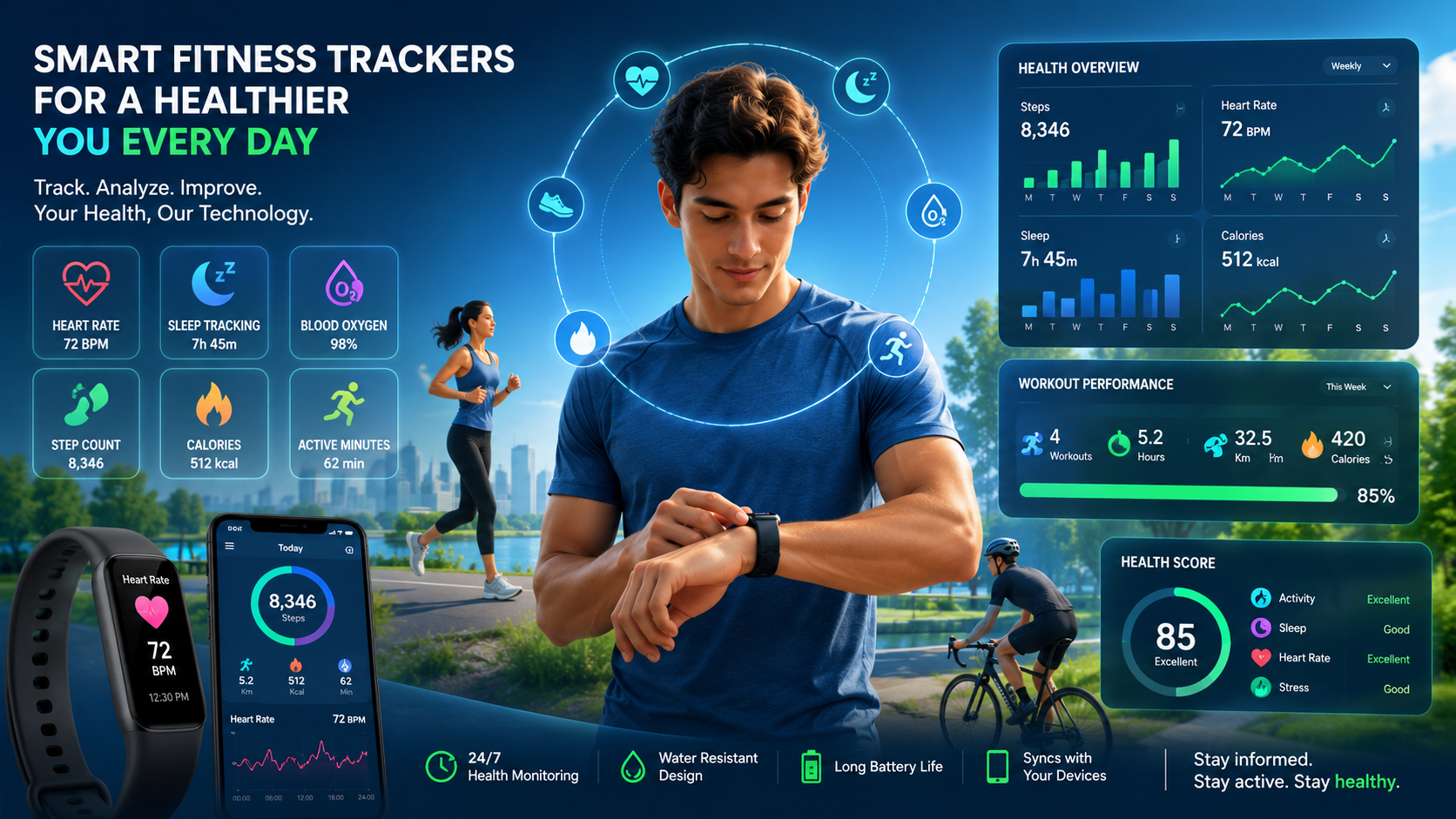
Fitness trackers have become much more than simple step counters. Today, these smart wearable devices help people monitor their overall health, track daily activities, improve fitness goals, and gain valuable insights into their well-being.
Whether you’re trying to stay active, improve your sleep, monitor your heart health, or manage your fitness routine, a good fitness tracker can provide useful data to help you make better lifestyle choices.
With so many options available, choosing the right device can feel overwhelming. In this guide, we’ll explore the best fitness trackers for accurate health monitoring and the features you should consider before making a purchase.
Why Fitness Trackers Have Become So Popular
People are becoming more health-conscious than ever before. Fitness trackers make it easier to understand how your body performs throughout the day.
These devices continuously collect health data and display it in a simple, easy-to-understand format. Instead of guessing whether you’re getting enough exercise or quality sleep, fitness trackers provide real-time information that helps you make informed decisions.
Many modern fitness trackers now offer advanced health monitoring features that were once only available through medical equipment.
What Makes a Fitness Tracker Accurate?
Accuracy is one of the most important factors when choosing a fitness tracker.
A quality fitness tracker should provide reliable measurements for daily activities and health metrics. The best devices use advanced sensors and AI-powered algorithms to improve tracking precision.
When evaluating accuracy, it’s important to consider features such as heart rate monitoring, sleep tracking, step counting, blood oxygen measurement, stress tracking, and workout detection.
The more accurate the data, the more useful the insights become.
Heart Rate Monitoring
One of the most valuable features in modern fitness trackers is continuous heart rate monitoring.
By tracking your heart rate throughout the day, fitness trackers can help you understand how your body responds to exercise, stress, and rest. Accurate heart rate data can also help users optimize workouts and maintain healthier habits.
Many premium fitness trackers now provide real-time heart rate alerts and detailed cardiovascular insights directly through mobile apps.
Sleep Tracking for Better Recovery
Sleep plays a major role in overall health, energy levels, and physical recovery.
Modern fitness trackers analyze sleep patterns by measuring sleep duration, sleep stages, movement, and interruptions during the night. These insights help users identify habits that may be affecting sleep quality.
Better sleep tracking can lead to improved recovery, increased productivity, and better long-term health outcomes.
Blood Oxygen Monitoring
Many advanced fitness trackers now include blood oxygen (SpO2) monitoring.
This feature measures how effectively oxygen is being delivered throughout your body. While it should not replace professional medical advice, it can provide useful information about your overall wellness and recovery.
Athletes, travelers, and health-conscious individuals often use this feature to better understand their body’s performance.
Activity and Step Tracking
Step tracking remains one of the most popular fitness tracker features.
Accurate activity monitoring helps users stay motivated by tracking daily movement, calories burned, distance traveled, and active minutes. Many devices also send reminders to move when they detect long periods of inactivity.
These small reminders can encourage healthier habits and reduce the risks associated with a sedentary lifestyle.
Stress Monitoring and Wellness Insights
Modern life can be stressful, and many fitness trackers now include tools designed to help users manage stress levels.
Using heart rate variability and other sensor data, fitness trackers can estimate stress levels and recommend breathing exercises or relaxation activities.
These wellness features provide users with a more complete picture of their overall health beyond physical fitness alone.
GPS Tracking for Outdoor Activities
For runners, cyclists, hikers, and outdoor enthusiasts, GPS tracking is an important feature.
Built-in GPS allows users to accurately track distance, pace, routes, and workout performance without carrying a smartphone. This provides more precise workout data and helps users measure progress over time.
Accurate GPS tracking is especially valuable for people who regularly participate in outdoor fitness activities.
Battery Life Matters
A fitness tracker is only useful if it’s available when you need it.
Long battery life ensures continuous health monitoring without frequent charging interruptions. Some modern fitness trackers can operate for several days or even weeks on a single charge.
For users who want uninterrupted sleep tracking and all-day monitoring, battery performance is an important consideration.
Smart Features Beyond Fitness
Today’s fitness trackers offer much more than health monitoring.
Many devices include smartphone notifications, music controls, contactless payments, weather updates, calendar reminders, and voice assistant integration.
These additional features make fitness trackers convenient companions for both health management and everyday activities.
Choosing the Right Fitness Tracker
The best fitness tracker depends on your personal goals and lifestyle.
If your primary focus is health monitoring, look for devices with advanced heart rate tracking, sleep analysis, and blood oxygen monitoring. If you’re an athlete, GPS accuracy and workout tracking may be more important.
It’s also worth considering battery life, comfort, app quality, and compatibility with your smartphone before making a final decision.
Choosing a fitness tracker that aligns with your needs will help you get the most value from your investment.
Popular Fitness Trackers to Consider
Several brands continue to lead the fitness tracker market because of their accuracy and reliability.
Popular options include devices from Fitbit, Garmin, Apple, Samsung, and Amazfit. Each offers unique strengths, whether it’s health tracking, fitness analytics, battery life, or smart features.
Comparing features and understanding your priorities can help you find the ideal device for your health and fitness journey.
Final Thoughts
Fitness trackers have evolved into powerful health monitoring tools that help users better understand their bodies and make smarter lifestyle decisions.
From heart rate monitoring and sleep analysis to stress management and GPS tracking, today’s fitness trackers provide valuable insights that can support healthier habits and long-term wellness.
The best fitness tracker is not necessarily the most expensive one. It’s the device that provides accurate data, fits comfortably into your daily routine, and helps you stay motivated to achieve your health and fitness goals.
As wearable technology continues to improve, fitness trackers will play an even bigger role in helping people take control of their health and live more active lives.
