Introduction
Artificial Intelligence is growing very fast, and many companies and developers are using AI models to build smart applications. When choosing an AI model, there are usually two main options: open-source AI models and proprietary AI models.
Both types help power tools like chatbots, content generators, recommendation systems, and data analysis platforms. However, they work in different ways and offer different levels of control, cost, and flexibility. Understanding the difference between them helps businesses and developers choose the right AI solution for their projects.
What Are Open-Source AI Models
Open-source AI models are AI systems where the source code and sometimes the model itself are publicly available. This means developers can download the model, study how it works, and modify it to fit their needs.
Because the technology is open, developers from around the world can contribute improvements and new features. This makes open-source AI a powerful tool for innovation and experimentation.
Companies can also host these models on their own servers, which gives them full control over how the AI works and how their data is handled.
What Are Proprietary AI Models
Proprietary AI models are developed and owned by private companies. The internal code and training process of these models are usually not publicly available.
Instead of downloading the model, developers typically access it through APIs or cloud platforms provided by the company. This makes it easier to use because the company manages the infrastructure and updates.
However, users cannot change the internal structure of the model. They can only use the features provided by the company that owns the technology.
Key Differences Between Open-Source and Proprietary AI Models
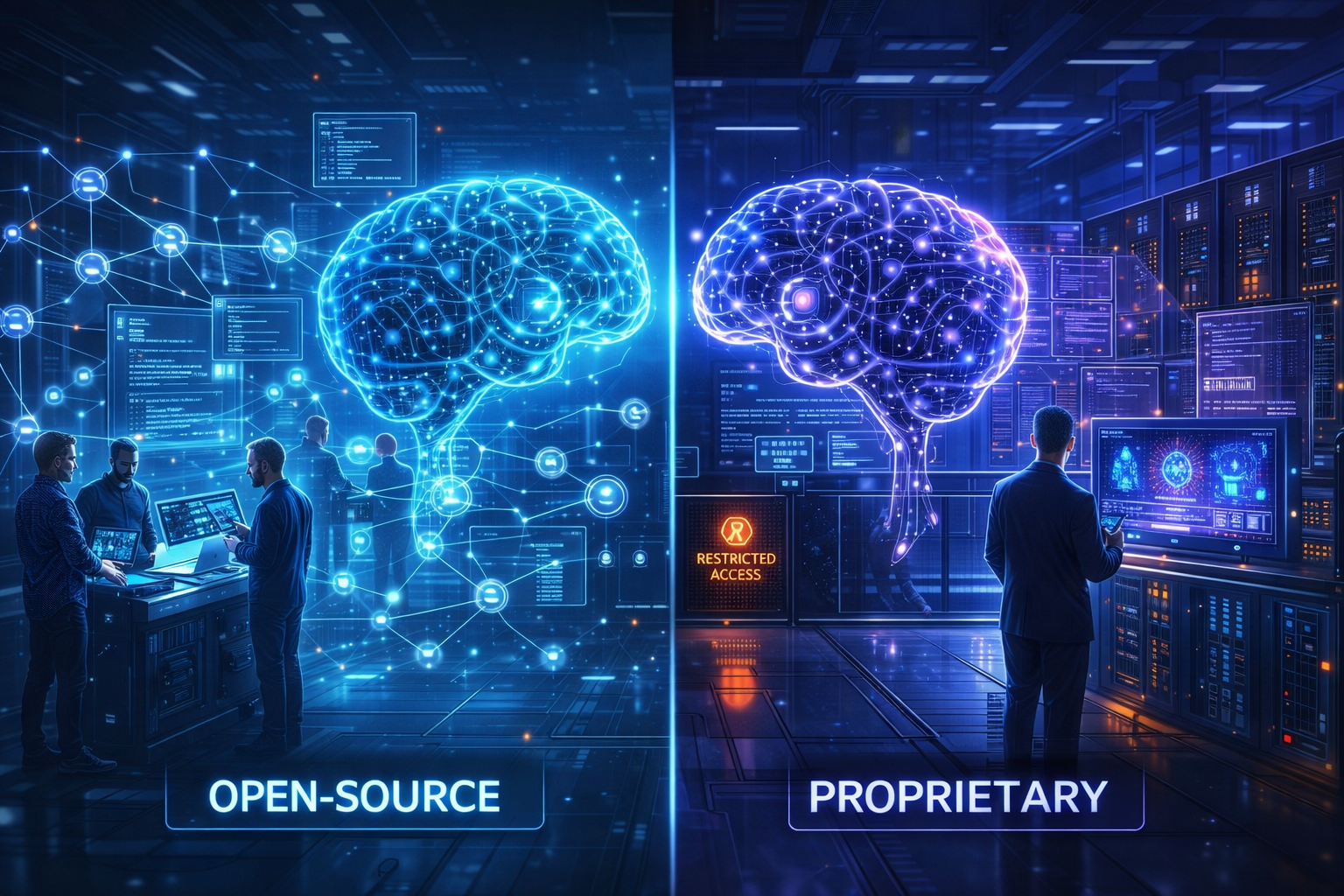
The biggest difference between these two types of AI models is control and accessibility. Open-source models allow developers to fully customize the system, while proprietary models offer limited control but provide ready-to-use services.
Another important difference is cost. Open-source models are often free to use, but running them may require powerful hardware and technical knowledge. Proprietary models usually charge based on usage, subscriptions, or API requests.
Transparency is also a key factor. Open-source AI allows developers to see how the model works, while proprietary models keep the internal technology private.
Benefits of Open-Source AI Models
Open-source AI models offer a high level of flexibility. Developers can modify them, fine-tune them with custom data, and adapt them for specific industries or projects.
They also encourage collaboration. Researchers, developers, and organizations around the world can work together to improve the technology.
Another major benefit is data privacy. Since companies can run the models on their own infrastructure, they have full control over their data and security.
Benefits of Proprietary AI Models
Proprietary AI models are usually very powerful because they are trained with large amounts of data and advanced computing resources.
They are also easier to use for many businesses. Companies provide simple APIs, documentation, and cloud platforms, which allow developers to integrate AI features quickly.
Another advantage is ongoing support. The company that owns the AI model continuously improves the technology, fixes issues, and provides updates to users.
Challenges of Both Approaches
Open-source AI models can sometimes be difficult to manage. Organizations may need skilled developers and strong computing systems to run them effectively.
On the other hand, proprietary AI models may create dependency on a single provider. Businesses might face higher costs over time or have limited customization options.
The Future of AI Models
The future of AI will likely include both open-source and proprietary models. Open-source AI will continue to encourage innovation, research, and customization. Proprietary AI will focus on providing powerful, scalable, and easy-to-use solutions.
Many organizations may even combine both approaches, using open-source models for customization and proprietary tools for advanced features.
Conclusion
Open-source and proprietary AI models both play an important role in the growth of artificial intelligence. Open-source models offer flexibility, transparency, and customization, while proprietary models provide convenience, performance, and strong support.
By understanding the differences between these two approaches, businesses and developers can choose the AI solution that best fits their goals, resources, and technical needs.
As AI technology continues to evolve, both types of models will help shape the future of innovation and digital transformation.
