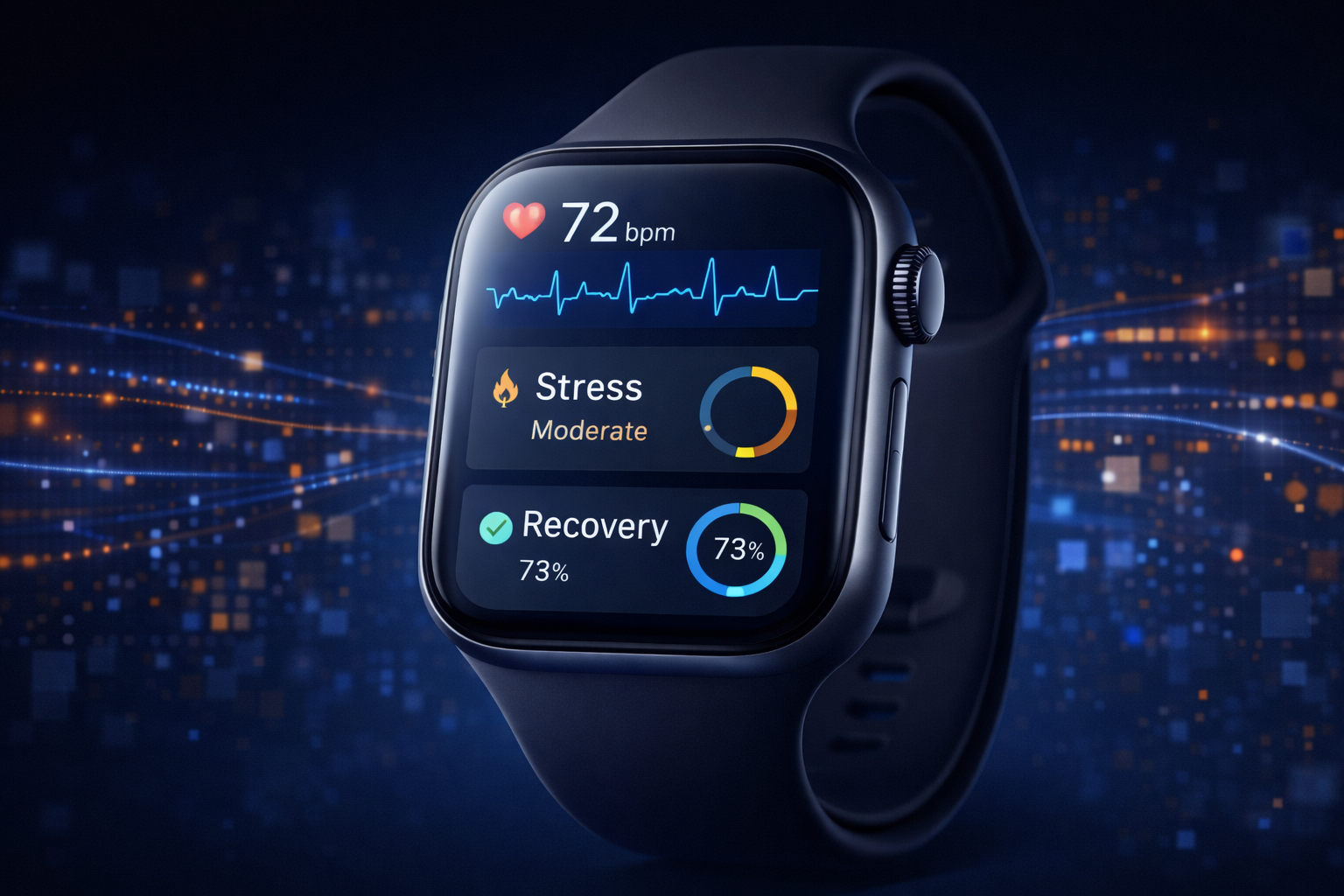
Real-time biointelligence wearables are becoming very popular in 2026. These devices are smarter than regular fitness bands. They don’t just count steps — they understand your body and give useful health insights instantly.
Let’s understand this trend in simple language.
What Are Real-Time Biointelligence Wearables
Real-time biointelligence wearables are smart devices that monitor your body continuously and analyze the data using artificial intelligence.
They can track things like:
- Heart rate
- Sleep quality
- Stress levels
- Oxygen levels
- Body temperature
- Daily activity
But instead of just showing numbers, they explain what the data means.
How These Devices Work
These wearables use tiny sensors to collect information from your body. The data is then processed using AI technology.
The system studies your patterns and gives suggestions. For example:
If your stress level is high, it may suggest breathing exercises.
If your sleep was poor, it may recommend more rest.
If your heart rate is unusual, it may send an alert.
This makes the device feel like a personal health assistant.
Why This Technology Is Trending
People today want to prevent health problems instead of treating them later. Real-time monitoring helps detect small changes early.
Technology has also improved. Sensors are smaller, more accurate, and more powerful. AI can now analyze health data much faster.
Because of this, wearable devices are becoming smarter and more helpful.
Common Examples of Biointelligence Wearables
Smart rings that track sleep and stress throughout the day.
Advanced smartwatches that monitor heart rhythm and recovery levels.
Wearable patches that track hydration and body signals.
Fitness wearables that provide daily readiness or recovery scores.
These devices are designed to give health insights in real time.
Benefits of Real-Time Biointelligence Wearables
They help users understand their body better.
They provide early warnings about potential health issues.
They offer personalized advice instead of general tips.
Athletes can improve performance using recovery data.
Users can manage stress and sleep more effectively.
Industries Using This Technology
Healthcare providers use wearable data for remote patient monitoring.
Fitness trainers rely on these devices to track performance.
Corporate wellness programs encourage employees to use health wearables.
Insurance companies are also exploring wearable health data.
The use of biointelligence wearables is growing in many industries.
Challenges and Concerns
Data privacy is very important because these devices collect sensitive health information.
Accuracy must be high to avoid wrong health alerts.
Battery life and comfort are also important for daily use.
Proper regulations are needed for medical-level devices.
The Future of Biointelligence Wearables
In the future, wearable devices may predict illness before symptoms appear.
They may connect directly with doctors through telemedicine.
Non-invasive glucose monitoring and deeper health tracking may become common.
Wearables could become essential daily health companions.
Final Thoughts
The rise of real-time biointelligence wearables shows how technology is changing healthcare and fitness. These devices are moving beyond simple tracking and becoming intelligent health partners.
As AI and sensor technology improve, wearable devices will likely become smarter, more accurate, and more helpful in daily life.
