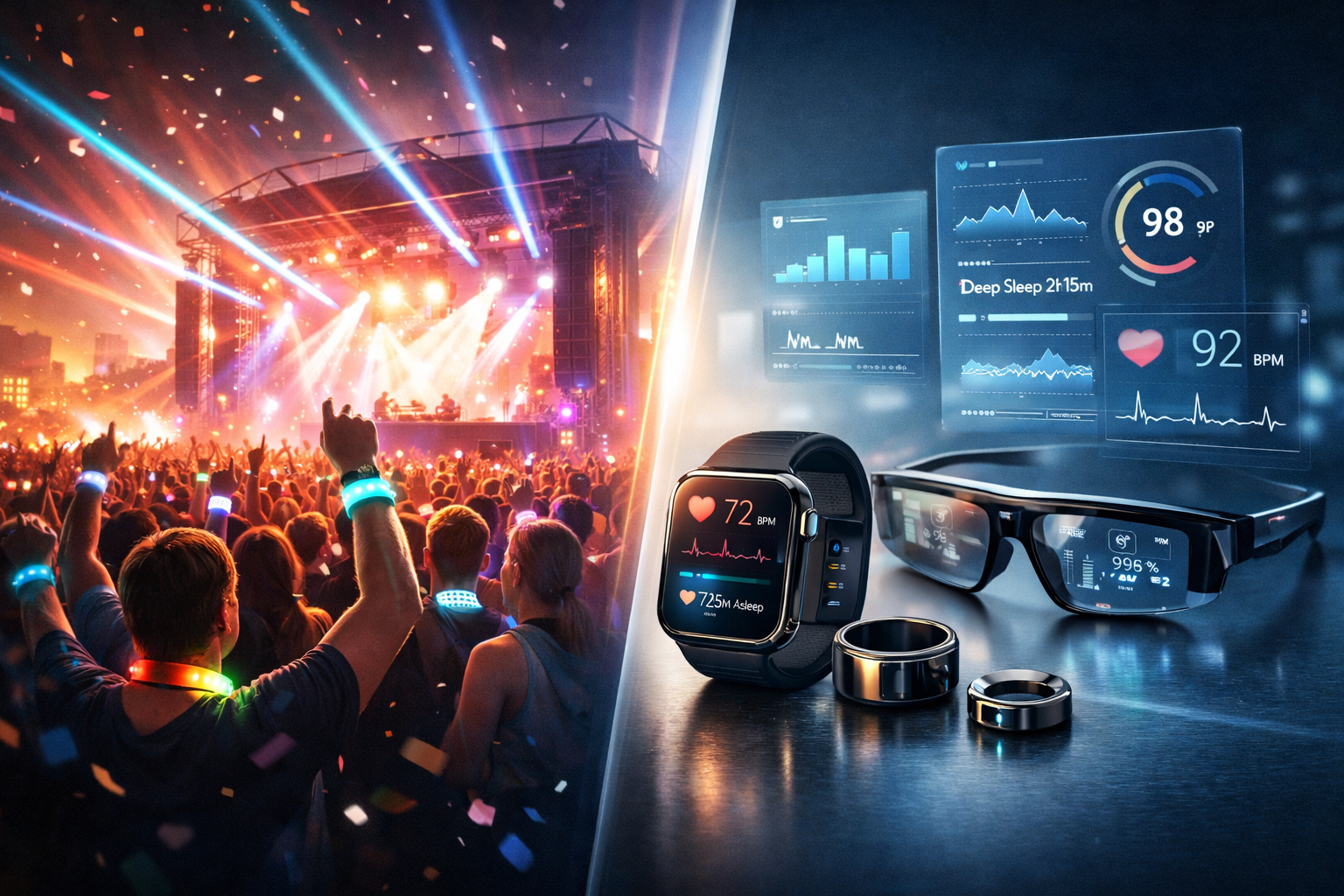
Wearable technology is no longer limited to counting steps or tracking workouts. Today, wearables are becoming a part of everyday life, helping people in entertainment, health, work, and social activities. From colorful wristbands at music festivals to smart devices that collect health data, wearables are doing much more than fitness tracking.
Let’s understand this evolution in a simple way.
What Are Wearables?
Wearables are small electronic devices that people wear on their body, such as:
- Smartwatches
- Fitness bands
- Smart rings
- Smart glasses
- Event wristbands
These devices collect data and help users stay connected, informed, and safe.
Wearables in Music Festivals and Events
One of the most exciting uses of wearables is in concerts and live events.
Smart Wristbands at Festivals
Many events now give visitors smart LED or RFID wristbands that:
- Light up with music
- Change colors during performances
- Allow cashless payments
- Help with entry and security
These wristbands turn the crowd into part of the show and create a fun, interactive experience.
Wearables for Daily Life and Convenience
Wearables are now designed for daily use, not just workouts.
Everyday Features
Modern wearables help users:
- Receive calls and messages
- Make contactless payments
- Use GPS navigation
- Control music and smart devices
- Access voice assistants
Smart rings and slim wearables are popular because they are comfortable, stylish, and easy to use.
Wearables for Health Beyond Fitness
Fitness tracking was just the beginning. Now wearables focus on overall health and wellness.
Health Monitoring Features
Wearables can track:
- Sleep quality
- Heart rate and oxygen levels
- Stress and recovery
- Early signs of health problems
This helps users understand their body better and take action before serious health issues occur.
Wearables in Work and Safety
Wearables are also used in offices, factories, and workplaces.
Professional Use Cases
- Smart badges for office access
- Wearables for worker safety
- AR glasses for training and remote help
- Hands-free communication tools
These devices improve productivity, safety, and efficiency at work.
How AI Makes Wearables Smarter
Artificial Intelligence (AI) plays a big role in modern wearables.
AI in Wearable Devices
AI helps wearables:
- Analyze user data
- Give personalized suggestions
- Detect patterns in health and activity
- Improve accuracy over time
Because of AI, wearables are becoming smart assistants, not just tracking devices.
Why Wearables Beyond Fitness Are Important
Wearables are changing how people:
- Enjoy entertainment
- Take care of health
- Stay connected
- Work safely and efficiently
They are no longer just fitness tools—they are lifestyle and experience devices.
Conclusion
From glowing wristbands at festivals to health data that helps people live better, wearables have grown far beyond fitness. As technology improves, wearables will continue to play an important role in daily life, health, and entertainment.
The future of wearables is about making life easier, safer, and more connected.
