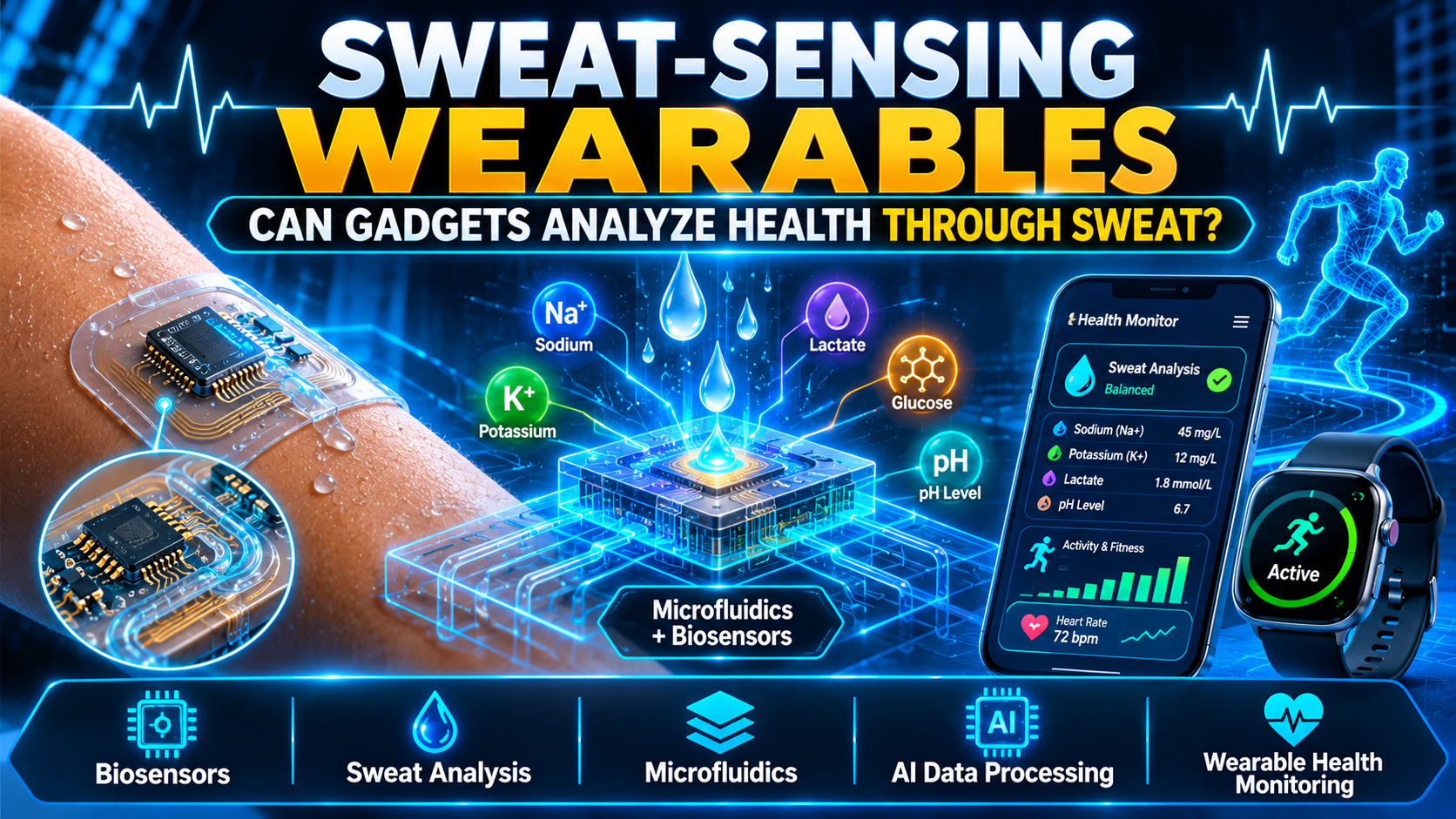
Technology is changing the way people monitor their health. Traditional health monitoring often requires medical equipment, blood tests, or visits to healthcare professionals. However, modern wearable technology is introducing new ways to collect health-related information.
One emerging innovation is sweat-sensing wearable technology. These smart devices use tiny sensors to analyze sweat and detect different substances present in it.
Unlike traditional fitness trackers that mainly measure heart rate, steps, and movement, sweat-sensing wearables aim to monitor certain chemical signals from the body. This technology could help athletes understand hydration levels, track physical performance, and support future health-monitoring applications.
But how does it work, and can sweat really provide useful information about our health? Let’s explore.
1. What Are Sweat-Sensing Wearables?
Sweat-sensing wearables are smart electronic devices designed to collect and analyze sweat from the human body.
These devices can be designed as flexible skin patches, smart wristbands, wearable stickers, or sensor-equipped clothing. They contain tiny biosensors that detect specific chemicals and substances present in sweat.
For example, sweat contains electrolytes such as sodium and potassium, along with substances such as lactate and glucose. By measuring selected biomarkers, these devices can provide information about certain body processes.
Example: Imagine an athlete wearing a small sensor patch on their arm during exercise. The device collects sweat and measures sodium levels. The information may help the athlete understand how much sodium is being lost through sweating.
2. How Does Sweat-Sensing Technology Work?
Sweat-sensing wearables combine biosensors, microfluidic technology, electronic circuits, and sometimes wireless connectivity to analyze sweat.
The process generally involves the following steps:
Step 1: Sweat Collection
The wearable device collects sweat directly from the skin using a small collection area or special microfluidic channels.
These channels guide sweat toward the sensing components.
Step 2: Chemical Detection
Tiny sensors detect specific substances present in the collected sweat.
Depending on the device, these may include sodium, potassium, lactate, glucose, or pH levels.
Step 3: Data Processing
The device converts chemical signals into electronic information. A small processing unit analyzes the sensor readings and prepares the results.
Step 4: Wireless Data Transfer
Some wearable devices can send collected information to a smartphone or computer using wireless technologies such as Bluetooth.
Step 5: Displaying Health Insights
A connected application may display sensor readings, changes over time, and other information in an easy-to-understand format.
3. What Can Sweat-Sensing Wearables Detect?
Sweat contains several substances that researchers are studying for health and fitness monitoring.
Sodium and Potassium
Sodium and potassium are important electrolytes that help maintain fluid balance and support normal muscle and nerve functions.
Sweat sensors can measure these electrolytes and may help athletes understand electrolyte loss during physical activity.
Lactate
Lactate is produced during normal energy metabolism, particularly when the body is working harder during exercise.
Monitoring sweat lactate may help researchers and athletes study exercise intensity, physical performance, and metabolic changes.
Glucose
Glucose is an important source of energy for the body. Researchers are developing wearable sensors that attempt to measure glucose in sweat.
However, sweat glucose readings do not currently replace established blood glucose monitoring methods. Their relationship with blood glucose requires further validation.
pH Levels
The pH level indicates how acidic or alkaline a substance is.
Measuring sweat pH may provide useful information about skin conditions, sweat chemistry, and changes during physical activity.
Other Biomarkers
Researchers are also investigating sweat-based sensors for detecting substances such as cortisol, certain drugs, and other biological markers.
These applications are still developing and require further testing to establish their practical value.
4. Different Types of Sweat-Sensing Wearable Devices
Sweat analysis technology can be integrated into different wearable designs.
Smart Sweat Patches
Smart sweat patches are small, flexible devices attached directly to the skin. They collect sweat and use built-in sensors to measure selected biomarkers.
Sensor-Based Smart Clothing
Smart clothing can contain flexible electronic sensors that collect information during exercise.
For example, specially designed fitness clothing may integrate sensors to study sweat composition and physical activity.
Flexible Biosensor Wristbands
These wearable devices are designed to sit around the wrist and may include sensors that analyze sweat during physical activity.
Microfluidic Wearable Devices
Microfluidic devices use extremely small channels to collect, transport, and manage sweat samples.
This technology helps researchers develop wearable systems for more controlled and continuous sweat analysis.
5. Benefits of Sweat-Sensing Wearables
Sweat-sensing technology offers several potential benefits for future wearable healthcare and fitness applications.
Non-Invasive Monitoring
These devices can collect sweat without requiring traditional blood sampling, making them attractive for certain types of continuous monitoring.
Real-Time Information
Some wearable sensors can provide repeated measurements while a person is exercising or performing physical activities.
Better Fitness Tracking
Athletes may use sweat-related information to understand electrolyte loss, exercise intensity, and hydration patterns.
Personalized Health Insights
When combined with other wearable measurements, sweat data may help build a more detailed picture of an individual’s physical activity and physiological changes.
Remote Monitoring Possibilities
Connected devices may send selected sensor readings to mobile applications or healthcare platforms, supporting future remote-monitoring systems.
6. How Artificial Intelligence Can Improve Sweat-Sensing Technology
Artificial intelligence could make future sweat-sensing wearables more useful by helping process and interpret complex sensor data.
Data Analysis
AI algorithms can analyze large amounts of sensor information and identify patterns that may be difficult to recognize manually.
Personalized Monitoring
Machine learning models may help interpret readings based on individual activity levels, sweat patterns, and other available measurements.
Sensor Data Integration
AI systems can combine sweat measurements with information from heart-rate sensors, temperature sensors, and motion trackers.
This combination may provide a more complete understanding of physical activity.
Smart Alerts
Future wearable applications may use sensor readings to provide personalized notifications about changes in measured parameters.
However, AI-generated health insights depend on the quality of sensor data and appropriate scientific validation.
7. Challenges and Limitations of Sweat-Sensing Wearables
Although sweat-sensing technology has exciting potential, several challenges must be addressed before it becomes a reliable everyday healthcare solution.
Sensor Accuracy
Sweat composition changes between individuals and even during different activities. This makes accurate measurement challenging.
Limited Sweat Availability
Some devices require enough sweat to collect meaningful samples. People may not produce sufficient sweat during normal daily activities.
Environmental Factors
Temperature, humidity, exercise intensity, and sweat evaporation can affect sensor readings.
Calibration Problems
Sensors may require regular calibration to maintain reliable measurements over time.
Medical Validation
A substance measured in sweat does not automatically represent its concentration in blood. More clinical research is required before many sweat-based measurements can be used for medical diagnosis.
Privacy and Data Security
Connected wearable devices collect personal information. Manufacturers must protect this information through appropriate security and privacy measures.
8. Sweat-Sensing Wearables vs Traditional Fitness Trackers
Both technologies help users understand aspects of their physical activity, but they measure different types of information.
| Feature | Traditional Fitness Trackers | Sweat-Sensing Wearables |
|---|---|---|
| Main technology | Motion and physiological sensors | Chemical and biosensors |
| Measurements | Steps, heart rate, movement | Selected sweat biomarkers |
| Hydration insights | Often indirect | May measure electrolyte-related indicators |
| Data collection | Optical and motion sensors | Sweat collection and analysis |
| Main applications | Fitness and activity tracking | Sweat chemistry and physiological research |
| Technology maturity | Widely available | Emerging and developing |
Some future wearable products may combine both technologies to provide more detailed monitoring.
9. The Future of Sweat-Sensing Wearable Technology
The future of sweat-sensing wearables looks promising as researchers continue improving flexible electronics, biosensors, microfluidic channels, and artificial intelligence.
In the coming years, these technologies may become more comfortable, energy-efficient, and capable of measuring multiple biomarkers at the same time.
Potential developments include:
- Advanced Smart Patches: Smaller and more comfortable devices for continuous sweat collection.
- AI-Based Analysis: Intelligent software that interprets complex sweat sensor readings.
- Smart Sports Clothing: Fitness clothing with integrated chemical sensors.
- Multi-Biomarker Detection: Devices capable of measuring several sweat-related substances simultaneously.
- Connected Healthcare: Integration with mobile applications and remote health-monitoring platforms.
However, wider medical use will depend on reliable sensor performance, clinical validation, and data protection.
10. Are Sweat-Sensing Wearables the Future of Healthcare?
Sweat-sensing wearables could become an important part of future health and fitness technology.
They offer a new way to collect biological information without traditional blood sampling. This may be especially useful in sports science, physical activity monitoring, and selected remote-monitoring applications.
However, these devices are not a replacement for medical tests or professional healthcare advice. Their measurements must be scientifically validated before being used for medical decisions.
As research progresses, sweat-sensing technology may help make wearable devices more intelligent and informative.
Conclusion
Sweat-sensing wearables represent an exciting development in modern wearable technology. By combining biosensors, microfluidics, wireless connectivity, and artificial intelligence, these devices aim to analyze selected substances present in human sweat.
From monitoring electrolyte loss during exercise to studying future health applications, this technology has several promising possibilities.
Although challenges such as sensor accuracy, calibration, and medical validation remain, continued research could make sweat-sensing wearables an important part of the next generation of smart health technology.
