Introduction
Unexpected equipment failures can cause production delays, increased maintenance costs, and lost revenue. Traditional maintenance methods, such as fixing machines only after they break or servicing them on a fixed schedule, often lead to unnecessary expenses and operational disruptions.
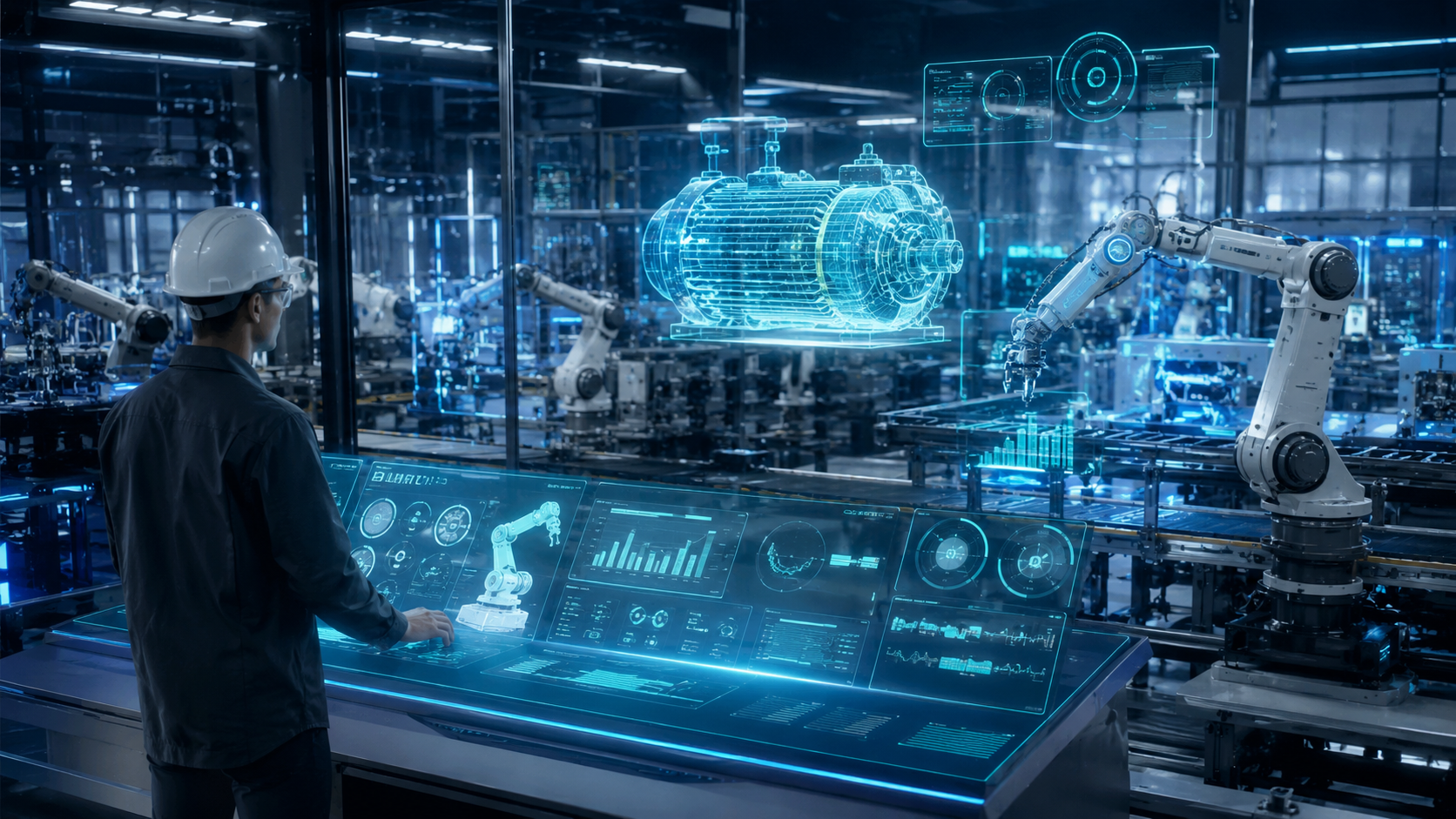
AI-powered predictive maintenance is changing this approach. By combining Artificial Intelligence (AI), Industrial Internet of Things (IIoT) sensors, and machine learning, businesses can monitor equipment in real time, predict failures before they happen, and schedule maintenance only when it is actually needed.
As industries continue adopting smart automation in 2026, predictive maintenance has become one of the most valuable technologies for improving efficiency, reducing downtime, and maximizing productivity.
What is AI-Powered Predictive Maintenance?
AI-powered predictive maintenance is a maintenance strategy that uses AI algorithms to analyze real-time data collected from machines and equipment.
Instead of relying on fixed maintenance schedules, AI continuously monitors machine health by collecting data such as:
- Temperature
- Vibration
- Pressure
- Noise levels
- Energy consumption
- Motor performance
- Oil quality
- Machine operating hours
By identifying patterns and detecting unusual behavior, AI predicts when a component is likely to fail, allowing maintenance teams to take action before a breakdown occurs.
How AI-Powered Predictive Maintenance Works
The predictive maintenance process typically follows these steps:
1. Data Collection
Smart sensors installed on equipment collect operational data continuously.
Examples include:
- Temperature sensors
- Vibration sensors
- Pressure sensors
- Humidity sensors
- Current sensors
- Acoustic sensors
2. Data Analysis
The collected data is sent to cloud or edge computing systems where AI analyzes equipment performance.
Machine learning models compare current machine behavior with historical performance to detect abnormalities.
3. Failure Prediction
If AI identifies patterns that usually occur before a failure, it predicts:
- Remaining useful life (RUL)
- Probability of failure
- Components requiring replacement
- Maintenance priority
4. Maintenance Planning
Maintenance teams receive alerts before equipment fails, allowing repairs during planned downtime instead of emergency shutdowns.
Benefits of AI-Powered Predictive Maintenance
1. Reduces Equipment Downtime
One of the biggest advantages is minimizing unexpected machine failures.
Instead of stopping production unexpectedly, businesses can schedule repairs at convenient times, ensuring continuous operations.
2. Lowers Maintenance Costs
Traditional preventive maintenance often replaces parts that are still in good condition.
Predictive maintenance only replaces components when AI detects actual wear, reducing unnecessary expenses.
3. Increases Equipment Lifespan
Early detection of issues prevents severe damage, helping machines operate efficiently for longer periods.
This reduces capital expenditure on new equipment.
4. Improves Workplace Safety
Equipment failures can create hazardous situations for workers.
AI detects safety risks before they become dangerous, reducing workplace accidents and improving compliance.
5. Enhances Productivity
Healthy equipment operates more efficiently.
Fewer breakdowns mean:
- Higher production output
- Better product quality
- Improved customer satisfaction
6. Better Resource Planning
Maintenance teams know exactly which equipment requires attention.
This helps organizations:
- Reduce spare part inventory
- Optimize technician schedules
- Improve maintenance planning
Technologies Behind Predictive Maintenance
Several advanced technologies work together to make predictive maintenance possible.
Artificial Intelligence (AI)
Analyzes large volumes of equipment data and predicts failures.
Machine Learning
Learns from historical equipment behavior and continuously improves prediction accuracy.
Industrial IoT (IIoT)
Connects machines using smart sensors that provide real-time operational data.
Edge Computing
Processes data near the equipment, enabling faster analysis and immediate response.
Cloud Computing
Stores and analyzes large datasets while supporting remote monitoring.
Digital Twins
Virtual replicas of physical machines simulate performance and predict future failures.
Industries Using AI-Powered Predictive Maintenance
Manufacturing
Factories monitor CNC machines, conveyors, robotic arms, compressors, and production equipment.
Benefits include:
- Reduced downtime
- Improved production efficiency
- Better quality control
Energy and Utilities
Power plants monitor:
- Turbines
- Generators
- Transformers
- Wind turbines
Predictive maintenance helps prevent costly outages.
Transportation
Railways, airlines, and logistics companies monitor vehicles for engine performance, brake systems, and tire health.
This improves safety while reducing maintenance costs.
Oil and Gas
Remote pipelines, drilling equipment, and offshore platforms require continuous monitoring.
AI helps detect potential failures before they become environmental or operational risks.
Healthcare
Hospitals use predictive maintenance for:
- MRI machines
- CT scanners
- Ventilators
- Laboratory equipment
Reliable medical equipment supports uninterrupted patient care.
Real-World Example
Imagine a manufacturing plant with hundreds of motors running 24 hours a day.
Traditionally, maintenance teams inspect every motor monthly.
With AI-powered predictive maintenance:
- Sensors continuously monitor vibration and temperature.
- AI detects unusual vibration in one motor.
- It predicts a bearing failure within two weeks.
- Maintenance is scheduled during a planned production break.
- The bearing is replaced before failure.
The result:
- No unexpected shutdown
- Lower repair costs
- No production delays
- Increased equipment reliability
Challenges of AI-Powered Predictive Maintenance
Although highly effective, businesses should consider several challenges:
Initial Investment
Installing sensors, AI software, and monitoring systems requires upfront costs.
Data Quality
AI predictions depend on accurate and reliable sensor data.
Poor-quality data reduces prediction accuracy.
Skilled Workforce
Organizations need engineers and data specialists to implement and manage predictive maintenance systems.
Integration with Existing Systems
Older equipment may require additional upgrades to support smart sensors and AI connectivity.
Future Trends in Predictive Maintenance
The future of predictive maintenance is becoming even more intelligent.
Key trends include:
- Agentic AI managing maintenance decisions automatically
- Autonomous maintenance scheduling
- Self-healing industrial systems
- AI-powered digital twins
- Real-time edge AI analytics
- 5G-enabled industrial monitoring
- Robotics-assisted equipment inspection
- Generative AI for maintenance recommendations
These innovations will help organizations reduce downtime further while improving operational efficiency.
Best Practices for Successful Implementation
To maximize the benefits of predictive maintenance:
- Start with critical equipment that has the highest impact on production.
- Install reliable IoT sensors for accurate data collection.
- Use high-quality historical maintenance data to train AI models.
- Integrate predictive maintenance with existing maintenance management systems (CMMS).
- Continuously monitor AI predictions and refine models over time.
- Train maintenance teams to interpret AI insights effectively.
Conclusion
AI-powered predictive maintenance is transforming how industries manage equipment. Instead of reacting to failures, organizations can now anticipate problems, plan maintenance proactively, and keep operations running smoothly.
By combining AI, IoT sensors, machine learning, edge computing, and digital twins, businesses can reduce downtime, lower maintenance costs, improve workplace safety, and extend the life of valuable assets.
As smart factories and Industry 5.0 continue to evolve, predictive maintenance will become an essential part of every modern industrial operation, helping businesses stay competitive in an increasingly automated world.
