Introduction
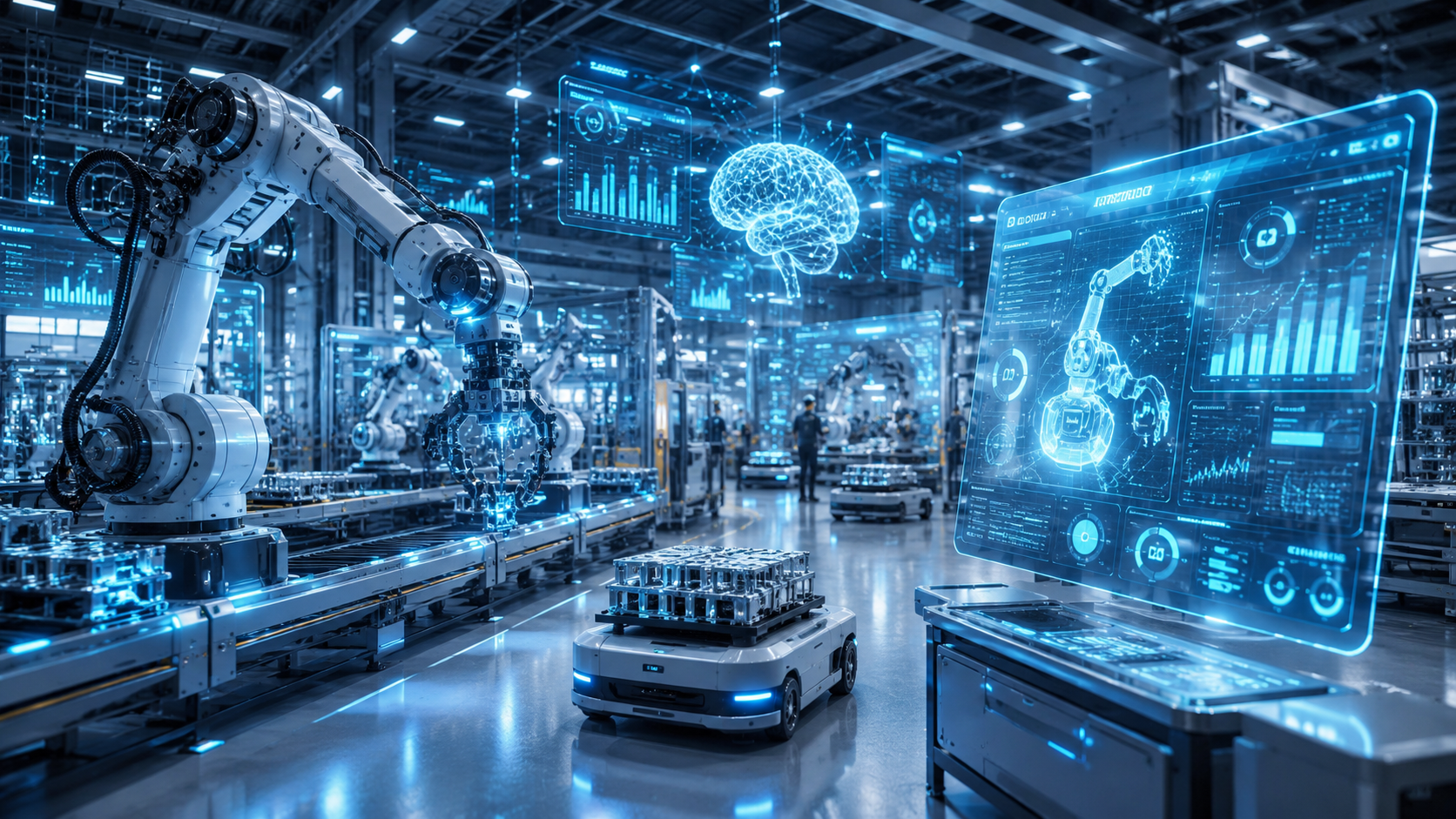
Manufacturing is changing faster than ever. Companies are constantly looking for ways to improve productivity, reduce costs, and deliver better products to customers. One technology helping businesses achieve these goals is Autonomous AI Agents.
These intelligent systems can analyze information, make decisions, and take actions without needing constant human supervision. Unlike traditional automation that follows fixed rules, AI agents can adapt to changing situations and continuously improve their performance.
From predicting machine failures to managing inventory and improving product quality, autonomous AI agents are becoming an important part of modern manufacturing.
Understanding Autonomous AI Agents
Autonomous AI Agents are intelligent software systems that can observe what is happening around them, process large amounts of data, and make decisions based on specific goals.
Think of them as digital assistants for factories. Instead of waiting for humans to tell them what to do, they can identify problems, suggest solutions, and sometimes even take action automatically.
For example, an AI agent monitoring a production line can detect unusual machine behavior and alert maintenance teams before a breakdown occurs.
Why Manufacturers Are Investing in AI Agents
Modern factories generate huge amounts of data every day. Machines, sensors, production lines, and supply chain systems constantly produce information that can be difficult for humans to analyze quickly.
AI agents help manufacturers make better use of this data by providing real-time insights and faster decision-making.
As a result, businesses can:
- Reduce production costs
- Improve efficiency
- Minimize downtime
- Increase product quality
- Improve workplace safety
- Optimize inventory management
- Make smarter business decisions
These advantages help manufacturers stay competitive in a rapidly changing market.
Smarter Maintenance and Fewer Breakdowns
One of the biggest challenges in manufacturing is unexpected equipment failure. When a machine suddenly stops working, production can come to a halt, leading to delays and financial losses.
Autonomous AI agents help solve this problem through predictive maintenance.
By continuously monitoring machine performance, temperature, vibration levels, and other operating conditions, AI systems can identify warning signs before a failure happens.
This allows maintenance teams to fix issues early, reducing downtime and extending the life of expensive equipment.
Improving Product Quality with AI
Maintaining consistent product quality is essential for every manufacturer.
AI-powered inspection systems can analyze products using cameras and advanced computer vision technology. These systems can quickly identify defects, measurement errors, scratches, or assembly issues that might be difficult for humans to detect.
Because AI agents work continuously and accurately, they help manufacturers reduce waste, improve customer satisfaction, and maintain high quality standards.
Industries such as automotive, electronics, and aerospace manufacturing are already using AI-powered quality inspection systems to improve production accuracy.
Better Production Planning and Scheduling
Production schedules can change for many reasons. Customer demand may increase unexpectedly, raw materials may arrive late, or equipment may require maintenance.
Autonomous AI agents can analyze these changing conditions and automatically adjust production schedules.
They can determine which jobs should be prioritized, allocate resources more efficiently, and reduce bottlenecks on the factory floor.
This helps manufacturers meet deadlines while maximizing productivity.
Making Supply Chains More Efficient
Supply chain disruptions can create serious challenges for manufacturers. Delayed deliveries, inventory shortages, and inaccurate demand forecasts can impact production and profitability.
AI agents help businesses manage these challenges by monitoring inventory levels, forecasting future demand, and identifying potential supply chain risks.
With better visibility and smarter decision-making, manufacturers can reduce inventory costs while ensuring they have the materials needed to keep production running smoothly.
Autonomous Robots in Manufacturing
Many modern factories use Autonomous Mobile Robots (AMRs) to move materials and products throughout the facility.
These robots use AI agents to navigate independently, avoid obstacles, and complete tasks without human assistance.
They can transport raw materials, deliver components to workstations, and move finished products to storage areas.
This reduces manual labor, improves efficiency, and allows employees to focus on more valuable tasks.
Reducing Energy Costs Through Intelligent Automation
Energy expenses are a major cost for manufacturing businesses.
Autonomous AI agents can monitor energy usage across the factory and identify opportunities to reduce waste. They can recommend more efficient operating schedules, optimize machine performance, and automatically adjust energy consumption during peak usage periods.
These improvements help manufacturers lower operating costs while supporting sustainability goals.
Creating Safer Human-Robot Collaboration
Modern factories are increasingly using collaborative robots, often called cobots, that work alongside human employees.
AI agents help these robots understand their surroundings and respond safely to human movements.
This creates a safer working environment while improving productivity. Employees can focus on tasks that require creativity and problem-solving, while robots handle repetitive or physically demanding work.
The combination of human expertise and AI-powered automation is becoming a key part of the future workplace.
Real-Time Monitoring for Smarter Decisions
Factory managers need accurate information to make good decisions.
Autonomous AI agents provide real-time visibility into production operations by continuously monitoring equipment, workflows, and performance metrics.
When issues arise, the system can identify the root cause and recommend corrective actions before problems become more serious.
This level of insight allows manufacturers to improve efficiency and maintain consistent production performance.
Industries Already Using Autonomous AI Agents
Many industries are already benefiting from AI-powered manufacturing solutions.
The automotive industry uses AI for quality inspections and robotic assembly. Electronics manufacturers rely on AI to improve precision and detect defects. Aerospace companies use AI systems for safety monitoring and component inspections.
Pharmaceutical manufacturers use AI to maintain quality standards and regulatory compliance, while food and beverage companies use intelligent automation to improve packaging and production processes.
As AI technology becomes more accessible, adoption is expected to grow across nearly every manufacturing sector.
Challenges Manufacturers Should Consider
While the benefits are significant, implementing autonomous AI agents is not without challenges.
Manufacturers need access to high-quality data, reliable technology infrastructure, and skilled employees who understand AI systems.
Cybersecurity is also an important consideration, as connected manufacturing systems must be protected from potential threats.
In addition, businesses may need to invest upfront in technology and employee training before realizing long-term benefits.
However, many organizations find that the productivity gains and cost savings justify the investment.
The Future of AI in Manufacturing
The future of manufacturing will be increasingly driven by intelligent automation.
As AI technology continues to improve, factories will become more connected, more efficient, and more autonomous. Future AI agents will be capable of making complex decisions, optimizing entire production networks, and working seamlessly alongside human employees.
Manufacturers that embrace these technologies today will be better prepared for tomorrow’s competitive landscape.
Conclusion
Autonomous AI Agents are transforming the manufacturing industry by helping businesses improve efficiency, reduce costs, and make smarter decisions.
From predictive maintenance and quality control to supply chain optimization and autonomous robotics, these intelligent systems are creating more productive and resilient factories.
As Industry 4.0 continues to evolve, AI-powered automation will play an even bigger role in shaping the future of manufacturing, helping businesses stay competitive while delivering higher quality products to customers.
