Introduction
Digital payments have become a normal part of our daily lives. Whether we are shopping online, sending money to friends, or paying for services, most transactions now happen digitally. However, traditional payment systems still have some common problems such as high fees, slow international transfers, and limited access in certain parts of the world.
This is where stablecoins are making a difference. They combine the speed of blockchain technology with the stability of traditional currencies, creating a faster and more efficient way to move money online.
As more businesses and consumers look for better payment solutions, stablecoins are becoming an important part of the future of digital finance.
What Are Stablecoins?
Stablecoins are a type of digital currency that is designed to maintain a stable value. Unlike cryptocurrencies such as Bitcoin, which can experience large price changes in a short period, stablecoins are usually linked to traditional currencies like the US Dollar or Euro.
For example, one stablecoin is often designed to remain equal to one US Dollar. This makes stablecoins much more predictable and practical for everyday transactions.
Because their value remains relatively stable, people can use them for payments without worrying about sudden price fluctuations.
Why Traditional Payment Systems Have Limitations
Although online payments have improved over the years, traditional systems still face several challenges.
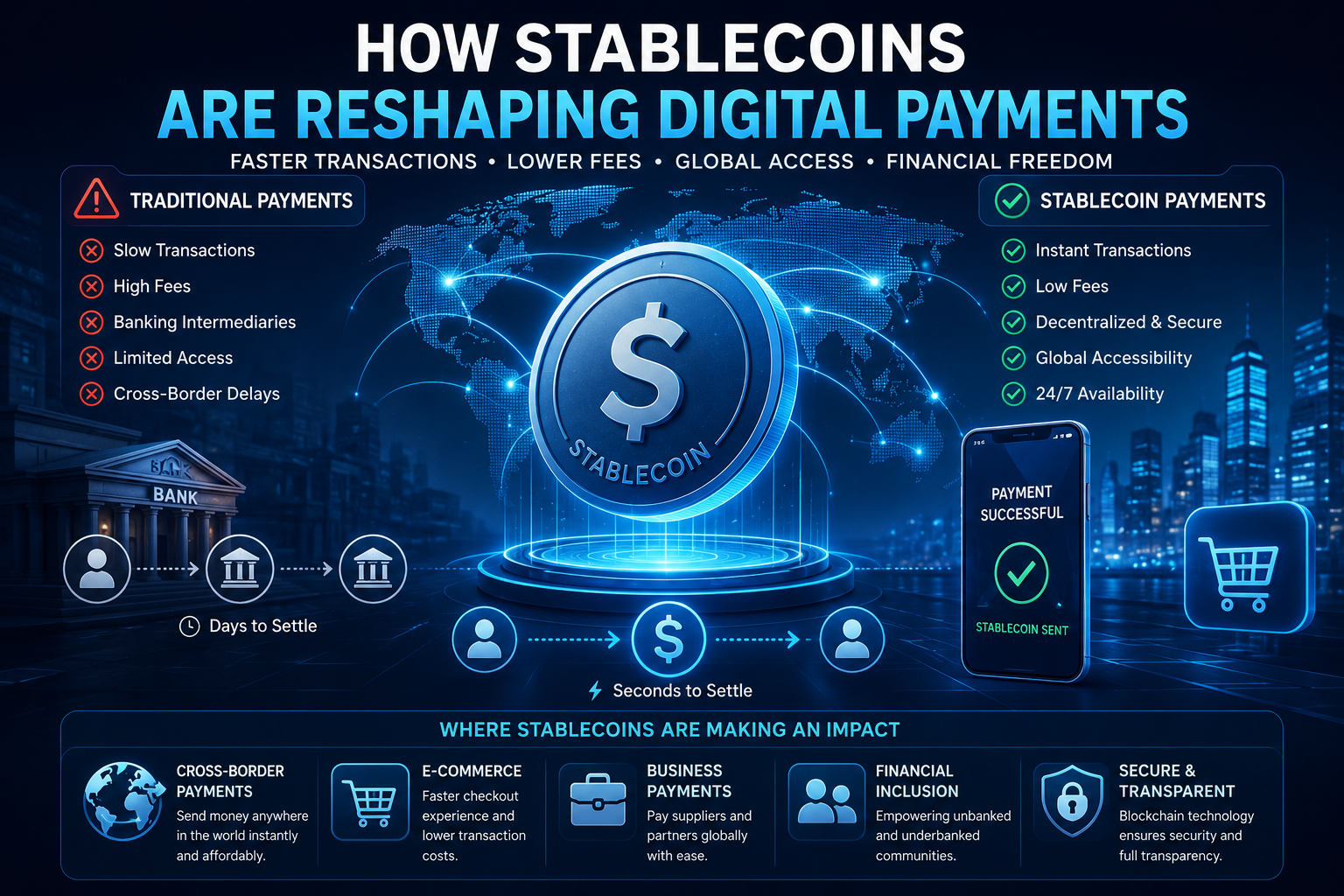
International money transfers often take several days to complete. Banks and payment providers may charge transaction fees, currency conversion costs, and processing charges. These expenses can add up, especially for businesses that regularly send or receive payments from different countries.
In addition, many people around the world still do not have access to traditional banking services, making it difficult for them to participate in the digital economy.
These challenges have encouraged businesses and consumers to look for faster and more affordable alternatives.
Faster Payments Across Borders
One of the biggest advantages of stablecoins is the ability to send money internationally without long waiting times.
Traditional international transfers often involve multiple banks and financial institutions before the payment reaches its destination. This process can be slow and expensive.
Stablecoins use blockchain networks that allow funds to move directly between users. As a result, payments can often be completed within minutes instead of days.
For businesses that work with international clients, suppliers, or customers, this speed can significantly improve operations.
Lower Transaction Fees
Payment processing fees are a common concern for both businesses and consumers.
Every time a payment is made through traditional systems, several parties may be involved in processing the transaction. Each step can add extra costs.
Stablecoins reduce the need for intermediaries, which helps lower transaction fees. Businesses can save money on payment processing, while customers can enjoy more affordable transfers.
This is one of the main reasons why stablecoins are attracting attention from companies worldwide.
Making Financial Services More Accessible
Not everyone has access to a traditional bank account. In many developing regions, banking services may be limited or difficult to access.
Stablecoins offer a simple alternative. Anyone with a smartphone and internet connection can store, send, and receive digital funds.
This creates new opportunities for people who have been excluded from traditional financial systems. It also allows small businesses to participate more easily in global commerce.
As digital technology continues to expand, stablecoins could help bring financial services to millions of people around the world.
Improved Transparency and Security
Trust is an important part of any payment system.
Stablecoins operate on blockchain technology, which records every transaction on a public and secure digital ledger. This creates transparency because transactions can be verified and tracked.
At the same time, blockchain technology uses advanced security measures that help protect transactions from fraud and unauthorized access.
For businesses, this means greater visibility and confidence when handling digital payments.
How Businesses Are Using Stablecoins
Many companies are already exploring stablecoins as part of their payment strategies.
Businesses can use stablecoins to pay international suppliers, receive customer payments, manage digital assets, and reduce transaction costs. Online stores and service providers are also beginning to accept stablecoins as a payment option.
As adoption continues to grow, stablecoins are becoming a practical solution for companies looking to improve payment efficiency.
The Impact on E-Commerce
The e-commerce industry depends heavily on fast and reliable payment systems.
Customers expect smooth checkout experiences, while businesses want lower processing costs and quicker access to funds. Stablecoins can help meet both of these needs.
Because payments can be processed quickly and securely, stablecoins have the potential to improve online shopping experiences and support global sales without many of the limitations of traditional payment methods.
This is why many experts believe stablecoins will play an important role in the future of e-commerce.
Challenges That Still Need Attention
Despite their advantages, stablecoins are not without challenges.
Governments and financial regulators are still developing rules and regulations for digital currencies. Businesses must ensure they follow legal requirements and maintain proper security practices.
There is also a need for greater public awareness and trust before stablecoins become a widely accepted payment method.
As the industry matures, these challenges are expected to become easier to manage.
What the Future Looks Like
The future of digital payments is becoming increasingly connected to blockchain technology, and stablecoins are at the center of this transformation.
As more businesses adopt digital payment solutions and regulations become clearer, stablecoins could become a common way to send money, make purchases, and conduct international transactions.
Their ability to combine the stability of traditional currencies with the speed and efficiency of blockchain technology makes them one of the most promising innovations in modern finance.
Conclusion
Stablecoins are changing the way people and businesses make digital payments. They offer faster transactions, lower fees, greater accessibility, and improved efficiency compared to many traditional payment systems.
While there are still challenges to overcome, stablecoins continue to gain popularity as a practical solution for modern financial transactions.
As digital payments continue to evolve, stablecoins are expected to play a major role in creating a faster, more connected, and more accessible global financial system.
