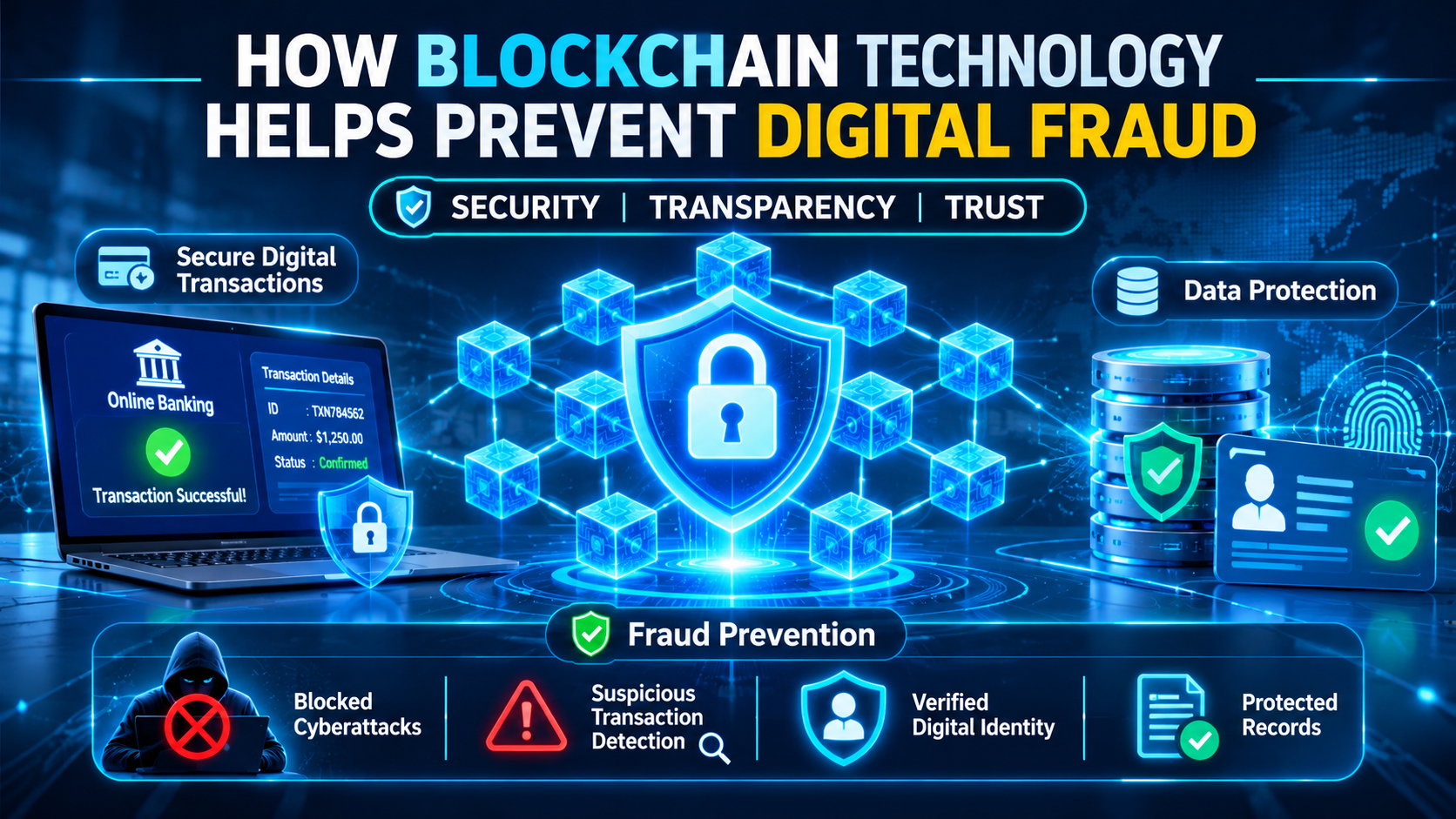
Today, people use the internet for online payments, shopping, banking, business transactions, and sharing information. However, as digital activities increase, online fraud and cybercrime are also becoming major concerns. Hackers and fraudsters may try to steal personal information, create fake transactions, or change important digital records.
Blockchain technology offers a new way to improve digital security. It stores information in connected digital blocks and uses advanced encryption methods to protect records from unauthorized changes. It also helps organizations verify transactions and track digital activities.
From online banking to healthcare and business operations, blockchain can help create safer and more transparent digital systems.
Let’s understand how blockchain technology helps prevent digital fraud and protect important information.
Category 1: Understanding Blockchain Technology
Blockchain is a technology that stores digital information in groups called blocks. These blocks are connected to each other, creating a secure chain of records.
Every block contains information about transactions, a timestamp, and a unique digital code called a hash. Once information is added to a blockchain, changing it without detection becomes difficult.
Unlike traditional databases, many blockchain networks store copies of records across multiple computers. This makes it harder for someone to secretly change information from a single location.
1. Decentralized Data Storage
In traditional systems, information is often stored on a central server controlled by one organization. If that server is attacked, important information may become exposed or damaged.
Blockchain works differently by distributing records across multiple computers in a network. This reduces dependence on one central server and makes the system more resistant to certain types of attacks.
2. Secure Digital Records
Blockchain connects each block using a unique cryptographic code called a hash. If someone changes information in an earlier block, its hash also changes.
This can break the connection between blocks and make unauthorized changes easier to identify. As a result, blockchain helps maintain reliable digital records.
Category 2: How Blockchain Helps Prevent Digital Fraud
Blockchain provides different security features that help protect online transactions, digital identities, and important business information.
1. Protecting Information from Unauthorized Changes
One of the biggest advantages of blockchain is that it makes changing stored records difficult without detection.
For example, a company can use blockchain to store payment records. If someone tries to secretly change an old transaction, the blockchain network can identify the change through its verification process.
This helps businesses maintain trustworthy records and reduce certain types of data manipulation.
2. Making Transactions More Transparent
Blockchain creates digital records that authorized users can verify. Each transaction can include details such as the transaction time and recorded information.
For example, when a company sends a payment to another business, the transaction can be recorded on a blockchain. Authorized participants can check the transaction history and confirm whether the payment was recorded correctly.
This improves transparency and makes suspicious activities easier to investigate.
3. Protecting Digital Identity
Digital identity fraud happens when someone uses another person’s personal information without permission.
Blockchain-based identity systems can help people manage and verify their digital identity more securely. They can also allow users to share only the information required for a particular verification process.
For example, a digital identity system may allow someone to prove their age or identity without sharing unnecessary personal details.
However, blockchain still needs reliable identity verification to confirm that the original identity information is genuine.
4. Securing Online Transactions
Blockchain uses cryptography and digital signatures to help verify transactions.
A digital signature helps confirm that a transaction was authorized using the correct private key. This makes it more difficult for unauthorized people to create valid transactions on a properly designed blockchain network.
For example, when someone sends cryptocurrency, the network checks the digital signature before accepting the transaction.
5. Tracking Digital Records
Businesses manage many important records, including payments, agreements, product ownership, and customer transactions.
Blockchain can maintain a time-stamped history of these records. This helps organizations check previous activities and identify suspicious changes.
For example, companies can use blockchain to record product ownership and transfer history, making certain types of ownership fraud more difficult.
Category 3: Real-World Applications of Blockchain in Fraud Prevention
Blockchain is not only used for cryptocurrency. It can also help different industries improve security, protect records, and verify important information.
1. Banking and Financial Services
Banks and financial organizations can use blockchain to record and verify transactions. It helps create traceable transaction histories and supports financial auditing.
For example, blockchain-based payment systems can help participating organizations verify payment records and identify inconsistencies.
2. Supply Chain Management
Supply chains involve many stages, from manufacturing products to delivering them to customers.
Blockchain can record product information at different stages. Businesses can use these records to check where products came from and how they moved through the supply chain.
This helps reduce certain types of product fraud, fake product claims, and unauthorized record changes.
3. Digital Identity Verification
Blockchain-based identity systems can help users manage their digital identity and share verified information securely.
For example, organizations may use digital identity verification to confirm a person’s credentials without repeatedly collecting all their personal information.
4. Healthcare Data Protection
Hospitals and healthcare organizations manage important patient information, including medical records and treatment details.
Blockchain can help maintain verifiable records of data access and updates. This improves accountability and makes unauthorized changes easier to identify.
Proper privacy protection is still necessary because medical information is sensitive.
5. Smart Contracts and Business Security
Smart contracts are digital programs stored on blockchain networks. They automatically perform specific actions when predefined conditions are met.
For example, a business can create a smart contract that releases a payment after a delivery has been verified.
This reduces manual work and can prevent certain types of payment manipulation, provided the contract and verification information are reliable.
Category 4: Major Benefits of Blockchain for Digital Security
Blockchain provides several useful features that help organizations improve their digital security systems.
1. Better Data Protection
Blockchain uses cryptographic methods to protect stored records and make unauthorized changes easier to detect.
2. Improved Transparency
Authorized participants can verify transaction records, helping organizations monitor activities and investigate suspicious transactions.
3. Secure Transaction Verification
Digital signatures and network verification help confirm whether transactions follow the required security rules.
4. Easy Transaction Tracking
Blockchain maintains transaction histories that help businesses track payments, ownership records, and other important digital activities.
5. Reduced Dependence on Centralized Systems
Distributed blockchain networks reduce the need to depend entirely on one central server, helping reduce certain single-point-of-failure risks.
Category 5: Challenges and Limitations of Blockchain Technology
Although blockchain offers several security benefits, it cannot prevent every type of digital fraud. Organizations must understand its limitations before using it.
1. Private Key Theft
Private keys are used to access and authorize certain blockchain transactions. If someone steals a user’s private key, they may gain control over the associated digital assets.
This is why secure key storage and account protection are very important.
2. Smart Contract Security Problems
Smart contracts can contain programming mistakes or security weaknesses. Hackers may use these weaknesses to access applications or steal digital assets.
Regular testing and security audits can help reduce these risks.
3. Incorrect Information
Blockchain can protect stored records, but it cannot automatically confirm that the original information is correct.
For example, if someone enters false product information into a blockchain system, the system may preserve that incorrect information.
4. Privacy Concerns
Some blockchain networks allow transaction details to be viewed by many participants. This can create privacy concerns when sensitive information is involved.
Organizations need proper access controls and suitable privacy technologies to protect confidential data.
5. High Implementation Costs
Building and maintaining blockchain systems can require specialized software, infrastructure, and technical experts.
This may make blockchain adoption expensive and complicated for smaller organizations.
Category 6: The Future of Blockchain in Digital Security
Blockchain technology may become more useful when combined with other modern technologies such as Artificial Intelligence (AI) and Machine Learning (ML).
AI can analyze transaction activities and identify unusual patterns that may indicate fraud. Blockchain can maintain verifiable records of transactions and important digital activities.
Together, these technologies can help businesses improve transaction monitoring, digital identity verification, and data security.
In the future, blockchain may play an important role in banking, healthcare, online payments, supply chain management, and digital business operations.
Conclusion
Blockchain technology is helping organizations create more secure and transparent digital systems. Its features, such as decentralized data storage, cryptographic protection, digital signatures, and transaction verification, can help reduce certain types of digital fraud.
From banking and healthcare to supply chain management and digital identity, blockchain offers useful ways to protect information and maintain reliable records.
However, blockchain is not a complete solution to every security problem. Organizations must also use strong passwords, secure private keys, reliable data verification, and regular security testing.
By combining blockchain with other security technologies, businesses can build stronger digital systems and create a safer online environment.
