Firefighters help protect people, buildings, and communities during emergencies. However, fighting fires is not easy. Thick smoke, high temperatures, and poor visibility can make it difficult to find people and understand how a fire is spreading.
Today, modern technology is helping firefighters handle these challenges. Special gadgets can help them see heat, check dangerous areas, and collect important information before entering a risky location.
Two useful examples are thermal imaging cameras and firefighting drones. These gadgets help firefighters understand the situation more clearly and plan their next steps. Let’s explore how they work and why they are useful.
Category 1: Thermal Imaging Camera
What Is a Thermal Imaging Camera?
A thermal imaging camera is a special camera that detects heat and shows temperature differences in an image. Unlike a normal camera, it does not need visible light to display these differences.
For example, when a room is filled with smoke, firefighters may find it difficult to see objects clearly. A thermal imaging camera can help them identify warmer areas and possible heat sources, making it easier to assess the surroundings.
How Does a Thermal Imaging Camera Help Firefighters?
Thermal imaging cameras help firefighters understand what is happening in places where visibility is poor. They can show heat patterns that may be difficult to notice with the human eye.
These cameras can also help firefighters check walls, ceilings, and other surfaces for areas that remain hot after a fire has been controlled.
However, a thermal camera cannot see through every wall or guarantee that a person will always appear clearly on its screen.
Main Benefits of Thermal Imaging Cameras
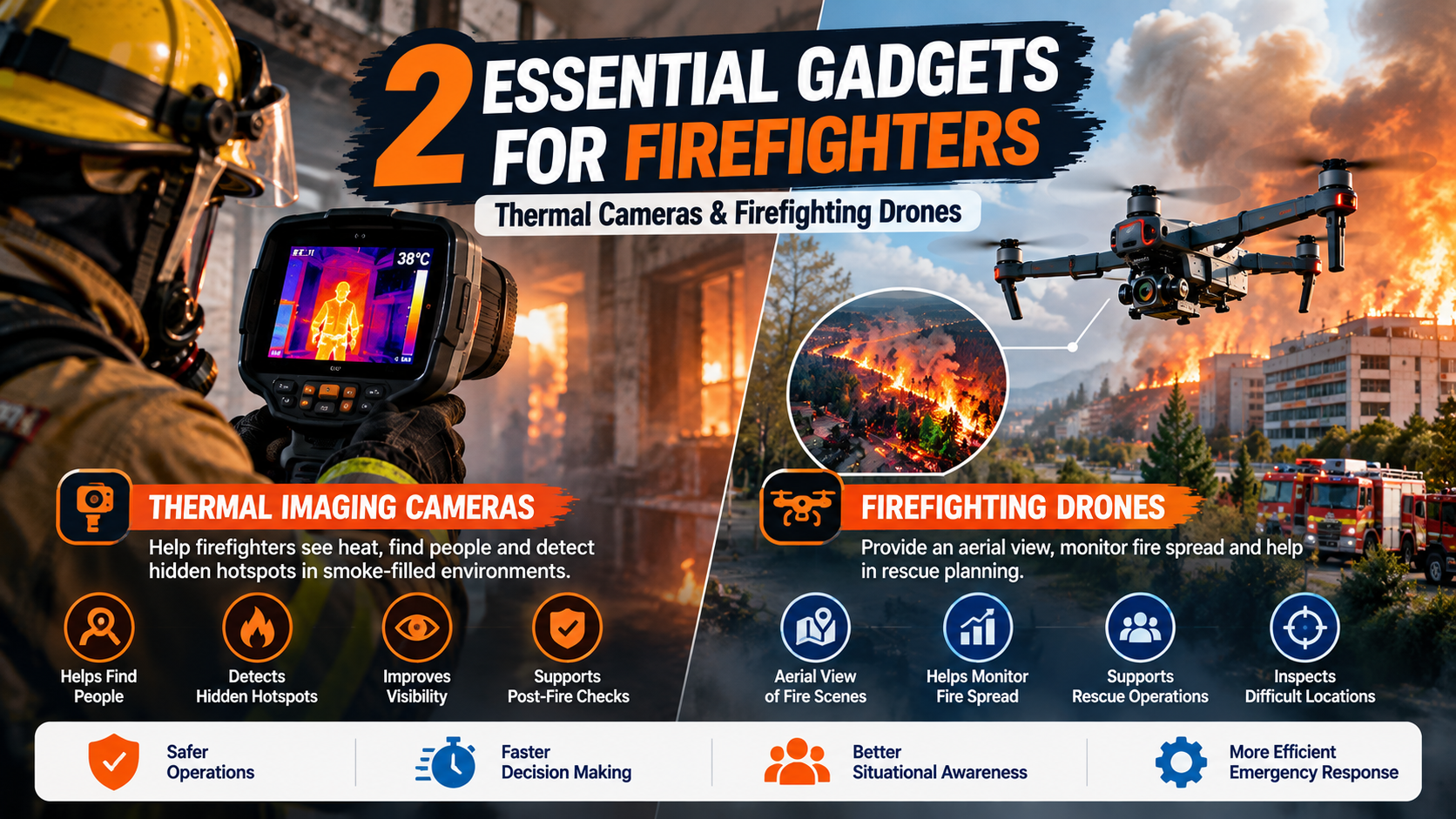
1. Helps Find People: A thermal camera can help firefighters detect heat patterns that may indicate someone is present in a smoke-filled room.
2. Finds Hidden Hotspots: Sometimes, heat remains inside walls or ceilings even after the flames disappear. A thermal camera can help firefighters identify these areas for further inspection.
3. Improves Visibility: When smoke or darkness makes it difficult to see, the camera provides additional information about the surrounding environment.
4. Supports Safety Checks: After a fire, firefighters can use thermal cameras to check for remaining heat that might indicate a continuing risk.
Where Are Thermal Imaging Cameras Used?
Thermal imaging cameras are useful during building fires, search-and-rescue operations, industrial emergencies, and post-fire inspections.
They help firefighters collect additional information about their surroundings and identify areas that need closer attention.
The camera is a support tool, not a replacement for proper training, protective equipment, or established rescue procedures.
Category 2: Firefighting Drones
What Is a Firefighting Drone?
A firefighting drone is a flying device that helps fire departments observe and assess emergency situations from above.
Many firefighting drones have cameras that capture photos and videos of a fire scene. Some advanced models also have thermal imaging cameras that can detect heat patterns from the air.
These drones can give firefighters a wider view of an emergency without requiring someone to enter a dangerous area just to get an initial look.
It is important to understand that most firefighting drones are used for observation and monitoring. They do not necessarily carry water or extinguish fires.
How Do Firefighting Drones Help Firefighters?
Firefighting drones allow emergency teams to observe areas that may be difficult to reach on foot. The information collected can help firefighters understand the situation before deciding how to respond.
For example, during a large outdoor fire, a drone may help teams observe the affected area and monitor visible changes in the fire’s spread.
Drones can also help inspect rooftops, large industrial facilities, and other locations where an aerial view may be useful.
Main Benefits of Firefighting Drones
1. Provides an Aerial View: Drones help firefighters see a larger area from above and better understand the size of an emergency.
2. Helps Monitor Fires: Equipped with suitable cameras, drones can help teams observe changes in a fire’s location and spread.
3. Supports Rescue Operations: Drones can survey difficult-to-reach areas and provide information that helps teams plan rescue activities.
4. Inspects Dangerous Locations: A drone can help examine certain rooftops, tall structures, and industrial sites without requiring an immediate physical inspection.
5. Improves Emergency Planning: Images and videos from drones can help incident commanders assess the situation and coordinate their teams.
Where Are Firefighting Drones Used?
Firefighting drones can be useful during wildfires, large building fires, industrial accidents, and search-and-rescue operations.
They are especially valuable when emergency teams need an aerial view of a large area or information about a location that is difficult to access.
However, drones have limitations. Strong winds, bad weather, thick smoke, high temperatures, and limited battery life can affect their performance. They must also be operated by trained personnel according to applicable aviation rules.
Category 3: Thermal Imaging Camera vs. Firefighting Drone
Both gadgets help firefighters, but they serve different purposes.
A thermal imaging camera helps firefighters examine heat patterns at close range, while a firefighting drone provides a wider view of an emergency from above.
Here is a simple comparison:
| Feature | Thermal Imaging Camera | Firefighting Drone |
|---|---|---|
| Main purpose | Detects temperature differences | Observes emergency scenes from the air |
| Main advantage | Helps identify heat patterns | Provides a wider view of an area |
| Common use | Building fires and hotspot detection | Wildfires and large emergency scenes |
| Rescue support | Helps search in some low-visibility conditions | Helps teams assess difficult-to-reach areas |
| Main limitation | Images can be difficult to interpret | Weather and flight conditions can limit use |
In some situations, these technologies can work together. For example, a drone equipped with a thermal camera can help firefighters observe heat patterns across a large area.
Category 4: Why Are These Gadgets Important for Fire Departments?
Better Information During Emergencies
Firefighters often need to make important decisions quickly. Thermal cameras and drones can provide additional information about heat, visibility, and the surrounding environment.
This information can help emergency teams understand the situation and decide which areas require further inspection.
Support for Firefighter Safety
Entering a burning building or approaching a large fire can be dangerous. These gadgets may help firefighters assess certain hazards before deciding how to approach an area.
However, neither gadget can eliminate all risks. Firefighters still need protective equipment, proper training, and established safety procedures.
Improved Rescue Planning
Finding people, checking dangerous locations, and understanding how a fire is spreading can be challenging during an emergency.
Thermal cameras and drones provide different types of information that may help teams plan their rescue activities more effectively.
Category 5: What Should Fire Departments Consider Before Buying These Gadgets?
Before purchasing firefighting technology, departments should consider their actual needs and the types of emergencies they commonly handle.
Safety and quality: Equipment should meet applicable safety standards and be suitable for firefighting conditions.
Ease of use: Firefighters should be able to operate the equipment effectively after appropriate training.
Battery life: Devices should provide sufficient operating time for their intended tasks.
Maintenance: Regular inspection, servicing, and maintenance are necessary to keep equipment working properly.
Cost: Departments should consider training, maintenance, accessories, and replacement costs in addition to the initial purchase price.
Compatibility: New equipment should work effectively with existing communication systems and emergency procedures where necessary.
Choosing the right equipment can help departments use their budgets effectively while meeting their operational requirements.
Conclusion
Thermal imaging cameras and firefighting drones are two useful gadgets that support modern fire departments.
Thermal imaging cameras help firefighters identify heat patterns, check for hidden hotspots, and search certain low-visibility environments. Firefighting drones provide aerial views that can help teams monitor fires, inspect difficult-to-reach locations, and plan rescue operations.
Both gadgets have limitations, but they can provide valuable information when used correctly by trained professionals.
As technology continues to improve, these tools can help fire departments make better-informed decisions and support safer emergency response operations.
