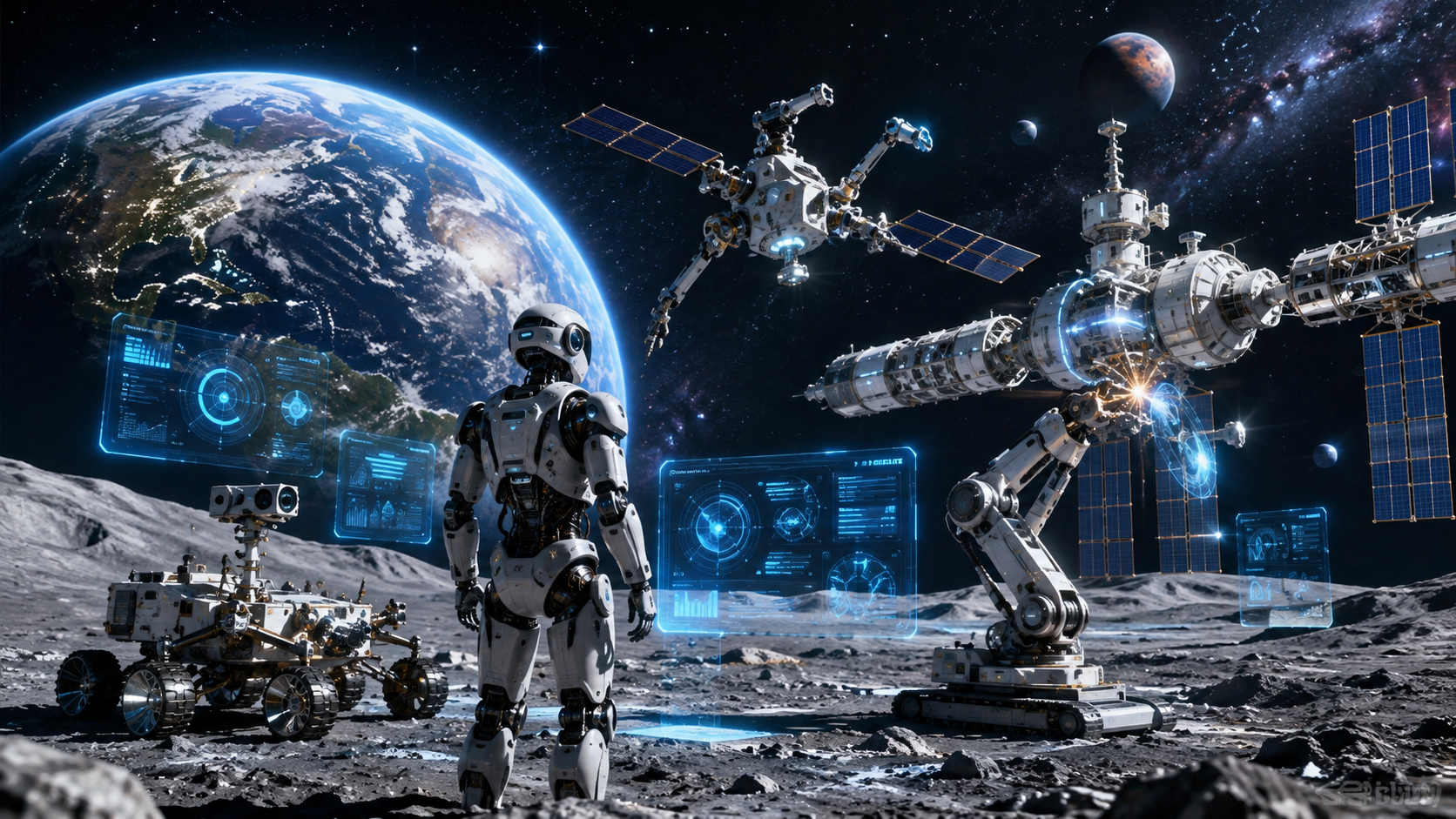
Introduction
Space exploration is becoming more exciting every year, and robots are playing a huge role in making it possible. Instead of sending astronauts to every dangerous location, space agencies now use smart robots to explore planets, repair satellites, and collect valuable scientific data.
These robots can work in places where humans cannot survive, such as the freezing surface of Mars or the empty vacuum of space. As technology improves, space robotics is becoming one of the most important parts of future space missions.
In this article, you’ll learn what space robotics is, why it matters, how it works, where it’s being used today, and what the future could look like—all explained in simple language.
What Is Space Robotics?
Space robotics is the use of robots that are specially designed to work in space. These robots help scientists and astronauts complete tasks that are difficult, dangerous, or impossible for humans to do alone.
Some space robots drive across planets, while others float around Earth to repair satellites. There are also robotic arms attached to spacecraft that help move equipment or assist astronauts during missions.
Unlike factory robots, space robots must work in extremely harsh conditions. They have to survive intense heat and cold, radiation, dust, and long periods without human help.
Why Are Robots Important for Space Missions?
Sending people into space is expensive and risky. Astronauts need food, water, oxygen, and safe living conditions, which makes every mission more complicated.
Robots don’t have these needs. They can work for months or even years without getting tired. They can also travel to dangerous places before humans arrive and collect information that helps scientists plan future missions.
Using robots makes space exploration safer, more affordable, and more efficient.
Where Are Space Robots Used?
Today, space robots are already helping scientists in many different ways.
Robotic rovers travel across the surface of Mars, taking pictures, collecting rock samples, and searching for signs that water once existed there.
On the International Space Station, robotic arms move equipment, unload cargo from spacecraft, and assist astronauts with maintenance work.
Some satellites also use robotic technology to inspect or repair equipment while orbiting Earth.
These real-world examples show how important robotics has become in modern space exploration.
Different Types of Space Robots
Not all space robots do the same job. Each one is designed for a specific mission.
Planetary rovers explore the surfaces of planets and moons. They drive across rough terrain, study rocks, and send valuable information back to Earth.
Robotic arms help move heavy equipment, capture spacecraft, and support astronauts during space missions.
Autonomous spacecraft use artificial intelligence to navigate through space with little human control. They can adjust their paths and complete tasks on their own.
Scientists are also developing robots that will one day build habitats on the Moon, repair satellites in orbit, and even help mine resources from asteroids.
How Do Space Robots Work?
Space robots are much smarter than ordinary machines. They use cameras, sensors, computers, and artificial intelligence to understand their surroundings.
Many robots can identify obstacles, choose safe paths, and complete tasks without waiting for instructions from Earth. This is important because signals sent between Earth and distant planets can take several minutes to arrive.
By making their own decisions, robots can continue working even when communication is delayed.
The Technology Behind Space Robotics
Modern space robots combine several advanced technologies that allow them to operate in challenging environments.
Artificial intelligence helps robots recognize objects, avoid dangers, and make decisions on their own.
Computer vision allows them to “see” their surroundings using cameras and sensors.
Navigation systems help robots travel safely across rough landscapes or through space.
Robotic arms perform delicate tasks such as collecting samples, repairing equipment, or moving cargo.
Machine learning allows some systems to improve their performance over time by learning from previous tasks.
Together, these technologies make space robots smarter, safer, and more reliable.
Future Missions That Will Use Space Robots
The future of space robotics is full of exciting possibilities.
Scientists plan to send robots to the Moon before astronauts arrive. These robots could build landing pads, set up solar panels, and prepare shelters for future human missions.
Mars missions will use even more advanced robots to search for signs of ancient life, drill beneath the surface, and collect samples that may eventually be brought back to Earth.
Engineers are also working on robots that can repair satellites in orbit instead of replacing them. This could save millions of dollars and reduce space waste.
Another exciting idea is asteroid mining. Special robots may one day collect valuable materials from asteroids that could support future space missions or even be used on Earth.
As technology continues to improve, robots will likely explore places humans cannot easily reach.
Benefits of Space Robotics
Space robots offer many advantages that make them essential for modern exploration.
They reduce risks for astronauts by handling dangerous tasks.
They can work continuously without needing rest, food, or oxygen.
They help lower the overall cost of space missions.
Robots can gather accurate scientific data from environments that would be impossible for humans to explore safely.
They also make long-term missions more practical because they can continue working independently for extended periods.
Challenges Space Robots Still Face
Although space robotics has made incredible progress, there are still many challenges.
Space is an extremely harsh environment. Robots must survive extreme temperatures, strong radiation, dust storms, and the absence of air.
Communication delays also make missions difficult. Commands sent from Earth may take several minutes to reach a robot on Mars, so robots must often make decisions without immediate human guidance.
Engineers continue improving robotics technology to make future missions even more reliable and efficient.
What Does the Future Look Like?
The next generation of space robots will be smarter, faster, and more independent.
Artificial intelligence will allow robots to solve problems without waiting for instructions from Earth.
Groups of robots may work together to build lunar bases or explore distant planets.
Future robots could even manufacture equipment using materials found on the Moon or Mars, reducing the need to transport everything from Earth.
Rather than replacing astronauts, robots will become trusted partners that help humans explore deeper into space than ever before.
Final Thoughts
Space robotics is changing the future of space exploration. From exploring Mars and repairing satellites to preparing the Moon for human settlement, robots are making missions safer, more efficient, and more successful.
As artificial intelligence and robotics continue to improve, these intelligent machines will take on even bigger responsibilities. They will help scientists make new discoveries, support astronauts on long missions, and open the door to a future where humans can explore more of our solar system.
Whether it’s building a base on the Moon or searching for life on another planet, space robots will be at the center of the next generation of space exploration.
