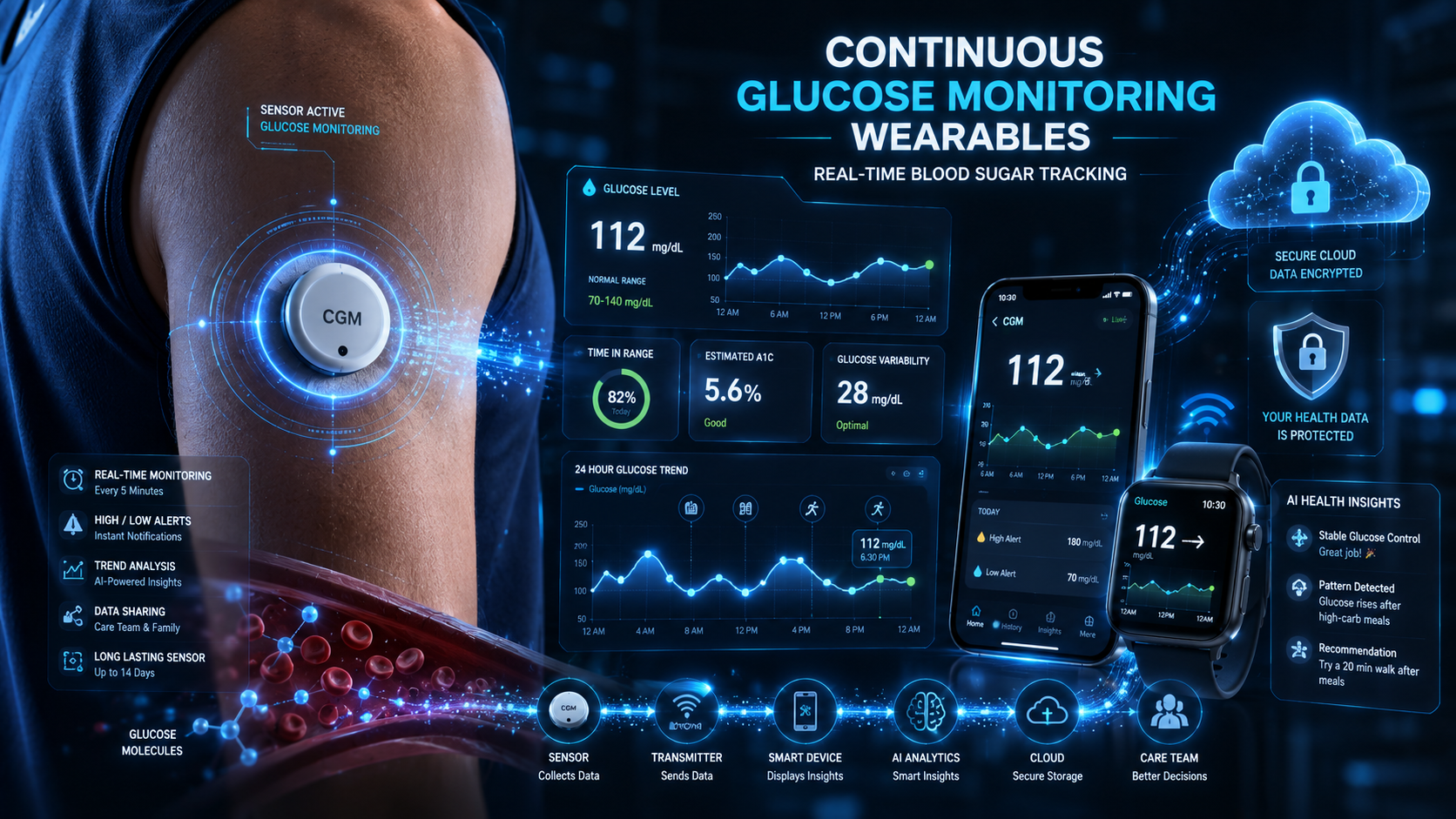
Technology has changed the way we track our health. Today, wearable devices can monitor heart rate, sleep, blood oxygen, stress levels, and even blood sugar. One of the biggest innovations in health technology is the Continuous Glucose Monitoring (CGM) wearable.
Unlike traditional glucose testing, which requires finger-prick blood samples several times a day, CGM wearables continuously measure glucose levels throughout the day and night. This gives users a clear picture of how their blood sugar changes after eating, exercising, sleeping, or taking medication.
In this guide, you’ll learn what Continuous Glucose Monitoring wearables are, how they work, their benefits, limitations, and who can benefit from using them.
What is a Continuous Glucose Monitoring (CGM) Wearable?
A Continuous Glucose Monitoring wearable, often called a CGM, is a small smart device that tracks glucose (blood sugar) levels automatically throughout the day.
Instead of checking blood sugar only once or twice, a CGM measures glucose every few minutes and sends the information to a smartphone, smartwatch, or dedicated receiver.
This allows users to see real-time glucose levels, view trends, and receive alerts when blood sugar becomes too high or too low.
CGM technology is especially useful for people with diabetes, but it is also becoming popular among athletes, fitness enthusiasts, and people who want to better understand how food and lifestyle affect their health.
How Does a CGM Wearable Work?
A CGM wearable uses a tiny sensor placed just under the skin, usually on the upper arm or abdomen.
The sensor measures glucose levels in the fluid between your body’s cells, called interstitial fluid. Although this is slightly different from measuring glucose directly in the blood, the readings closely reflect blood sugar levels.
Here’s how the process works:
- A small sensor is attached to your skin.
- The sensor measures glucose levels every few minutes.
- A transmitter sends the data wirelessly.
- The information appears on your smartphone or smartwatch through a companion app.
- The app creates easy-to-read graphs, trends, and alerts.
Most CGM devices can monitor glucose continuously, giving users a much clearer picture than occasional finger-prick tests.
Why Are CGM Wearables Becoming So Popular?
Traditional blood sugar testing provides only a snapshot of your glucose level at one specific moment.
A CGM wearable shows how glucose changes throughout the day, helping users understand what causes blood sugar to rise or fall.
For example, you can see:
- How different meals affect your glucose.
- How exercise changes blood sugar.
- The impact of stress on glucose levels.
- Overnight glucose patterns while sleeping.
- How medications influence glucose throughout the day.
This continuous data makes it easier to make informed lifestyle and treatment decisions.
Key Features of Modern CGM Wearables
Today’s Continuous Glucose Monitoring devices include many smart features that make health tracking easier and more convenient.
Common features include:
- Real-time glucose monitoring
- Automatic glucose updates every few minutes
- High and low glucose alerts
- Smartphone app integration
- Smartwatch notifications
- Historical glucose reports
- Trend graphs and analytics
- Data sharing with family members or healthcare providers
- Cloud synchronization
- Long-lasting wearable sensors
Many devices also use artificial intelligence (AI) to identify glucose patterns and provide personalized insights.
Benefits of Continuous Glucose Monitoring Wearables
CGM wearables offer several advantages over traditional glucose testing.
One of the biggest benefits is convenience. Since glucose is monitored automatically, users don’t need to perform frequent finger-prick tests throughout the day.
Continuous monitoring also helps detect sudden changes in blood sugar before they become serious, allowing users to take action more quickly.
Other important benefits include:
- Better diabetes management
- More accurate long-term glucose trends
- Improved awareness of daily habits
- Better exercise planning
- Smarter meal choices
- Reduced risk of severe glucose fluctuations
- Greater peace of mind through real-time alerts
Many users find that seeing how food, activity, and sleep affect their glucose helps them make healthier lifestyle choices.
Are CGM Wearables Accurate?
Modern CGM wearables are highly accurate and continue to improve with each new generation.
However, it’s important to remember that CGM devices measure glucose in interstitial fluid rather than directly from the bloodstream. Because of this, readings may sometimes lag behind blood glucose by a few minutes, especially during rapid changes after meals or intense exercise.
For most daily monitoring, this difference is small and acceptable. In some situations, healthcare professionals may still recommend confirming a reading with a traditional blood glucose test before making important treatment decisions.
Who Can Benefit from a CGM Wearable?
Continuous Glucose Monitoring wearables are most commonly used by people with diabetes, but they can also be helpful for others.
They may benefit:
- People with Type 1 diabetes
- People with Type 2 diabetes
- Individuals at risk of diabetes
- Pregnant women with gestational diabetes (under medical guidance)
- Athletes tracking how exercise affects glucose
- Fitness enthusiasts interested in metabolic health
- People working with healthcare providers to better understand glucose patterns
If you don’t have diabetes, a CGM may still provide insights into how your body responds to food and activity, but it’s best to discuss its use with a healthcare professional.
Things to Consider Before Buying a CGM Wearable
Before choosing a Continuous Glucose Monitoring device, think about your personal needs and the features that matter most.
Consider factors such as:
- Sensor wear time
- Smartphone compatibility
- Smartwatch support
- Comfort and size
- Alert customization
- App features and reports
- Cost of sensors and replacements
- Insurance coverage (where applicable)
- Ease of use
- Customer support
Choosing the right device depends on your health goals, budget, and recommendations from your healthcare provider.
Common Myths About CGM Wearables
There are several misconceptions about Continuous Glucose Monitoring devices.
Myth: Only people with diabetes can use a CGM.
Fact: While CGMs are primarily designed for diabetes management, some people without diabetes use them under professional guidance to learn about glucose responses.
Myth: CGMs completely replace finger-prick testing.
Fact: Many people rely mainly on CGMs, but there are situations where a finger-prick test may still be recommended.
Myth: Wearing a CGM is painful.
Fact: Most users report only mild discomfort when applying the sensor, and many quickly get used to wearing it.
The Future of Continuous Glucose Monitoring Wearables
Wearable health technology is advancing rapidly, and CGM devices are becoming smaller, smarter, and more connected.
Future developments may include:
- Longer-lasting sensors
- More advanced AI-powered health insights
- Better integration with smartwatches and fitness trackers
- Improved battery life
- Smaller and more comfortable designs
- Enhanced remote monitoring for healthcare providers
- Potential non-invasive glucose monitoring technologies
As innovation continues, CGM wearables are expected to play an even bigger role in preventive healthcare and personalized wellness.
Conclusion
Continuous Glucose Monitoring wearables have transformed the way people track and understand their glucose levels. Instead of relying on occasional finger-prick tests, users can monitor glucose continuously and gain valuable insights into how meals, exercise, sleep, stress, and daily routines affect their health.
For people living with diabetes, CGMs can support better day-to-day management by providing real-time alerts and long-term trends. They are also attracting interest from athletes and wellness enthusiasts who want to learn more about their body’s response to different activities.
While these devices are powerful tools, they should be viewed as part of a broader health strategy and used alongside guidance from a qualified healthcare professional when making medical decisions.
