Introduction
Staying healthy has become easier than ever, thanks to wearable technology. Devices like smartwatches, fitness bands, and smart rings are no longer just stylish gadgets—they have become personal fitness companions.
Whether you want to lose weight, build muscle, improve your daily activity, or simply live a healthier lifestyle, wearable devices can help you stay on track. They collect useful information about your body and daily habits, making it easier to understand your progress and stay motivated.
But can these devices really help you reach your fitness goals?
The answer is yes—but only if you use them consistently along with healthy habits. In this blog, we’ll explain how wearables work, what they can track, their benefits, their limitations, and how they can support your fitness journey in simple, easy-to-understand language.
What Are Wearable Fitness Devices?
Wearable fitness devices are smart electronic gadgets that you wear on your body to monitor your health and physical activity throughout the day.
The most popular wearable devices include:
- Smartwatches
- Fitness bands
- Smart rings
- GPS sports watches
- Smart clothing
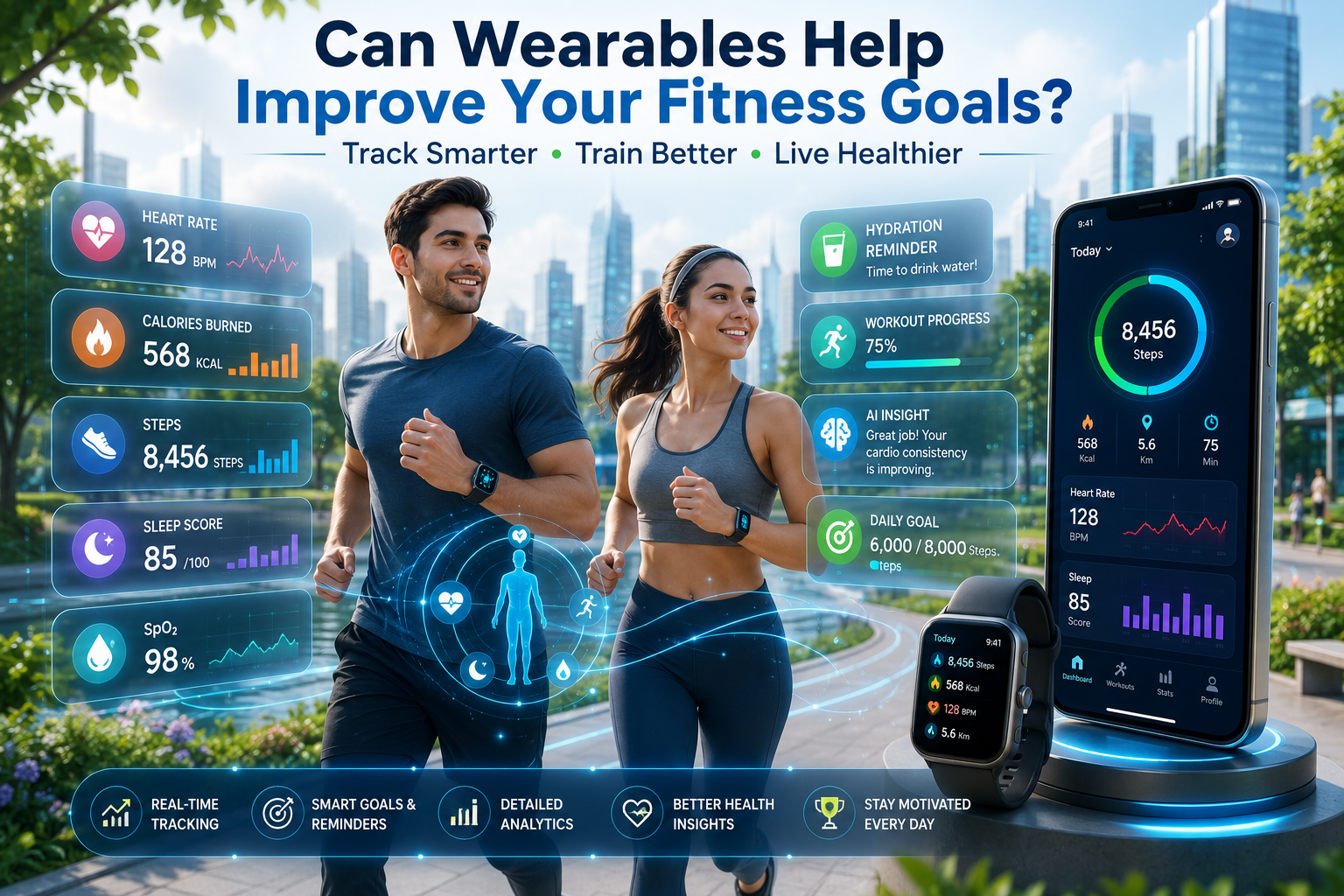
These devices connect to your smartphone and automatically record your daily activities. Instead of guessing how active you were, you can see detailed reports anytime.
How Do Wearables Work?
Wearable devices use built-in sensors to collect information about your body and movements.
For example, they can measure:
- Your heart rate
- Number of steps
- Distance walked or run
- Calories burned
- Sleep quality
- Stress levels
- Blood oxygen (SpO₂)
- Workout duration
The collected data is sent to a mobile app, where it is displayed in easy-to-read charts and reports. This helps you understand your daily habits and identify areas where you can improve.
What Can Wearables Track?
Modern fitness wearables can monitor many aspects of your health. Some of the most useful features include:
- Daily step count
- Calories burned
- Heart rate
- Sleep tracking
- Blood oxygen level (SpO₂)
- Workout sessions
- Distance covered
- Running pace
- Stress level
- Active minutes
- Water reminders
- Breathing exercises
These insights help you make smarter decisions about your health and fitness.
How Wearables Help You Stay Active
One of the biggest challenges in maintaining fitness is staying consistent. Wearable devices help by reminding you to move throughout the day.
If you’ve been sitting for a long time, your smartwatch or fitness band may send a gentle reminder to stand up, stretch, or take a short walk.
These small reminders may seem simple, but they encourage healthier daily habits and reduce long periods of inactivity.
They Help You Track Your Progress
It’s difficult to stay motivated if you can’t see your progress.
Wearables solve this by showing your daily, weekly, and monthly achievements.
You can easily check:
- Steps completed
- Calories burned
- Exercise time
- Distance traveled
- Activity goals achieved
Watching your progress improve over time gives you the motivation to continue working toward your fitness goals.
They Help You Exercise More Effectively
During a workout, it’s important to know how hard your body is working.
Wearables continuously monitor your heart rate and help you understand whether you’re exercising at the right intensity.
Some devices even suggest recovery time after intense workouts, helping you avoid overtraining.
This makes your workouts safer and more effective.
They Improve Your Sleep Quality
Exercise alone isn’t enough for good health. Proper sleep is equally important.
Many wearable devices track:
- Total sleep time
- Deep sleep
- Light sleep
- Sleep interruptions
By reviewing your sleep reports, you can identify unhealthy sleep habits and make improvements that support better recovery and overall fitness.
They Encourage Healthy Daily Habits
Wearables do much more than count steps.
Many devices send reminders to:
- Drink water
- Complete your daily activity goal
- Practice breathing exercises
- Go to bed on time
- Stay active throughout the day
Over time, these simple reminders help create healthy routines that become part of your everyday life.
Are Wearables Accurate?
Most wearable devices provide reliable information for everyday fitness tracking.
They are generally accurate for measuring:
- Steps
- Heart rate
- Workout duration
- Daily activity
- Sleep trends
However, it’s important to remember that they are not medical devices.
The numbers they provide should be used as helpful guidance rather than exact medical measurements.
Benefits of Using Wearable Technology
Fitness wearables offer many advantages for people of all fitness levels.
Some of the biggest benefits include:
- Easy health monitoring
- Better workout motivation
- Real-time fitness tracking
- Improved sleep awareness
- Daily activity reminders
- Personalized fitness goals
- Long-term progress tracking
- Easy connection with fitness apps
These features make it easier to stay committed to a healthier lifestyle.
Things Wearables Cannot Do
Although wearable technology is impressive, it isn’t perfect.
Some limitations include:
- Calories burned are only estimates.
- Sleep tracking may not always be 100% accurate.
- Heart rate readings can vary during very intense exercise.
- Battery charging is required regularly.
- Some advanced health features are only available on premium models.
Knowing these limitations helps you use the device more effectively.
Tips to Get the Best Results
If you want your wearable device to truly help your fitness journey, follow these simple tips:
- Wear the device correctly for accurate readings.
- Set realistic fitness goals.
- Review your weekly progress.
- Don’t ignore activity reminders.
- Stay consistent with your workouts.
- Eat a healthy, balanced diet.
- Get enough sleep every night.
- Focus on long-term progress instead of daily numbers.
Remember, the wearable gives you useful information, but your daily habits are what bring real results.
Who Should Use Fitness Wearables?
Fitness wearables are useful for almost everyone.
They are especially beneficial for:
- Beginners starting a fitness journey
- Gym enthusiasts
- Runners and cyclists
- Busy professionals
- Students
- Older adults
- Anyone who wants to live a healthier lifestyle
Whether your goal is weight loss, better fitness, or simply staying active, wearable devices can help you monitor your progress more effectively.
Can Wearables Replace a Personal Trainer?
Wearables are excellent for tracking your activity and health, but they cannot completely replace a personal trainer.
A wearable can tell you:
- How many steps you’ve taken
- Your heart rate
- Your workout duration
- Your sleep quality
But a fitness coach can help you:
- Improve your exercise technique
- Create a personalized workout plan
- Adjust your nutrition
- Keep you motivated
Using both together often gives the best results.
Final Thoughts
Wearable technology has changed the way people manage their health and fitness. From tracking daily steps to monitoring heart rate and sleep, these smart devices provide valuable insights that help you make better lifestyle choices.
However, wearables are not magic solutions. They are tools that support your fitness journey by providing useful data and keeping you motivated.
The real success comes from combining wearable technology with regular exercise, healthy eating, proper sleep, and consistency. If you use your wearable wisely and build healthy habits over time, it can become one of your best partners in achieving your fitness goals.
