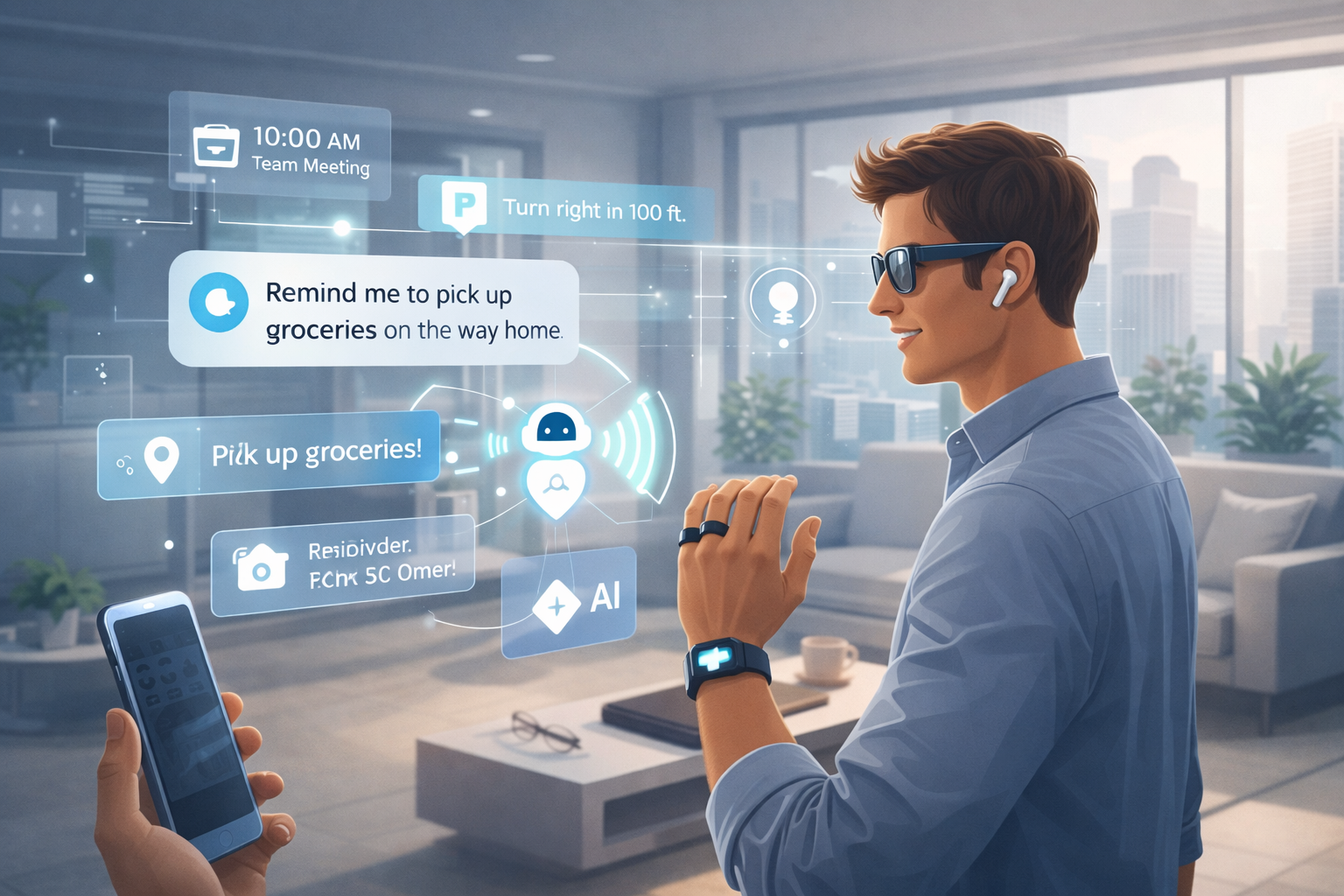
What Are AI Wearables?
AI wearables are smart devices you can wear, such as smart rings, smart glasses, earbuds, or watches. These devices use artificial intelligence to understand your voice, actions, and habits. They are designed to help you do daily tasks without using a phone screen.
Why AI Wearables Are Becoming Popular
People want faster and easier ways to use technology. AI wearables are popular because they are hands-free, lightweight, and always with you. You don’t need to take your phone out again and again.
Hands-Free Calls and Messages
With AI wearables, you can make calls and send messages using just your voice. Smart earbuds and AI glasses allow you to talk, reply, or listen to messages while walking, driving, or working.
Managing Daily Tasks Easily
AI wearables help with reminders, alarms, meetings, and to-do lists. You can ask your wearable to remind you about important tasks instead of opening apps on your smartphone.
AI Wearables as Personal Assistants
These devices work like personal assistants. They can take voice notes, summarize meetings, translate languages, and answer questions instantly. This makes daily life more organized and productive.
Getting Directions Without Looking at Your Phone
AI glasses and audio wearables can give directions and important updates through voice or small displays. This makes navigation safer and more convenient, especially when you are traveling.
Health and Fitness Support
AI wearables track your health, such as heart rate, sleep, stress, and activity levels. They use AI to give personalized health tips, reducing the need to check health apps on your phone.
Less Screen Time, More Focus
One big benefit of AI wearables is less screen usage. Instead of staring at your phone, you receive information through voice or simple alerts. This helps improve focus and reduces digital stress.
Current Limits of AI Wearables
AI wearables are improving fast, but they are not perfect yet. For long typing, watching videos, or using complex apps, smartphones are still needed. However, wearables are slowly taking over simple daily tasks.
The Future of AI Wearables
In the future, smartphones may become secondary devices. AI wearables could handle most daily activities, while phones stay in pockets or bags for rare use.
Final Thoughts
AI wearables are changing how people interact with technology. By handling daily tasks in a simple and hands-free way, they have the potential to reduce our dependence on smartphones.
