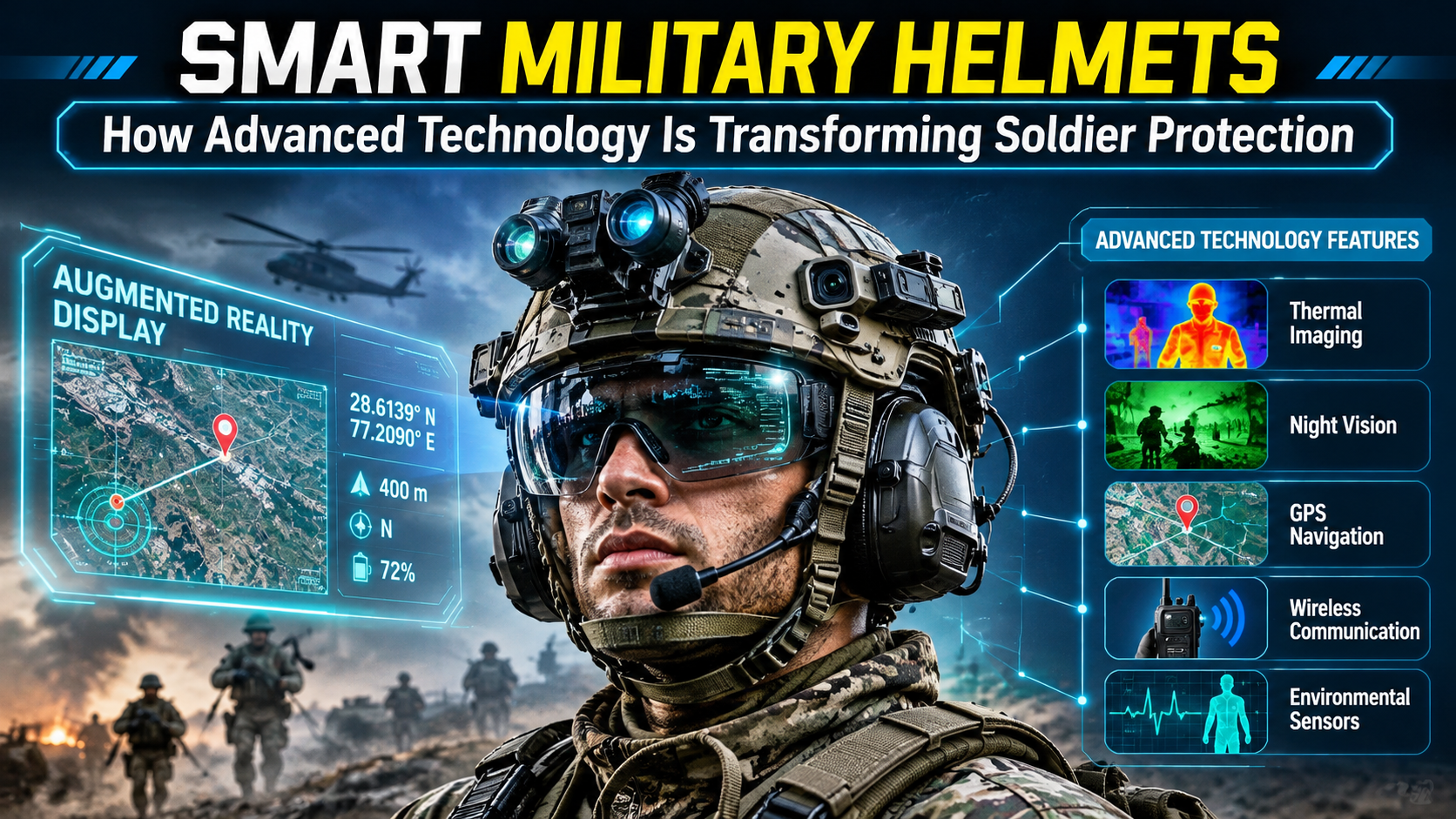
Technology is changing the way soldiers work and stay protected on the battlefield. One important innovation is the smart military helmet. Unlike traditional helmets, smart military helmets combine head protection with modern technologies such as night vision, thermal cameras, GPS, augmented reality, and communication systems. These features help soldiers see better, communicate easily, and access important information while performing their duties.
1. What Are Smart Military Helmets?
Smart military helmets are advanced helmets designed to protect soldiers while providing access to useful digital information. Traditional helmets mainly protect the head from physical injuries, while smart helmets can also include cameras, sensors, microphones, speakers, and digital displays. These technologies help soldiers understand their surroundings, communicate with their teams, and receive important updates without always needing to use separate devices.
2. Important Technologies Used in Smart Military Helmets
2.1 Augmented Reality (AR) Displays
Augmented Reality (AR) is a technology that adds digital information to what a person sees in the real world. In smart military helmets, AR displays can show maps, navigation details, alerts, and other useful information directly in front of the soldier’s eyes. This allows soldiers to access important details without constantly looking at a separate screen.
2.2 Night Vision Technology
Night vision technology helps soldiers see objects and surroundings in low-light conditions. It uses special electronic or image-enhancement systems to make dark environments easier to observe. Some advanced military helmets can support night vision devices, helping soldiers perform their duties when natural light is limited.
2.3 Thermal Imaging Cameras
Thermal imaging cameras detect heat produced by people, animals, vehicles, and other objects. Instead of depending only on visible light, these cameras create images using temperature differences. This technology can help soldiers observe their surroundings in darkness, smoke, or other difficult visibility conditions.
2.4 Advanced Communication Systems
Communication is essential during military operations. Smart military helmets can include microphones, speakers, and wireless communication connections. These systems allow soldiers to communicate with their team members and receive instructions without holding a separate communication device. This makes teamwork and coordination easier.
2.5 GPS and Navigation Systems
GPS technology helps soldiers identify their geographical location and understand where they are. When connected to digital maps and compatible displays, GPS systems can provide navigation information and location updates. This helps military personnel maintain better coordination and understand their surroundings during field operations.
2.6 Health and Environmental Sensors
Some advanced military wearable systems use sensors to monitor physical and environmental conditions. These sensors may help track information such as body temperature, heat exposure, and other health-related indicators. Such information can help identify possible safety risks and support better care for soldiers working in challenging environments.
3. Major Benefits of Smart Military Helmets
3.1 Better Head Protection
The main purpose of a military helmet is to protect a soldier’s head. Smart military helmets combine protective materials with modern electronic features. However, their level of protection depends on the helmet’s design, materials, and certified safety standards.
3.2 Improved Visibility
Night vision and thermal imaging technologies help soldiers observe their surroundings in low-light and difficult visibility conditions. These features provide additional visual information that may not be available through normal vision.
3.3 Easy Communication
Integrated microphones and speakers allow soldiers to communicate with team members more conveniently. This reduces the need to handle separate communication equipment and supports better coordination.
3.4 Quick Access to Information
Digital displays can provide important information such as maps, navigation details, and alerts. Soldiers can access this information while keeping their hands free for other activities.
3.5 Better Safety Monitoring
Sensors can help monitor selected physical and environmental conditions. This information may help identify heat-related risks, fatigue indicators, and other safety concerns during demanding activities.
4. Challenges of Smart Military Helmets
Although smart military helmets offer many benefits, they also have some challenges. Adding cameras, displays, batteries, and electronic components can make helmets heavier and less comfortable. Battery life is another important concern because electronic systems need regular charging. These helmets can also be expensive to manufacture and maintain. In addition, communication systems and connected devices must be protected against cybersecurity threats to keep important information secure.
5. Future of Smart Military Helmets
The future of smart military helmets will depend on improvements in artificial intelligence, augmented reality, lightweight materials, and sensor technology. Future helmets may provide clearer digital displays, improved battery performance, better communication, and more advanced environmental monitoring. Artificial intelligence may also help organize information and highlight important alerts. As these technologies improve, smart helmets could become an important part of modern connected soldier equipment.
6. Conclusion
Smart military helmets are an important example of how technology is improving modern military equipment. They combine traditional head protection with features such as night vision, thermal imaging, GPS, communication systems, and digital displays. These technologies help soldiers access information, communicate with their teams, and understand their surroundings more effectively. Although challenges such as weight, battery life, cost, and maintenance still exist, future innovations may make smart military helmets more comfortable, reliable, and useful.
