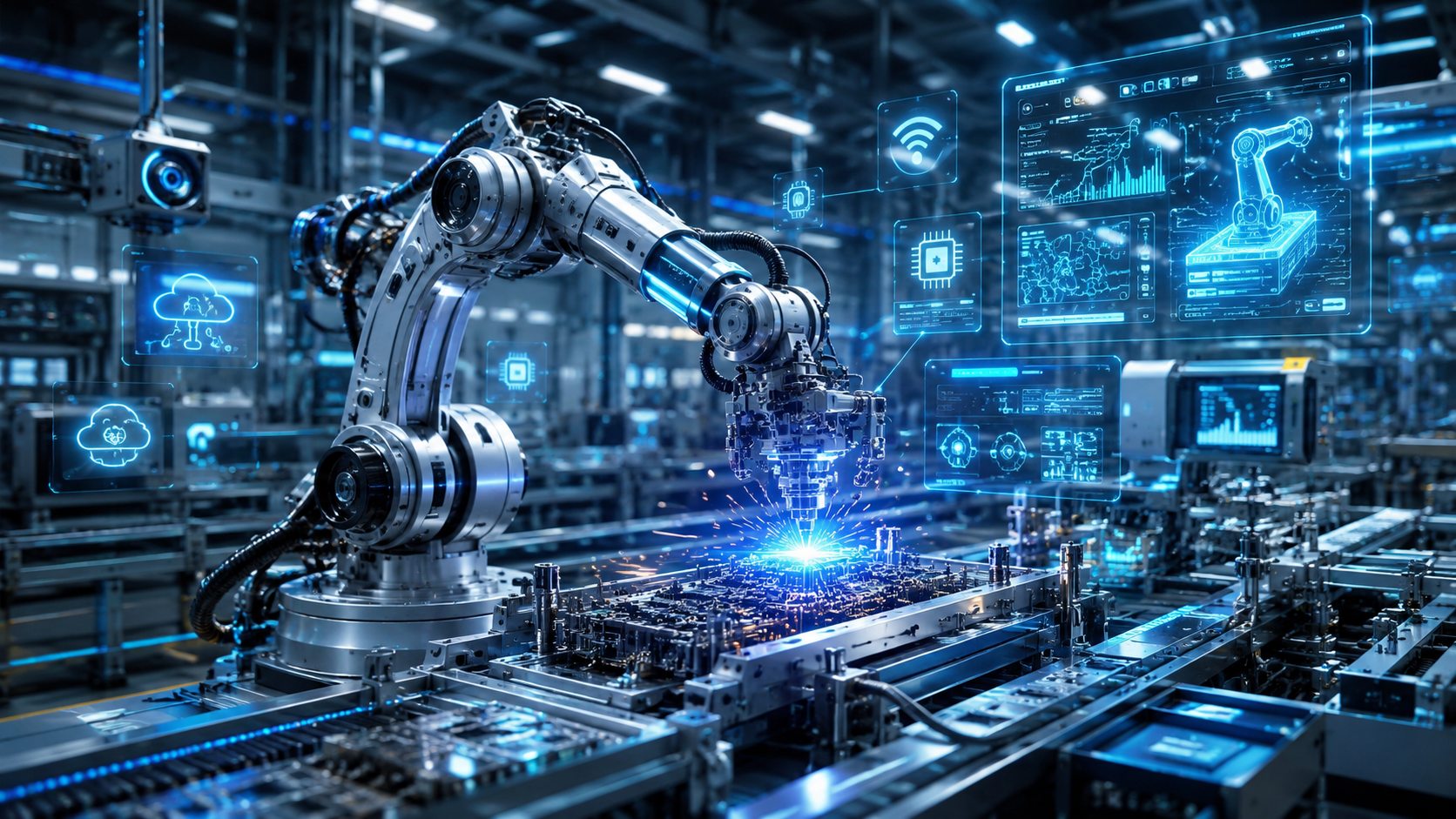
Robotic arms have become an important part of modern technology. They are used in factories, hospitals, warehouses, farms, and even space missions. These machines help people complete tasks faster, more safely, and with greater accuracy.
Years ago, robotic arms were only found in large manufacturing plants. Today, they are becoming more affordable, smarter, and easier to use. Many small and medium-sized businesses are also using robotic arms to improve their daily operations.
If you’ve ever wondered what a robotic arm is, how it works, or why so many industries depend on it, this guide will explain everything in simple words.
What Is a Robotic Arm?
A robotic arm is a machine that is designed to move like a human arm. It has different joints that allow it to bend, rotate, lift, and reach in different directions.
At the end of the robotic arm is a special tool called an end effector. This tool can grab objects, weld metal, paint surfaces, tighten screws, or perform many other tasks depending on the job.
Unlike humans, a robotic arm can repeat the same task thousands of times without getting tired or making mistakes. This makes it perfect for jobs that require speed and precision.
How Does a Robotic Arm Work?
A robotic arm works by following instructions given through software or a computer.
When a task is assigned, the controller tells each motor how much to move. The joints then rotate in the correct direction while sensors continuously check the arm’s position.
If something changes, such as an object moving slightly, the sensors help the robot adjust its movement. This allows the robotic arm to perform its job accurately every time.
Some modern robotic arms also use Artificial Intelligence (AI) and cameras to recognize objects, avoid obstacles, and make smart decisions while working.
Main Parts of a Robotic Arm
Every robotic arm has several important parts that work together.
Base
The base supports the entire robot and keeps it stable while it moves.
Joints
The joints allow the robotic arm to bend and rotate, just like the shoulder, elbow, and wrist of a human arm.
Motors
Motors provide the power needed to move each joint smoothly.
Sensors
Sensors help the robot understand its surroundings. They measure position, force, distance, and movement to improve accuracy and safety.
Controller
The controller acts like the robot’s brain. It processes instructions and controls every movement.
End Effector
The end effector is the tool attached to the end of the arm. It can be a gripper, welding torch, drill, camera, vacuum suction cup, or many other tools depending on the application.
Different Types of Robotic Arms
Not every robotic arm is built for the same purpose. Different industries use different designs depending on the type of work.
Articulated Robotic Arms
These are the most common robotic arms. They have multiple joints and can move in many directions. They are widely used in car manufacturing, welding, painting, and assembly lines.
SCARA Robots
SCARA robots are designed for fast and precise assembly work. They are commonly used in electronics manufacturing and packaging industries.
Cartesian Robots
These robots move in straight lines along the X, Y, and Z axes. They are often used in CNC machines, 3D printers, and cutting systems.
Delta Robots
Delta robots are lightweight and extremely fast. They are mainly used for sorting, packaging, and food processing.
Collaborative Robots (Cobots)
Cobots are designed to work safely alongside humans. They are easy to program and are becoming popular among small businesses because they do not require large safety barriers.
Where Are Robotic Arms Used?
Robotic arms are now used in many industries because they can perform repetitive work quickly and accurately.
Manufacturing
Factories use robotic arms to assemble products, weld parts, paint vehicles, inspect quality, and package finished goods. They help manufacturers increase production while reducing errors.
Automotive Industry
Car manufacturers use robotic arms to build vehicle bodies, install engines, paint cars, and assemble different components with high precision.
Healthcare
Hospitals use robotic arms during surgeries, laboratory testing, and medicine handling. Their accuracy helps doctors perform delicate procedures with greater confidence.
Warehouses and Logistics
Large warehouses use robotic arms to pick products, sort packages, stack boxes, and prepare customer orders. This speeds up deliveries and improves efficiency.
Agriculture
Farmers use robotic arms to harvest fruits, pick vegetables, and monitor crops. These machines help solve labor shortages and improve productivity.
Electronics Manufacturing
Electronic devices contain tiny components that require very accurate assembly. Robotic arms can place these small parts much faster and more accurately than humans.
Food Industry
Food companies use robotic arms to package products, decorate cakes, sort food items, and maintain high hygiene standards throughout production.
Benefits of Using Robotic Arms
Robotic arms offer many advantages for businesses of all sizes.
Better Productivity
Robotic arms can work all day and night without getting tired. This allows companies to produce more products in less time.
High Accuracy
These machines perform the same task with excellent precision every time, helping reduce defects and improve product quality.
Improved Safety
Dangerous jobs involving heavy lifting, toxic chemicals, or high temperatures can be handled by robotic arms, reducing the risk of workplace injuries.
Lower Long-Term Costs
Although buying a robotic arm requires an initial investment, businesses often save money over time through lower labor costs, reduced waste, and increased productivity.
Consistent Quality
Unlike manual work, robotic arms deliver the same quality repeatedly, making products more reliable.
Flexible Operations
Modern robotic arms can be programmed to perform different tasks simply by changing software or replacing the end tool.
Are There Any Limitations?
Like every technology, robotic arms also have some challenges.
The initial cost can be high, especially for advanced industrial robots. They also require regular maintenance and trained operators. Some businesses may need to upgrade their production systems before installing robotic automation.
However, as technology continues to improve, robotic arms are becoming easier to install, simpler to program, and more affordable than ever before.
The Future of Robotic Arms
The future of robotic arms looks very exciting.
New robots are becoming smarter with the help of Artificial Intelligence, machine vision, and cloud computing. Instead of only following fixed instructions, future robotic arms will learn from experience, recognize objects automatically, and safely work alongside people.
Industries are also adopting smart factories where robotic arms communicate with other machines to improve efficiency and reduce downtime.
As technology continues to advance, robotic arms will become a normal part of many workplaces around the world.
Conclusion
Robotic arms have changed the way many industries work. They help businesses complete tasks faster, improve product quality, increase safety, and reduce long-term costs.
As Artificial Intelligence and automation continue to evolve, robotic arms will become even smarter and more useful. Whether it’s building cars, performing surgeries, packing products, or harvesting crops, these machines are shaping the future of work.
Understanding how robotic arms work is the first step toward understanding the future of automation, and it’s clear that this technology will continue to play an important role in our everyday lives.
