Introduction
The world of industrial automation is changing faster than ever. Traditional robots have been helping manufacturers for many years, but a new generation of robots is taking automation to the next level. These are called self-learning robots.
Unlike conventional robots that follow fixed instructions, self-learning robots can learn from their experiences, improve their performance, and adapt to new situations. With the help of Artificial Intelligence (AI), Machine Learning, and advanced sensors, these robots are becoming smarter and more efficient every day.
As industries look for ways to increase productivity, reduce costs, and improve quality, self-learning robots are becoming an important part of modern manufacturing and industrial operations.
What Are Self-Learning Robots?
Self-learning robots are intelligent machines that can improve their work without being constantly reprogrammed by humans.
Traditional robots perform tasks exactly as they are programmed. If something changes in the production process, engineers often need to update the robot’s instructions. Self-learning robots work differently. They collect data, analyze it, and learn from previous actions to make better decisions in the future.
This ability allows them to adapt to changing environments and perform tasks more accurately over time.
How Self-Learning Robots Work
Self-learning robots use a combination of technologies to become smarter and more efficient.
Artificial Intelligence helps robots understand information and make decisions. Machine Learning allows them to learn from past experiences and improve their performance. Cameras and sensors help them see their surroundings and collect real-time data.
By continuously processing information, these robots can identify patterns, avoid mistakes, and find better ways to complete tasks.
Why Industries Are Adopting Self-Learning Robots
Businesses are constantly looking for ways to improve efficiency and stay competitive. Self-learning robots offer several advantages that help companies achieve these goals.
Because these robots can learn and adapt, they can complete tasks faster and with greater accuracy. They also help reduce human errors and improve the overall quality of products.
Another major benefit is flexibility. Manufacturers can introduce new products or modify production processes without spending significant time reprogramming robots.
This makes operations more efficient and helps businesses respond quickly to market demands.
Improving Productivity and Efficiency
One of the biggest advantages of self-learning robots is their ability to increase productivity.
As robots gather more data, they discover faster and more effective ways to perform tasks. They can optimize workflows, reduce production delays, and improve output without sacrificing quality.
This leads to smoother operations and better use of resources throughout the factory.
Better Quality Control
Maintaining product quality is essential in any industry.
Self-learning robots can inspect products using cameras and advanced vision systems. They learn to recognize defects, inconsistencies, and production errors with high accuracy.
Because they continuously improve their inspection capabilities, manufacturers can reduce waste, improve customer satisfaction, and maintain consistent product quality.
Reducing Downtime Through Predictive Maintenance
Unexpected equipment failures can be costly for manufacturers.
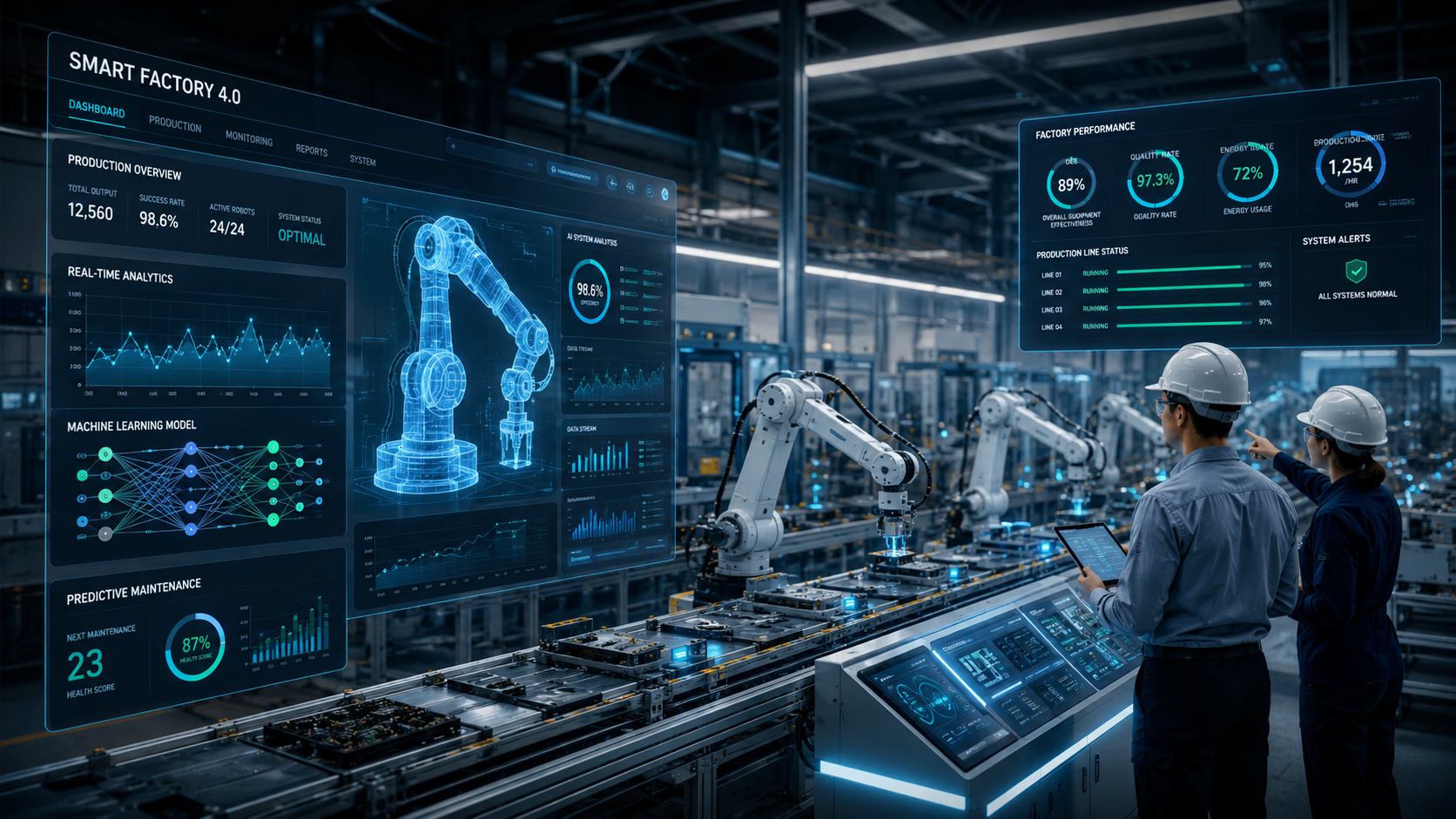
Self-learning robots help solve this problem by monitoring machines and analyzing performance data. They can detect early warning signs of potential issues before a breakdown occurs.
This approach, known as predictive maintenance, allows companies to schedule repairs in advance, reduce downtime, and avoid expensive disruptions.
Creating Safer Work Environments
Many industrial tasks involve repetitive movements, heavy lifting, or hazardous conditions.
Self-learning robots can take over these demanding tasks, reducing the risk of workplace injuries. Employees can focus on higher-value work while robots handle dangerous or physically demanding activities.
This creates a safer and more productive work environment for everyone.
Where Self-Learning Robots Are Being Used
Self-learning robots are being adopted across a wide range of industries.
In manufacturing, they assist with assembly, welding, packaging, and quality inspection. In warehouses, they help manage inventory, sort products, and move goods efficiently.
The automotive industry uses intelligent robots for precision assembly and quality checks. Electronics manufacturers rely on them to handle delicate components with extreme accuracy.
Even pharmaceutical companies are using self-learning robots to improve packaging, testing, and production processes.
The Connection Between Self-Learning Robots and Industry 4.0
Industry 4.0 is transforming factories into smart, connected environments where machines communicate and share information.
Self-learning robots play a major role in this transformation. They connect with other machines, exchange data, and make real-time decisions that improve efficiency across the entire production line.
As more businesses embrace Industry 4.0, intelligent robotics will become even more important for future manufacturing success.
Challenges Businesses Should Consider
While self-learning robots offer many benefits, companies should also consider some challenges before implementation.
The initial investment can be significant because advanced robotics systems require specialized hardware and software. Businesses also need skilled employees who can manage and maintain these technologies.
Data security is another important factor, as connected robots generate and process large amounts of information that must be protected from cyber threats.
Despite these challenges, many organizations find that the long-term benefits outweigh the initial costs.
The Future of Self-Learning Robots
The future of industrial robotics looks incredibly promising.
As Artificial Intelligence continues to evolve, self-learning robots will become even smarter, faster, and more capable. Technologies such as digital twins, edge computing, and advanced computer vision will further improve their performance.
In the coming years, we can expect robots to handle more complex tasks, work more closely with humans, and play an even bigger role in industrial operations around the world.
Conclusion
Self-learning robots are changing the way industries operate. Their ability to learn, adapt, and improve over time makes them far more powerful than traditional automation systems.
From increasing productivity and improving quality control to reducing downtime and enhancing workplace safety, these intelligent machines are helping businesses build smarter and more efficient operations.
As technology continues to advance, self-learning robots will become a key driver of innovation and growth across manufacturing, logistics, healthcare, and many other industries.
