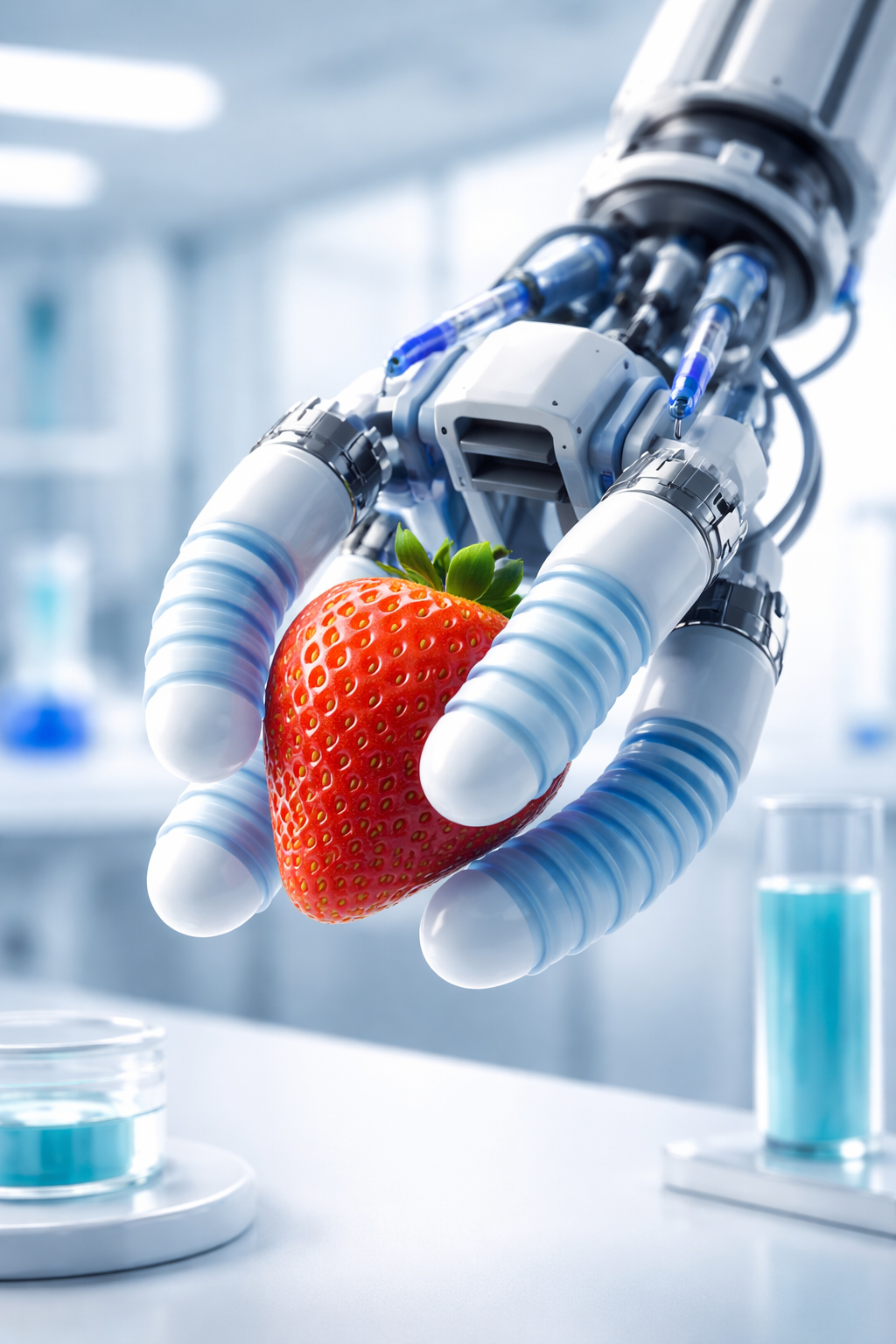
Bio-hybrid robotics and soft robots are new types of robots designed to be flexible, gentle, and more natural in movement. Unlike traditional robots made of hard metal, these robots are built using soft materials or even biological components.
Let’s understand this technology in simple language.
What Are Soft Robots
Soft robots are machines made from flexible materials like rubber, silicone, or soft plastic. They can bend, stretch, twist, and squeeze.
Because they are soft, they can safely touch humans and handle delicate objects. For example, a soft robotic gripper can pick up fruits without damaging them.
They are different from traditional robots that use rigid metal arms and motors.
What Is Bio-Hybrid Robotics
Bio-hybrid robotics combines living biological parts with robotic systems.
In some research labs, scientists use living muscle cells or tissues connected to robotic structures. These living cells help the robot move in a more natural way.
Bio-hybrid robots are inspired by nature, such as how humans move muscles or how animals crawl and swim.
The goal is to create robots that behave more like living organisms.
How Soft Robots Work
Soft robots usually move using air pressure or liquid pressure instead of traditional motors.
When air fills certain parts of the robot, it bends or moves. When the air is released, it returns to its original shape.
Some soft robots use smart materials that react to heat, electricity, or light to create movement.
This makes their motion smooth and flexible.
How Bio-Hybrid Robots Work
Bio-hybrid robots use living muscle cells that contract when stimulated by electricity or chemical signals.
These contractions create movement in the robot’s body.
Artificial intelligence systems often control these robots to help them respond to their environment.
This combination of biology and technology creates natural-like motion.
Why This Technology Is Becoming Popular
Traditional robots are powerful but not always safe around humans.
Soft and bio-hybrid robots are safer because they are flexible and less likely to cause injury.
They are also better at handling fragile materials and working in tight spaces.
As industries look for safer and smarter automation, these robots are gaining attention.
Uses in Healthcare
Soft robotic devices help patients in physical therapy.
Flexible robotic tools assist doctors in surgery.
Wearable soft robotic suits help people walk again after injury.
Bio-hybrid systems are being explored for advanced prosthetic limbs.
Healthcare is one of the most important areas for this technology.
Uses in Industry and Farming
Soft robotic grippers can pick fruits without bruising them.
Factories use soft robots to handle delicate electronics.
Underwater soft robots explore oceans safely.
Food processing companies use flexible robots for careful packaging.
These robots are useful wherever gentle handling is needed.
Benefits of Soft and Bio-Hybrid Robots
They are safer for human interaction.
They can move more naturally.
They are better for delicate tasks.
They improve automation in sensitive environments.
They open new possibilities in medical and biological research.
Challenges and Limitations
Soft materials may wear out faster than metal parts.
Bio-hybrid systems require special biological care.
Production costs can be high.
Medical applications need strict approval processes.
Even with these challenges, research continues to grow.
Future of Bio-Hybrid and Soft Robotics
In the future, we may see more wearable soft robots for daily use.
Hospitals may use advanced bio-inspired robots regularly.
Soft robots may assist in disaster rescue operations.
Scientists may develop robots that move almost like living creatures.
This technology has strong potential to shape the future of robotics.
Final Thoughts
Bio-hybrid robotics and soft robots represent a new direction in automation. Instead of hard, rigid machines, we are moving toward flexible, human-friendly systems.
As materials and artificial intelligence improve, these robots will become more common in healthcare, industry, and everyday life.
