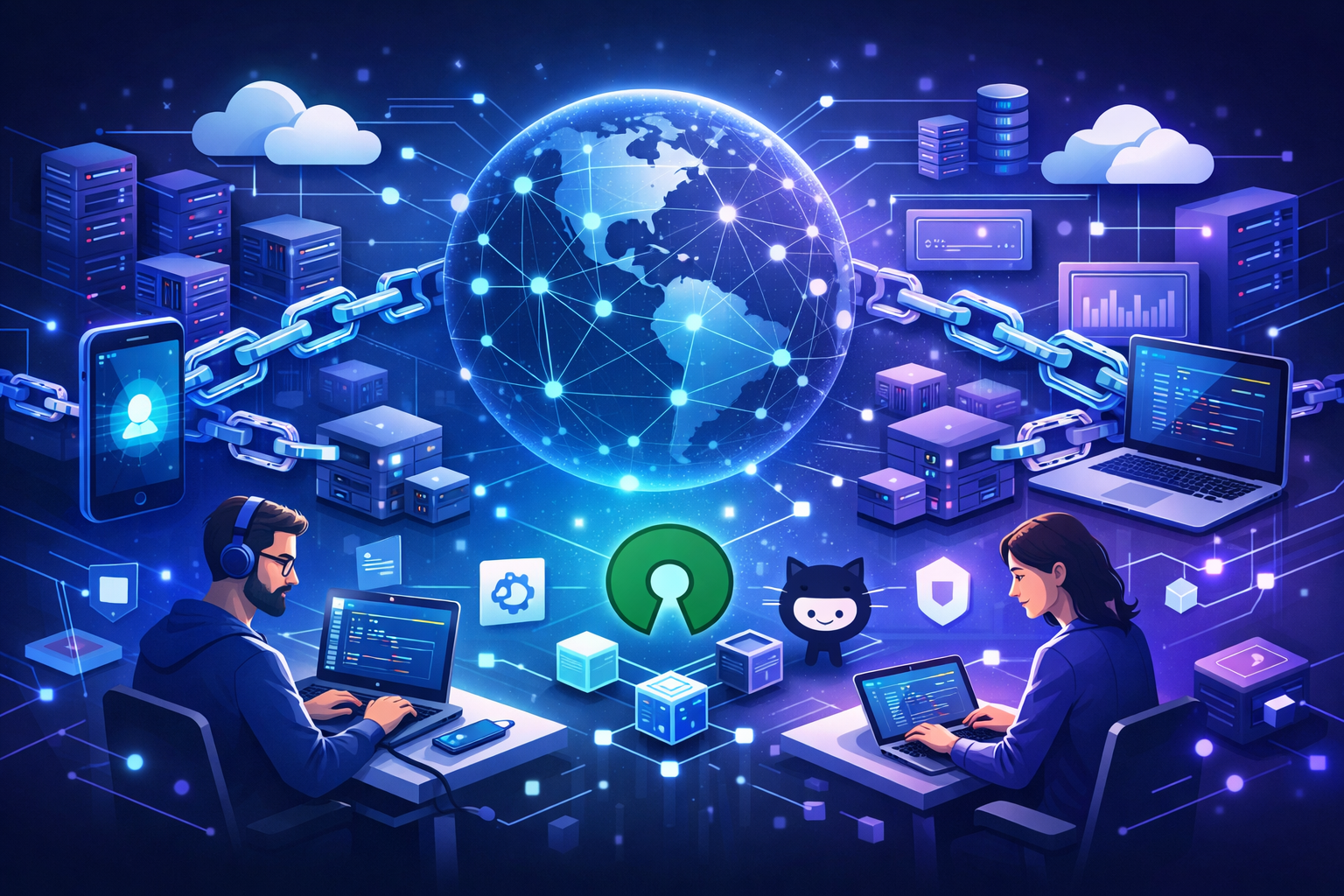
Decentralization is changing the way modern software is built and used. Earlier, most software depended on one central company or server. Today, decentralized software spreads control, data, and power across many users and systems. This makes software safer, more transparent, and more user-friendly.
What Is Decentralized Software?
Decentralized software does not depend on a single server or owner. Instead, it runs on many computers connected through a network.
In simple words:
- No single company controls everything
- Data is shared across many systems
- The software keeps running even if one server fails
Examples include blockchain apps, peer-to-peer software, and open-source platforms.
Why Decentralization Is Becoming Popular
People are moving away from centralized software because of common problems like data theft, server downtime, and lack of user control.
Decentralized software is popular because it:
- Keeps data more secure
- Gives users control over their own information
- Reduces the risk of system failure
- Builds trust through transparency
Users today care more about privacy and freedom, which is why decentralization is growing fast.
How Decentralization Improves Data Privacy
In decentralized systems, user data is not stored in one central location. This makes it harder for hackers to steal information.
Benefits include:
- Better protection of personal data
- Less tracking by companies
- More control for users
This is especially important for apps related to finance, communication, and storage.
Open-Source and Community-Based Software
Most decentralized software is open source. This means anyone can view, improve, or contribute to the code.
Advantages:
- Faster innovation
- Better quality software
- Transparent development process
Developers from around the world work together to build stronger software ecosystems.
Stronger and More Reliable Software Systems
Because decentralized software runs on many systems, it is more reliable than traditional software.
If one part stops working:
- The rest of the network continues
- Users experience less downtime
- Systems are harder to shut down or censor
This makes decentralized software more stable and trustworthy.
Less Dependence on Big Companies
Traditional software often locks users and developers into one platform or provider. Decentralization removes this dependency.
Benefits include:
- Freedom to choose services
- No vendor lock-in
- More flexibility for developers
This gives power back to users and businesses.
Technologies Behind Decentralized Software
Some key technologies that support decentralization include:
- Blockchain – Secure and transparent record keeping
- Peer-to-Peer Networks – Direct user-to-user communication
- Decentralized Storage – Files stored across many locations
- Decentralized Identity – Users control their own digital identity
These technologies work together to create modern decentralized ecosystems.
Real-Life Examples of Decentralized Software
Decentralized software is already being used in many areas, such as:
- Decentralized applications (dApps)
- Cryptocurrency and finance platforms
- Privacy-focused messaging apps
- Open-source media platforms
- Distributed cloud storage services
These examples show how decentralization is being used in real life.
Challenges of Decentralized Software
Despite many benefits, decentralization also has challenges:
- More complex development process
- Some systems are still slow or expensive
- User experience needs improvement
- Legal rules are still unclear in some countries
Developers are actively working to solve these problems.
The Future of Decentralized Software
Decentralization will not completely replace traditional software. Instead, the future lies in hybrid software models that combine centralized speed with decentralized security.
As demand for privacy, security, and transparency increases, decentralized software will play a bigger role in modern software ecosystems.
