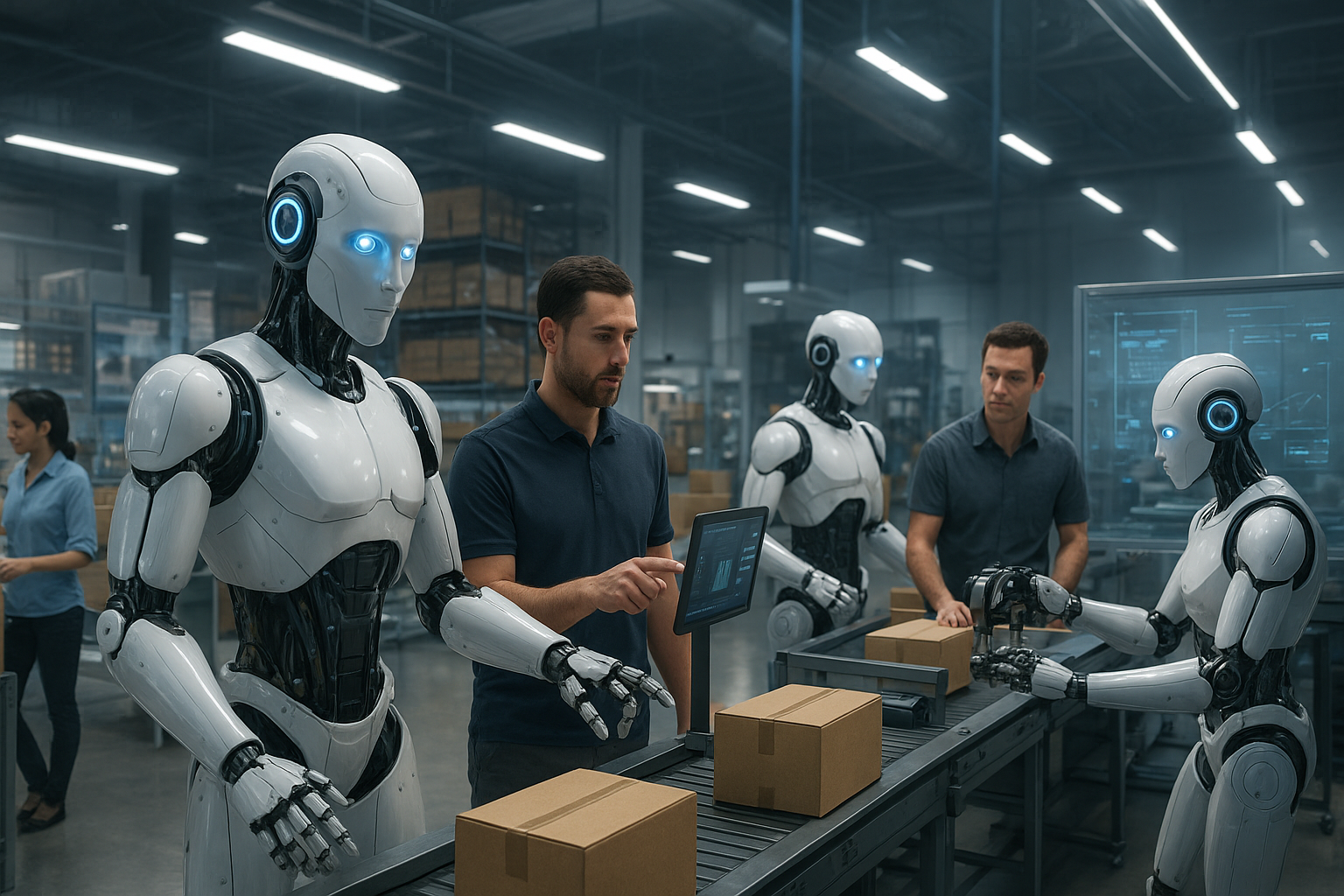
A simple explanation of why human-like robots are becoming more common
Humanoid robots, or robots that resemble and behave like humans, are no longer a mere fantasy of the future. They are, in fact, scheduled to carry out real jobs across various industries in 2025-2026. To explain, these machines have the anatomy and faculties of a human such as limbs, eyes, and an AI-powered “brain” to help them figure out and execute jobs cast for human workers in their environment.
⭐ Why Humanoid Robots Are Becoming Popular Now
Humanoid robots were for decades slow, expensive, and unstable enough to be put out of operation in real-life scenarios. However, technology has progressed in the following areas today:
- Artificial Intelligence (AI)
- Motion control and balancing
- Battery life
- 3D vision and object detection
- Natural language understanding
Due to these changes, businesses such as Tesla, Figure AI, Agility Robotics, Sanctuary AI, and others a so great that they are putting robots on the line in real environments like warehouses, agricultural fields, and factories. The trials have been successful in that the machines dealt with repetitive, physically hard, or dangerous work well and on time.
🏭 1. How Humanoid Robots Are Helping in Warehouses
Humanoid robots are becoming widely used in logistics centers and warehouses. They are able to:
- Pick and sort products
- Move boxes or inventory
- Assist with packaging and shipping
Additionally, warehouses have no need to totally rethink their work style since the robots could be used as usual (i.e., they go about their work as humans do and thus human workers will feel comfortable with it).
⚙️ 2. Using Humanoid Robots in Manufacturing
Factories are planning to use humanoid robots to:
- Help in operating tools and machines
- Bring and assemble small parts
- Carry out repetition work on the assembly line
These machines also can take over human workers’ fatigue and double the workforce at night or off-peak hours.
🛒 3. Humanoid Robots in Retail Stores
Retailers experiment with humanoids to do the following work:
- Shelving and stocking
- Customer guidance
- Checking product availability
Since robots look nice and are somewhat similar to humans, customers consider them easy to communicate with.
🏥 4. Helping in Hospitals and Elderly Care
Humanoid robots in health-care institutions help staff by:
- Moving light medical instruments
- Delivering necessities
- Assisting old or handicapped patients
Thanks to their human-like shape, they scare less and thus are more trustworthy with patients.
🛡️ 5. Improving Security and Surveillance
Security troops attain the following objectives with the help of humanoid robots:
- Patrolling buildings or the parking lot
- Using AI vision for behavior/environs detection
- Checking out high-risk spots while keeping personnel safe
⚡ What Makes Modern Humanoid Robots So Advanced?
The current ones are able to function better due to some major changes:
- AI plus language models make comprehension of sentences much easier for them
- Improved legs and joints work for walking and climbing to be done smoothly
- Hands with high precision allow the use of instruments
- Lesser production cost makes them marketable
- Subscription (RaaS) models allow companies to rent robots rather than buying them
📈 Why Businesses Are Interested in Humanoid Robots
Industries of any kind are most likely to face such problems as insufficient workers, increasing labor costs, and demand for non-stop operations. The latter can be solved through the introduction of robotic assistants if a company’s aim is to:
- Maintain productivity around the clock
- Reduce injury cases
- Perform tasks flexibly
- Carry out long-term operations at a low cost
Experts suggest that within a decade, humanoids might turn into a billion-dollar industry with a major share of the market.
