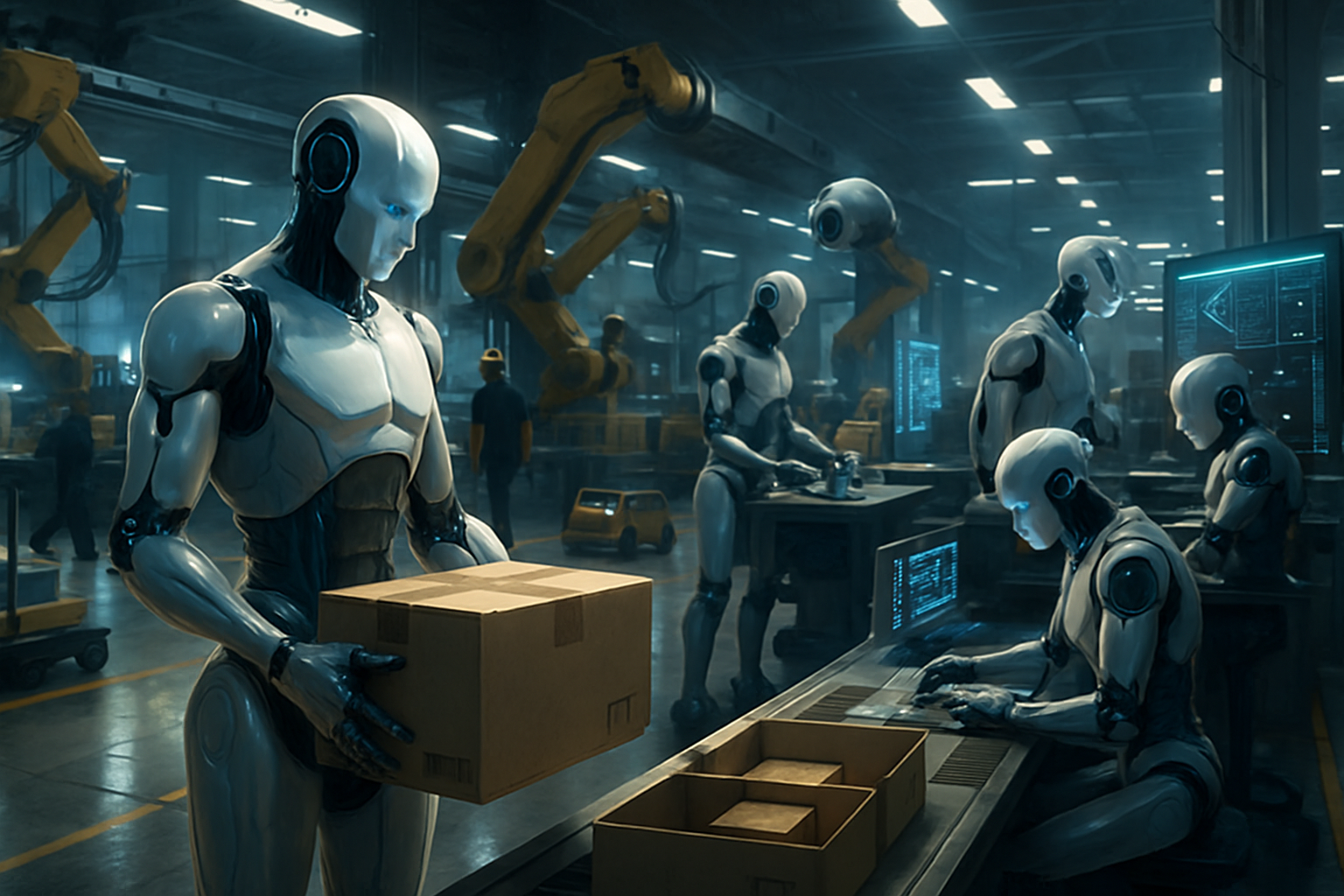
Humanoid robots aren’t just sci-fi movie stuff anymore—they’re becoming real players in today’s industries. Built to resemble humans in looks and movement, these machines can adjust to current work areas and handle jobs that people used to do. By 2025, we’ll see more of them in factories, warehouses, and service industries. Let’s take a closer look at the main factors behind this shift.
💡 What They Are
Humanoid robots are machines that look like humans in shape and motion featuring arms, legs, and a head. Unlike stationary robotic arms, these robots can walk, bend, lift, and use tools—giving them flexibility for various jobs. Since they fit into spaces designed for people, businesses can use them without changing their work environments.
🚀 What’s Making Them Popular
Several things are driving industries to use humanoid robots:
- Labor Shortages – Many industries find it hard to hire skilled workers for jobs that are repetitive or demand physical effort.
- AI Gets Better – Smarter systems for making decisions let robots adjust to changing tasks as they happen.
- Hardware Improves – New designs weigh less, have more strength, and use less energy, making them more useful in everyday situations.
- Safety & Teamwork – Today’s robots can work next to humans boosting cooperation between people and machines.
🏭 Real-World Use Cases
Some well-known humanoid robots already at work in industries include:
Here’s my attempt at rewriting the text:
- Boston Dynamics Atlas – Shows skill in moving and balancing now put to the test in warehouses and on building sites.
- Tesla Optimus – Built to do the same tasks over and over in Tesla factories.
- Agility Robotics Digit – Already lends a hand in Amazon warehouses to shift and organize packages.
- South Korea’s K-Humanoid Alliance – A plan to build robots that can pick up more than 20 kg by 2028.
📈 How Businesses Gain
Human-like robots offer several plus points:
- Simple to Add – Fits into current people-focused workplaces.
- Round-the-Clock Output – Keeps going without needing rest or getting tired.
- Juggling Multiple Jobs – Can take care of putting things together, packing, checking, and sending out.
- Money-Saver in the Long Run – Cuts down on worker costs and stops over time.
⚠️ Roadblocks They Face
Even though they show promise, human-like robots still have some obstacles to get past:
- High Initial Cost – Buying these robots costs a lot, but new rental options like Robotics-as-a-Service are making them cheaper to use.
- Job Replacement Concerns – There’s a risk of fewer jobs for humans if we don’t balance how we use these robots.
- Technical Limits – We’re still working on making batteries last longer, robots move more , and solve problems faster.
🔮 The Future Outlook
Humanoid robots are changing how industries work in a big way. We think they’ll help fix worker shortages, make things run smoother, and get more done. Companies that start using them now will get ahead in the race to use machines for work.
