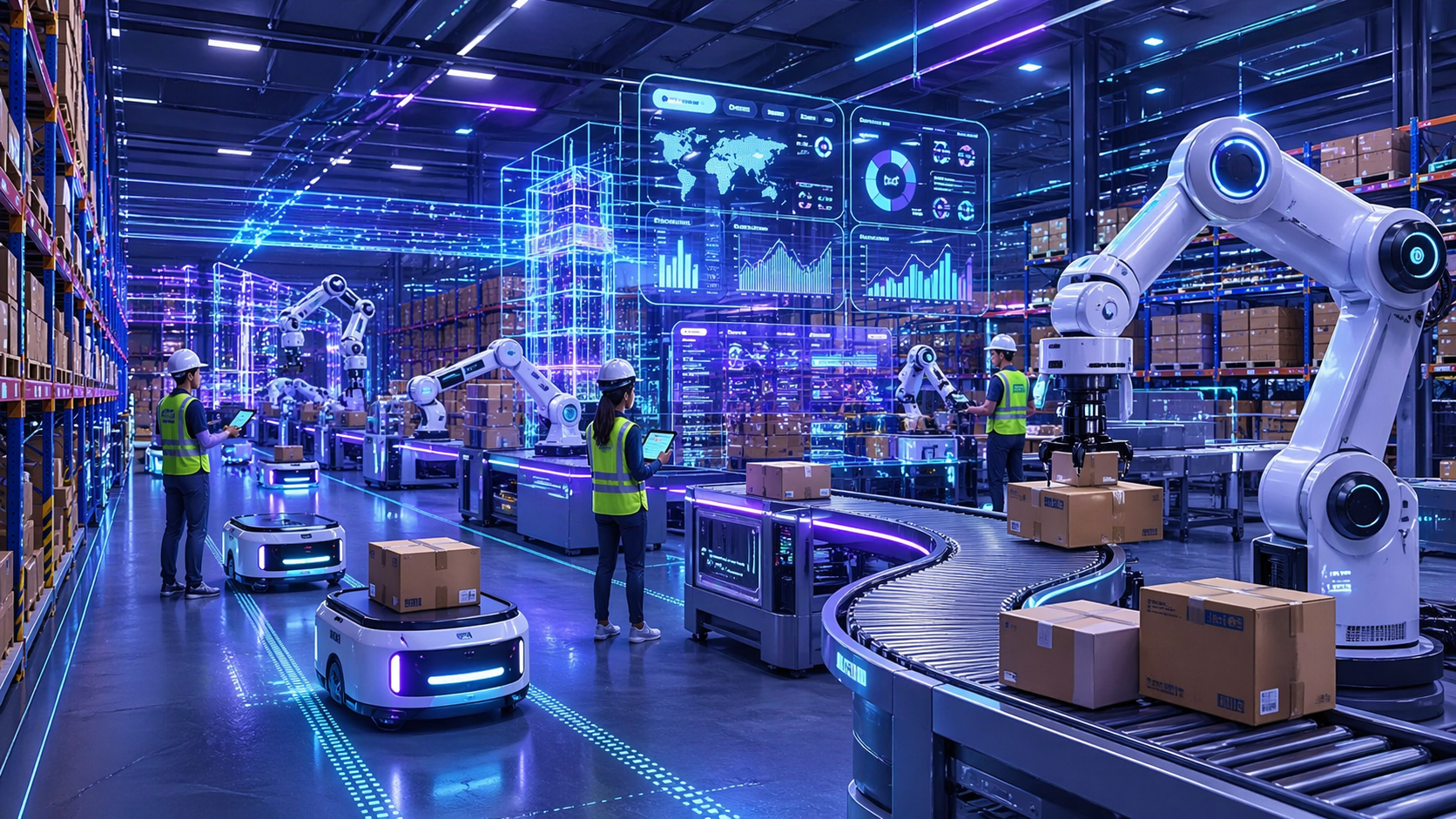
Understanding Smart Warehousing
Smart warehousing is a modern way of managing warehouses using technology like robots, artificial intelligence, and automation tools. Instead of doing everything manually, machines and software help store products, track inventory, and manage orders. This makes the whole process faster, smoother, and more organized, especially for online businesses.
How Robotics Helps in E-commerce
In e-commerce, companies receive a large number of orders every day. Robots make this work easier by handling tasks like picking items, moving goods, and packing orders.
For example, when an order is placed, a robot can quickly find the product, bring it to the packing area, and prepare it for delivery. This saves time and reduces mistakes. Humans still play an important role, but robots take care of repetitive and time-consuming tasks.
Technologies Used in Smart Warehouses
Autonomous Mobile Robots (AMRs)
These robots can move freely inside the warehouse without fixed tracks. They use sensors to avoid obstacles and choose the best path.
Robotic Picking Systems
Special robotic arms pick products from shelves with good accuracy, especially useful for small and lightweight items.
AI-Based Inventory Management
AI helps track stock levels, predict demand, and make sure products are always available when needed.
Automated Sorting Systems
Packages are sorted automatically based on their destination, which speeds up the shipping process.
Benefits of Smart Warehousing
Faster Delivery
Automation helps process orders quickly, allowing companies to offer faster delivery services.
Better Accuracy
Robots reduce human errors, so customers receive the correct products more often.
Lower Costs Over Time
Even though the setup cost is high, automation saves money in the long run by reducing manual work.
Easy to Scale
Businesses can handle more orders during peak seasons without much stress.
Real-Life Example
A company like Amazon uses advanced robots in its warehouses to manage millions of products. These robots help deliver orders quickly and efficiently, which is one reason why customers trust their fast service.
Challenges You Should Know
High Setup Cost
Setting up robotic systems requires a big investment, which may not be easy for small businesses.
Complex Integration
Connecting new technology with existing systems can take time and effort.
Maintenance Needs
Robots and systems need regular updates and maintenance to work properly.
Future of Smart Warehousing
The future looks even more advanced. Warehouses will become smarter with better AI, faster robots, and improved systems that can make decisions on their own. As online shopping grows, more businesses will adopt this technology to stay competitive.
