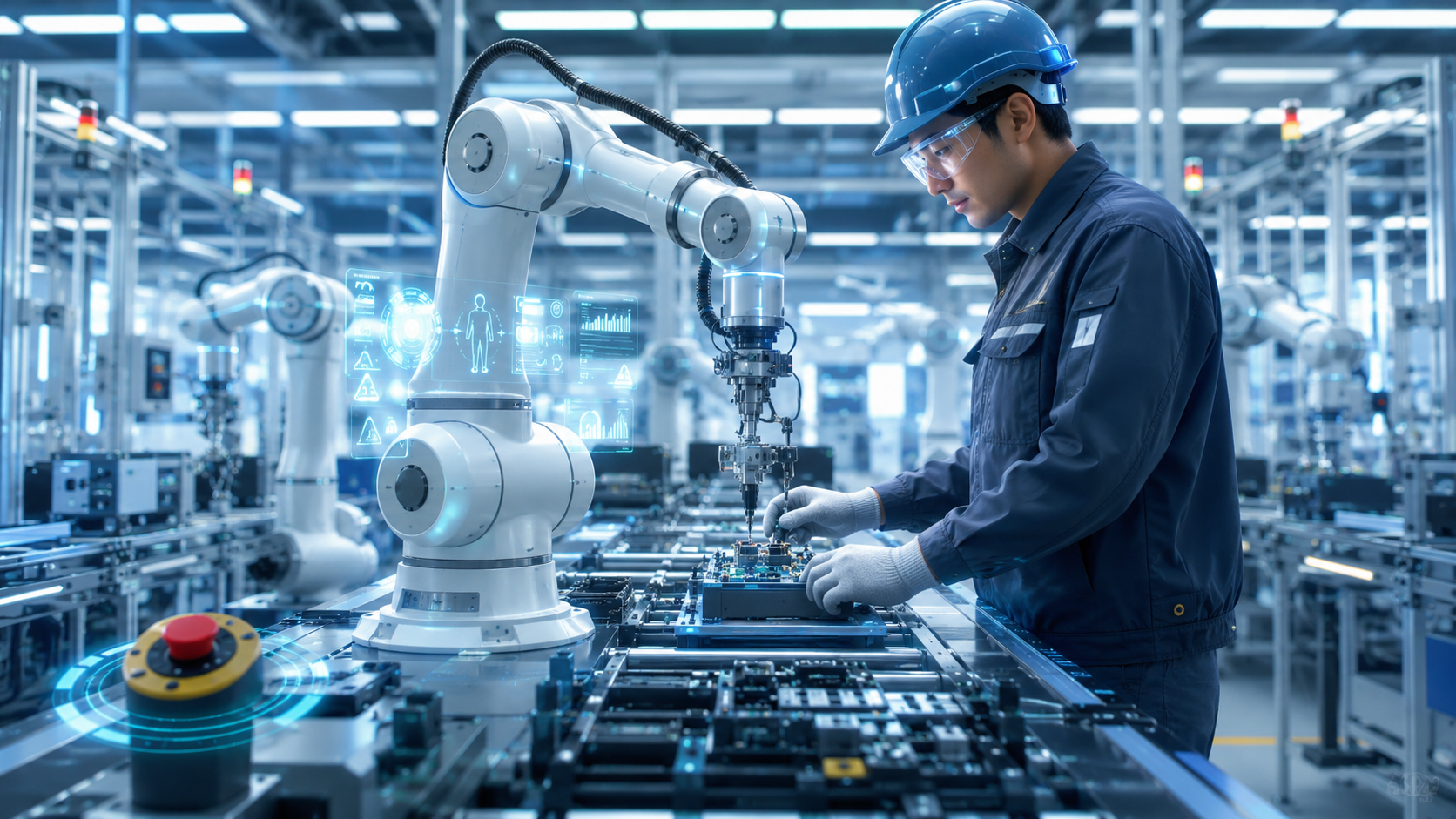
Automation is becoming a part of almost every industry, and collaborative robots, also known as cobots, are leading this change. Unlike traditional industrial robots that work behind safety fences, cobots are designed to work alongside people. They help businesses complete repetitive tasks faster while allowing employees to focus on more important work.
Whenever people hear the word “robot,” they often wonder if it is safe to work near one. The good news is that cobots are built with safety as their top priority. They use advanced sensors, smart software, and international safety standards to reduce risks and create a safer working environment.
In this blog, we’ll explain how cobots stay safe, what robot safety standards mean, and why businesses trust cobots in modern workplaces.
What Is a Cobot?
A cobot, short for collaborative robot, is a robot designed to work together with people instead of replacing them. Traditional robots usually operate inside protective cages because they move very fast and carry heavy loads. Cobots, however, are made to share the same workspace with human workers.
These robots are easy to program, flexible to use, and can handle repetitive jobs without getting tired. They are commonly used in manufacturing, packaging, electronics, healthcare, warehouses, and many other industries.
Why Is Safety So Important?
Even though cobots are designed to work with people, they are still machines. If they are installed incorrectly or used without proper planning, accidents can happen.
Following safety guidelines protects employees from injuries, keeps production running smoothly, and helps businesses meet legal safety requirements. A safe workplace also gives workers more confidence when working with robotic systems.
How Do Cobots Keep People Safe?
One of the biggest reasons companies choose cobots is because they come with several built-in safety features. These features help reduce the risk of accidents while allowing humans and robots to work together comfortably.
Force Limiting
Cobots constantly monitor how much force they apply while moving. If they accidentally touch a person, they immediately reduce their force or stop moving to prevent injury.
Collision Detection
Modern cobots can detect unexpected contact. If they hit an object or a person, they stop almost instantly, reducing the chance of serious accidents.
Speed Control
Many cobots automatically slow down when someone enters their work area. Once the person moves away, the robot safely returns to its normal speed.
Emergency Stop Button
Every cobot includes an emergency stop button. If something unexpected happens, workers can press the button to stop the robot immediately.
Smart Sensors
Cobots use advanced sensors and cameras to monitor their surroundings. These sensors help the robot detect people, avoid obstacles, and move safely inside the workspace.
What Are Robot Safety Standards?
Robot safety standards are international guidelines that help manufacturers and businesses use robots safely. These standards explain how robots should be designed, installed, tested, and maintained.
Following these standards helps reduce workplace risks and ensures that both workers and robots can operate safely together.
ISO 10218
ISO 10218 is one of the most important safety standards for industrial robots. It provides rules for robot manufacturers and businesses on how robots should be installed and operated safely.
It covers topics such as robot design, emergency stop systems, maintenance, and safe operation.
ISO/TS 15066
ISO/TS 15066 is specially created for collaborative robots.
This standard explains how humans and cobots should safely work together. It includes guidance on safe contact limits, risk assessment, and proper safety measures for collaborative workspaces.
Many modern cobots are designed by following this standard.
Why Risk Assessment Is Necessary
Before a cobot starts working, businesses should carefully check the workplace for possible risks. This process is called a risk assessment.
During a risk assessment, companies identify possible hazards, check how people will interact with the robot, and decide what safety measures are needed.
Whenever the production process changes or new equipment is added, the risk assessment should also be updated.
Can Cobots Still Be Dangerous?
Cobots are much safer than traditional industrial robots, but no machine is completely risk-free.
Problems usually happen because of human mistakes rather than the robot itself. For example, using the wrong tool, poor programming, skipping maintenance, or not training workers properly can all create safety risks.
This is why proper planning and regular inspections are always important.
Best Practices for Safe Cobot Use
Using cobots safely is not difficult, but businesses should always follow a few simple practices.
Train employees before they start working with robots so they understand how the system works.
Inspect the robot regularly to make sure sensors, motors, and safety features are working properly.
Keep software updated so the robot can use the latest safety improvements.
Choose certified robots that follow international safety standards.
Review safety procedures regularly, especially when production changes.
These simple steps can greatly reduce workplace risks.
Benefits of Using Safe Cobots
When used correctly, cobots provide many benefits for both businesses and employees.
They reduce repetitive work, improve production speed, increase product quality, and lower the chances of workplace injuries.
Instead of replacing workers, cobots help people by handling physically demanding or repetitive tasks. This allows employees to focus on work that requires creativity, problem-solving, and decision-making.
The Future of Cobot Safety
Robot technology continues to improve every year. Future cobots will become even safer by using artificial intelligence, smarter cameras, better sensors, and faster decision-making.
These improvements will help robots understand their surroundings more accurately and respond more quickly when people are nearby.
As technology advances, working with robots will become even safer and more efficient.
Final Thoughts
Cobots are changing the way people work by making jobs easier, faster, and safer. Their built-in safety features, combined with international safety standards like ISO 10218 and ISO/TS 15066, allow humans and robots to work together with confidence.
However, safety does not depend only on the robot. Proper installation, employee training, regular maintenance, and risk assessments are all important for creating a safe workplace.
As more businesses adopt automation, cobots will continue to play an important role in improving productivity while keeping workers safe.
