🌟 Simple Meaning of Multi-Agent Systems
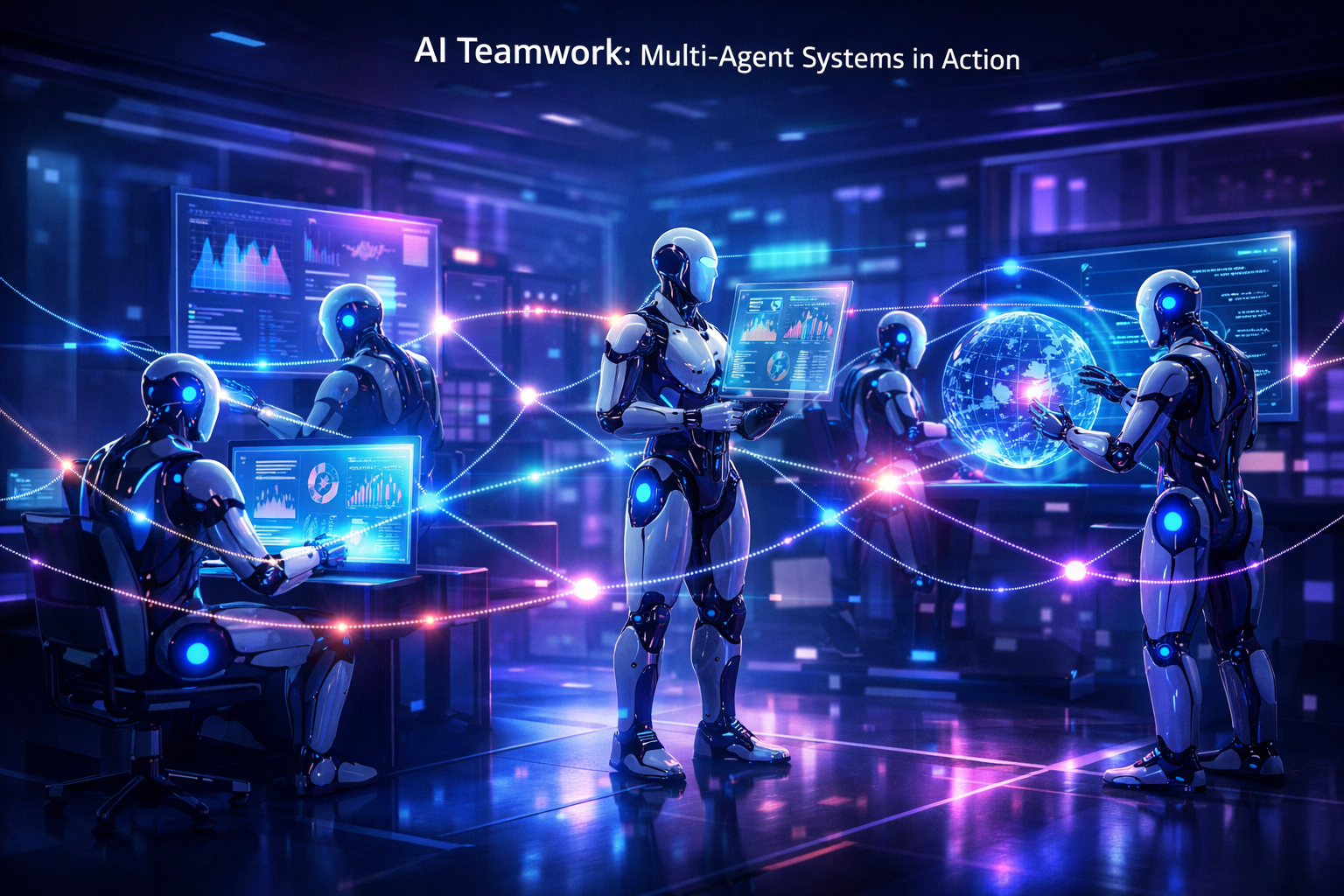
Multi-agent systems are software where many small AI programs (called agents) work together like a team.
Instead of one big system doing everything, each agent handles a specific task. This makes the work easier and more organized.
For example, imagine a team in an office — one person collects data, another analyzes it, and someone else makes decisions. Multi-agent systems work in the same way, but digitally.
🧠 How These Systems Work Together
Each agent in the system has its own role and responsibility. They communicate with each other, share information, and take actions based on that.
It’s like teamwork:
- One agent gathers information
- Another processes it
- Another gives the final output
Because of this teamwork, the system becomes faster and smarter.
🔥 Why Multi-Agent Systems Are Becoming Popular
Today’s software needs to handle large data and complex tasks. A single system can become slow or overloaded.
Multi-agent systems solve this problem by dividing the work. This leads to:
- Faster results
- Better performance
- Smarter decision-making
That’s why many companies are moving toward this technology.
💼 Where Multi-Agent Systems Are Used
You might not notice it, but multi-agent systems are already used in many areas:
In customer support, different AI agents handle chats, complaints, and solutions.
In e-commerce, agents manage product recommendations, pricing, and stock.
In finance, they help detect fraud and make smart trading decisions.
In gaming, multiple AI characters interact and behave intelligently.
⚙️ Benefits of Using Multi-Agent Systems
One of the biggest benefits is speed. Since work is divided, tasks get completed quickly.
Another benefit is flexibility. You can add more agents when the system grows.
It also improves problem-solving because each agent focuses on a specific part.
Overall, it helps automate work and reduces human effort.
⚠️ Challenges You Should Know
Even though this technology is powerful, it also has some challenges.
Agents need proper communication, otherwise confusion can happen.
Designing such systems can be complex.
Fixing errors (debugging) can also be harder compared to simple systems.
But with the right planning, these problems can be managed easily.
🌐 Future of Multi-Agent Systems
In the future, software will not work alone — it will work like a team.
We will see systems where multiple AI agents handle business operations, make decisions, and improve efficiency without much human involvement.
This is a big step toward fully automated and intelligent software systems.
