Understanding the Idea
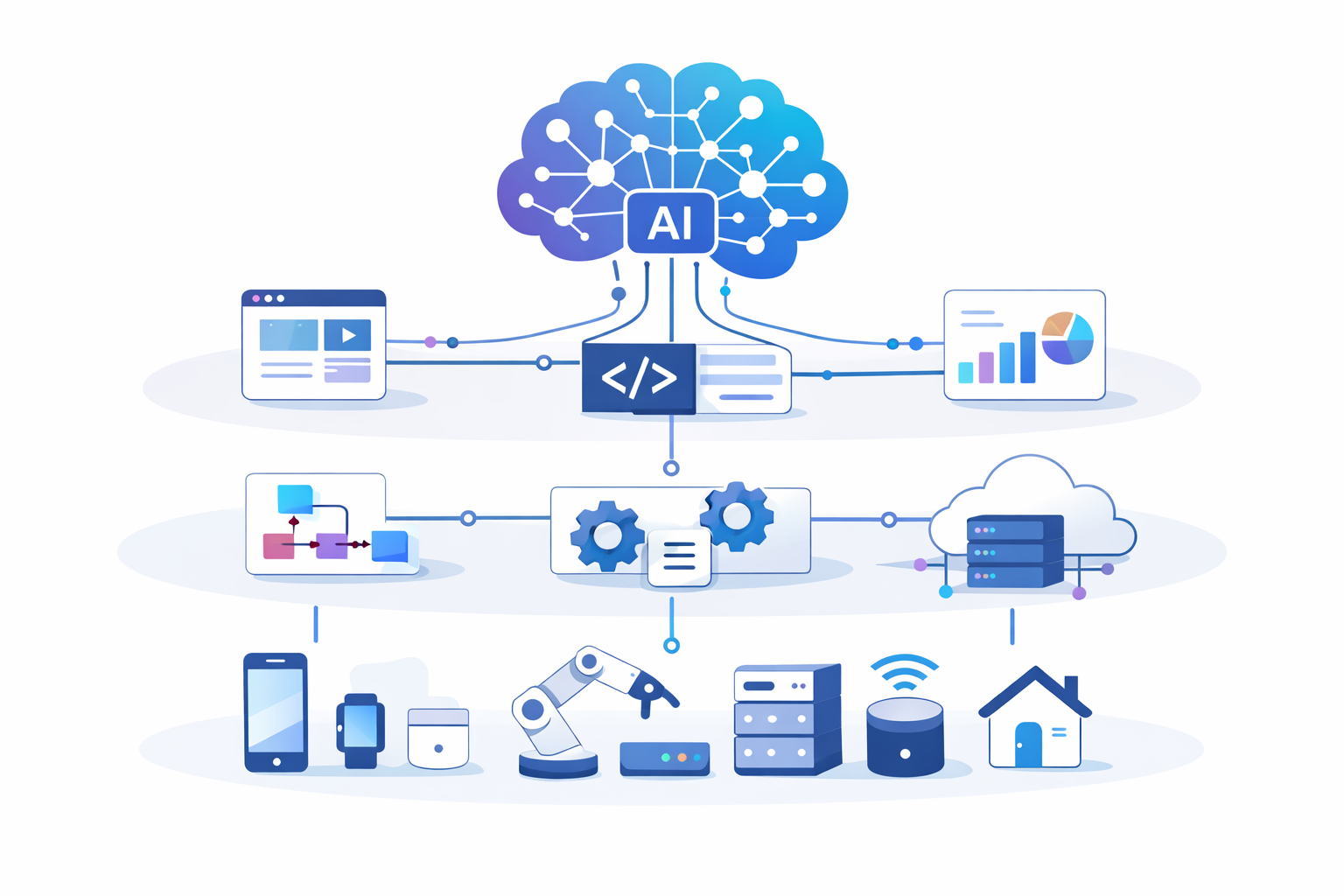
AI as a control layer means using artificial intelligence as the main decision-maker for software, processes, and connected devices. Instead of humans manually controlling systems or relying on fixed rules, AI decides what to do, when to do it, and how to do it.
Think of AI as the brain that controls everything underneath it.
How AI Control Layers Work
Traditional software follows strict instructions written by developers. It only does what it’s told.
An AI control layer works differently. It:
- Observes data from systems and users
- Understands the current situation
- Makes decisions based on goals
- Takes action automatically
- Learns from results to improve over time
This makes systems smart, flexible, and self-improving.
AI as the Control Layer in Applications
In applications, AI controls how the app behaves and responds to users.
Instead of users adjusting settings manually, AI adjusts things automatically.
Examples include:
- A CRM that decides which sales leads matter most
- A design or coding tool that suggests the next best action
- A business app that changes its layout based on how users work
Here, AI manages the app experience so users can focus on results, not settings.
AI as the Control Layer in Workflows
Workflows are the steps businesses follow to complete tasks. AI control layers make these workflows smart and adaptive.
Instead of fixed automation rules, AI:
- Detects delays and problems
- Reassigns tasks automatically
- Chooses the best path to complete work
- Improves workflows over time
This helps businesses work faster and reduce manual effort.
AI as the Control Layer for Devices
AI also controls physical devices, especially in IoT and smart environments.
AI can:
- Adjust machines in factories
- Optimize energy usage in buildings
- Control traffic systems in smart cities
- Adapt smart homes to user habits
In these cases, AI makes real-time decisions without waiting for human input.
Why Businesses Are Adopting AI Control Layers
Companies are moving toward AI control layers because they offer many benefits.
AI-controlled systems:
- Adapt quickly to changes
- Scale easily across many systems
- Reduce human workload
- Make better decisions using data
- Improve performance over time
This shift helps businesses stay competitive and efficient.
Difference Between Traditional Automation and AI Control Layers
Traditional automation follows fixed rules and needs frequent updates.
AI control layers:
- Make decisions dynamically
- Learn from experience
- Focus on goals instead of tasks
- Work well in complex and changing environments
This makes AI systems far more powerful and flexible.
Where AI Control Layers Are Used Today
AI control layers are already being used in many industries, such as:
- Business software and enterprise tools
- Healthcare systems and patient workflows
- Manufacturing and supply chains
- Financial services and fraud detection
- Smart cities and infrastructure management
Their use is growing rapidly across sectors.
The Future of AI Control Layers
In the future, AI control layers will become even more advanced.
They will:
- Act like AI operating systems
- Run autonomous AI agents
- Manage entire digital ecosystems
Instead of telling software what to do, humans will simply set goals, and AI will handle everything else.
Final Thoughts
AI as the control layer is changing how software, workflows, and devices operate. It turns systems into intelligent, self-managing platforms that adapt automatically.
For businesses and developers, this approach means less manual work, smarter decisions, and better results in a fast-changing digital world.
