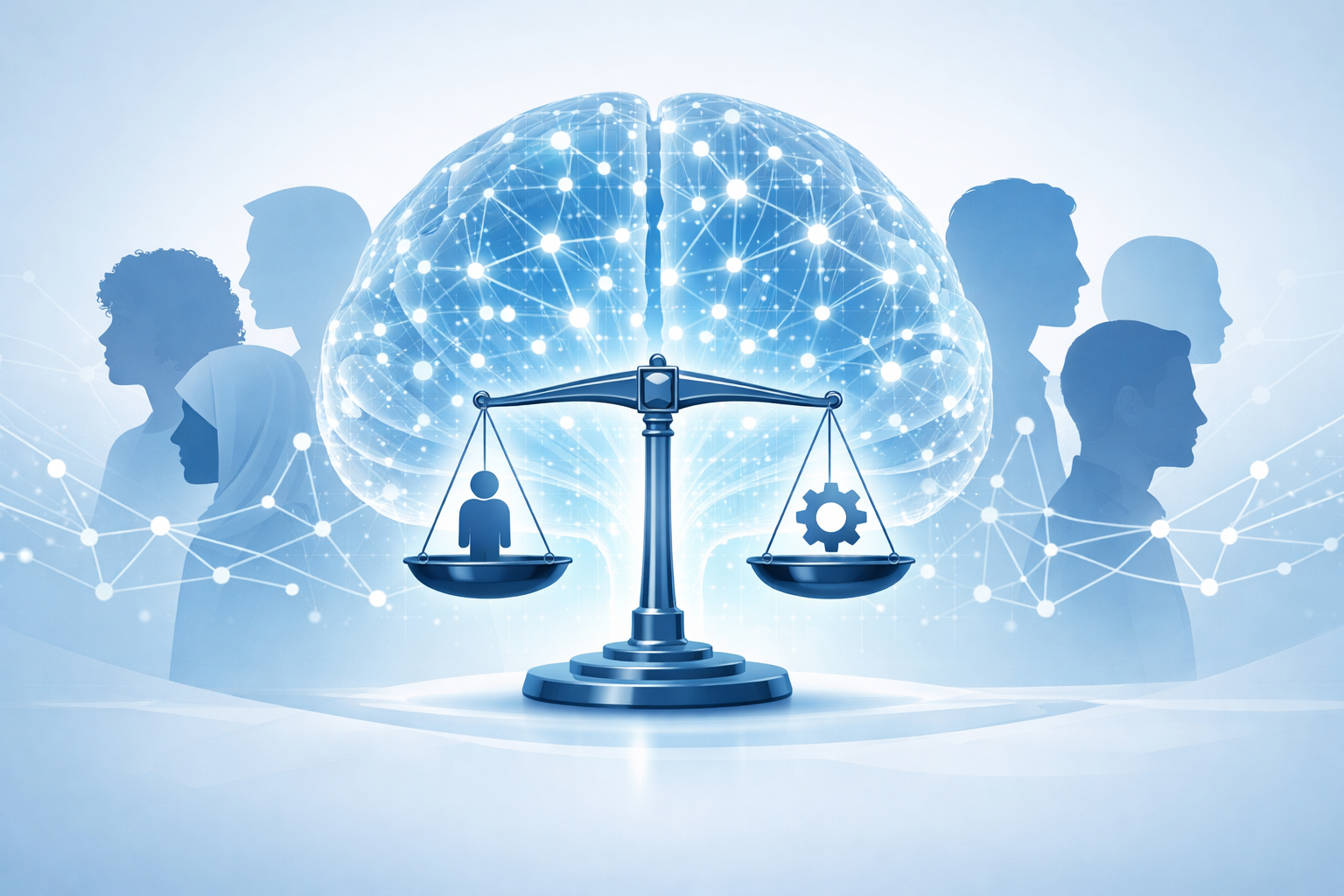
Machine Learning is now used in many parts of our daily lives — from job recommendations and loan approvals to healthcare and online shopping. Because these systems influence important decisions, it is very important that they are fair, trustworthy, and unbiased. This is where ethics in machine learning becomes important.
This article explains ethics in ML in a simple and easy way, and shows how we can build models that treat everyone fairly.
Understanding Ethics in Machine Learning
Ethics in machine learning means creating AI systems that make responsible and fair decisions. An ethical ML model does not discriminate, respects user privacy, and behaves in a transparent way.
The goal is to ensure that machines support humans instead of causing harm or inequality. Ethical AI focuses on fairness, accountability, and trust.
What Bias Means in Machine Learning
Bias in machine learning happens when a model treats certain people or groups unfairly. This usually happens without intention.
If a model is trained on biased or incomplete data, it will learn those patterns and repeat them in its decisions. This can result in unfair outcomes for specific groups.
Where Bias Comes From
Bias mainly comes from the data and design choices used during model development.
If the training data reflects past discrimination, the model will learn that behavior. Bias can also occur when some groups are underrepresented in the dataset or when certain features indirectly represent sensitive information.
Human decisions during model building can also unintentionally introduce bias.
Why Ethical Machine Learning Is Important
Ethical machine learning builds trust between users and technology. People are more likely to accept AI systems when they believe the outcomes are fair.
From a business point of view, ethical AI reduces legal risks and protects brand reputation. Fair models also perform better because they work accurately for a wider range of users.
Using Fair and Balanced Data
One of the most important steps in ethical ML is using diverse and balanced data.
When data represents people from different backgrounds, genders, and locations, the model learns more fairly. Regular checks should be done to make sure no group is ignored or underrepresented.
Finding Bias in Models
Bias should be identified early in the development process.
By testing models on different user groups, developers can see if predictions are unfair. Measuring fairness helps teams understand where improvements are needed before deploying the model.
Reducing Bias in Machine Learning
Bias can be reduced at different stages of model development.
Data can be cleaned and balanced before training. Fairness-focused algorithms can be used during training. After training, model outputs can be reviewed and adjusted to reduce unfair behavior.
Avoiding Sensitive Information
Sensitive information such as gender, religion, or race should not be directly used in machine learning models.
Even indirect information that hints at these attributes should be handled carefully. Removing such data helps reduce unfair influence on predictions.
Making Machine Learning Models Explainable
Explainable AI helps people understand why a model made a certain decision.
When models are transparent, users and organizations can trust the system more. Explainability also helps identify mistakes and bias more easily.
Keeping Humans in Control
Machine learning systems should support humans, not replace them completely.
For important decisions like hiring or medical diagnosis, human review should always be involved. This ensures better judgment and prevents serious errors.
Monitoring Models Over Time
Even fair models can become biased over time as data and user behavior change.
Regular monitoring and updates help maintain fairness and accuracy. Ethical machine learning is an ongoing process, not a one-time task.
Ethical Machine Learning as the Future
Ethical machine learning is becoming a key requirement for modern AI systems.
Organizations that focus on fairness and responsibility will gain user trust and long-term success. Building ethical ML models is not just a technical responsibility — it is a social one.
