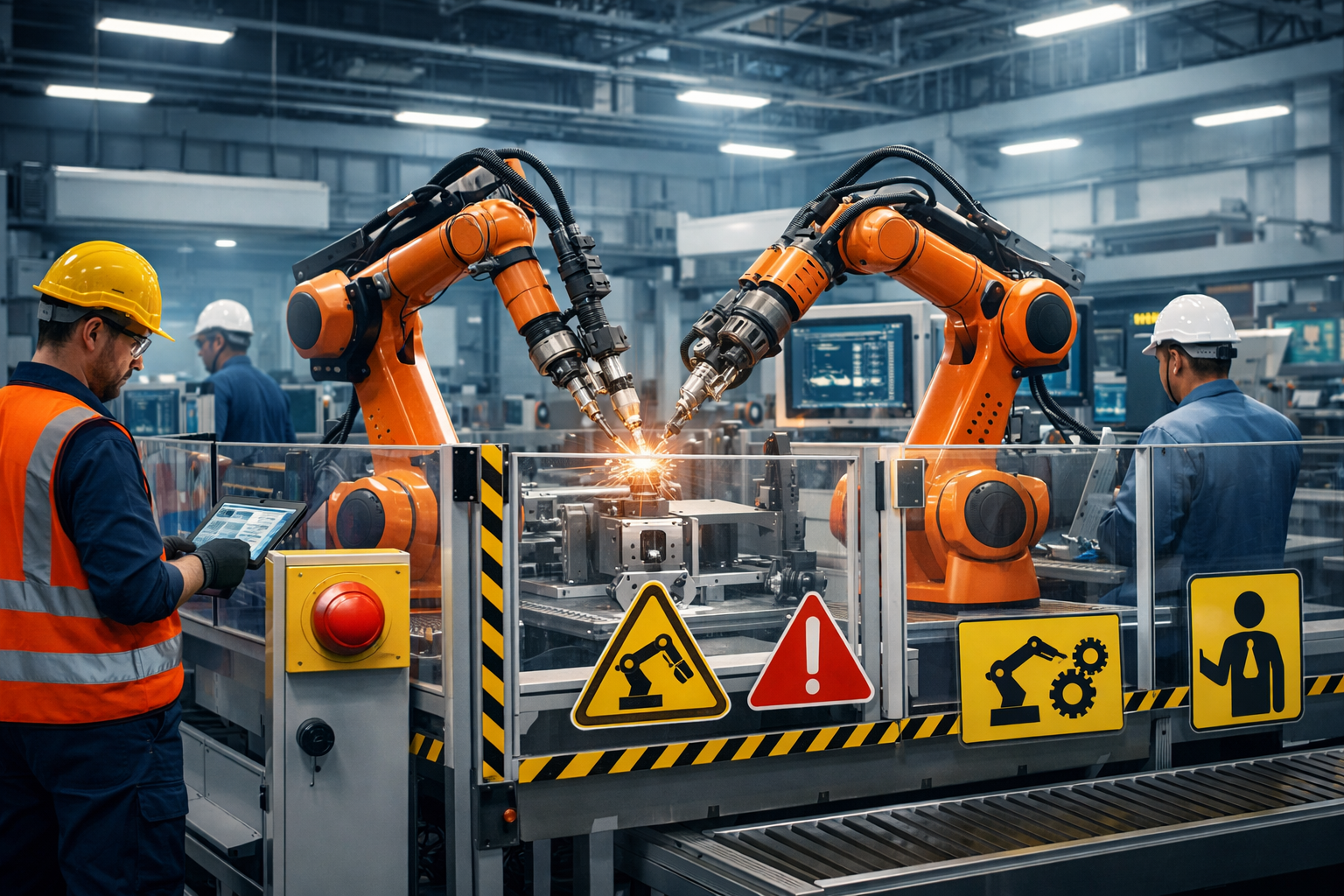
Introduction: Why Robotics Safety Matters
Robots are now widely used in factories, warehouses, and production units. They help improve speed, accuracy, and productivity. However, when robots work near humans, safety becomes very important. Robotics safety standards help manufacturers reduce accidents, follow legal rules, and create a safe working environment.
This article explains the most important robotics safety standards in a simple and easy way.
Industrial Robot Safety Standards
Industrial robots are powerful machines that perform tasks like welding, lifting, and assembling. Because of their strength and speed, proper safety rules are necessary.
ISO 10218 – Safety for Industrial Robots
ISO 10218 is a global standard that focuses on the safe design and use of industrial robots. It ensures robots have emergency stop buttons, protective guards, and safe operating modes.
This standard also requires manufacturers to check risks before installing robots and to train workers properly.
Why it is important:
It helps prevent serious injuries and ensures robots operate safely in manufacturing plants.
Collaborative Robot Safety (Cobots)
Collaborative robots, or cobots, are designed to work side-by-side with humans. Because there are no physical barriers, extra safety measures are needed.
ISO/TS 15066 – Safety for Human-Robot Interaction
ISO/TS 15066 sets limits on robot speed, force, and pressure to make sure human contact does not cause harm. It also explains how cobots should slow down or stop when a person comes close.
Why it is important:
This standard makes cobots safe to use while maintaining productivity.
Robotics Safety Standards in the United States
Different regions follow different safety regulations, especially in North America.
ANSI/RIA R15.06 – US Robotics Safety Standard
ANSI/RIA R15.06 is the main robotics safety standard in the United States. It follows international rules but adds regional safety and compliance requirements.
Why it is important:
It helps manufacturers meet legal requirements and avoid penalties in the US market.
Electrical Safety in Robotic Systems
Robots use complex electrical systems, so electrical safety is a major concern.
IEC 60204-1 – Electrical Safety of Machinery
This standard ensures that robotic machines are protected from electrical hazards such as shocks, short circuits, and fires. It covers wiring, grounding, and emergency controls.
Why it is important:
It protects workers and improves the reliability of robotic systems.
Control System Safety for Robots
Robotic safety also depends on control systems that manage sensors, software, and emergency stops.
ISO 13849 – Safety Control Systems
ISO 13849 ensures that safety-related control parts work correctly even if a component fails. It helps manufacturers decide how strong and reliable safety systems should be.
Why it is important:
It prevents accidents caused by system or software failures.
Risk Assessment and Hazard Prevention
Identifying risks early is the foundation of robot safety.
ISO 12100 – Risk Assessment and Risk Reduction
ISO 12100 provides a method to identify possible dangers and reduce risks during robot operation. It looks at mechanical, electrical, and operational hazards.
Why it is important:
It helps manufacturers prevent accidents before robots are even installed.
Cybersecurity and Robotics Safety
Modern robots are connected to networks and software systems, which makes them vulnerable to cyber threats.
IEC 62443 – Cybersecurity for Industrial Automation
This standard focuses on protecting robotic systems from hacking, unauthorized access, and digital attacks that could cause physical damage.
Why it is important:
Cybersecurity failures can lead to unsafe robot behavior and system shutdowns.
Benefits of Following Robotics Safety Standards
Following safety standards provides many advantages:
- Fewer workplace accidents
- Legal and regulatory compliance
- Improved machine reliability
- Higher employee confidence
- Better company reputation
Conclusion: Building a Safer Automated Future
Robotics safety standards are essential for safe and successful automation. By following standards like ISO 10218, ISO/TS 15066, ISO 13849, and IEC 60204-1, manufacturers can protect workers while improving productivity.
As automation grows, staying updated with safety standards will help businesses remain safe, compliant, and future-ready.
