Technology is becoming more human-friendly every day. Human-Machine Interaction and Immersive Technology help people communicate with machines in a natural and simple way. These technologies are changing how we work, learn, and use advanced systems across many industries.
Meaning of Human-Machine Interaction
Human-Machine Interaction explains how humans and machines communicate with each other. This interaction happens through screens, buttons, voice commands, hand gestures, sensors, and wearable devices. The main purpose is to make machines easy to use and understand.
Good interaction design helps users control machines with less effort and fewer mistakes. It also improves safety and efficiency in workplaces such as factories, hospitals, and control rooms.
Meaning of Immersive Technology
Immersive technology creates digital experiences that feel real. It includes tools like Virtual Reality, Augmented Reality, and Mixed Reality. These tools allow users to step into a digital world or see digital information placed on the real world.
Immersive experiences help people understand complex systems more easily by showing information in a visual and interactive way.
How Both Technologies Work Together
When human-machine interaction is combined with immersive technology, machines become more interactive and user-friendly. Users can see information, give commands, and receive feedback in real time.
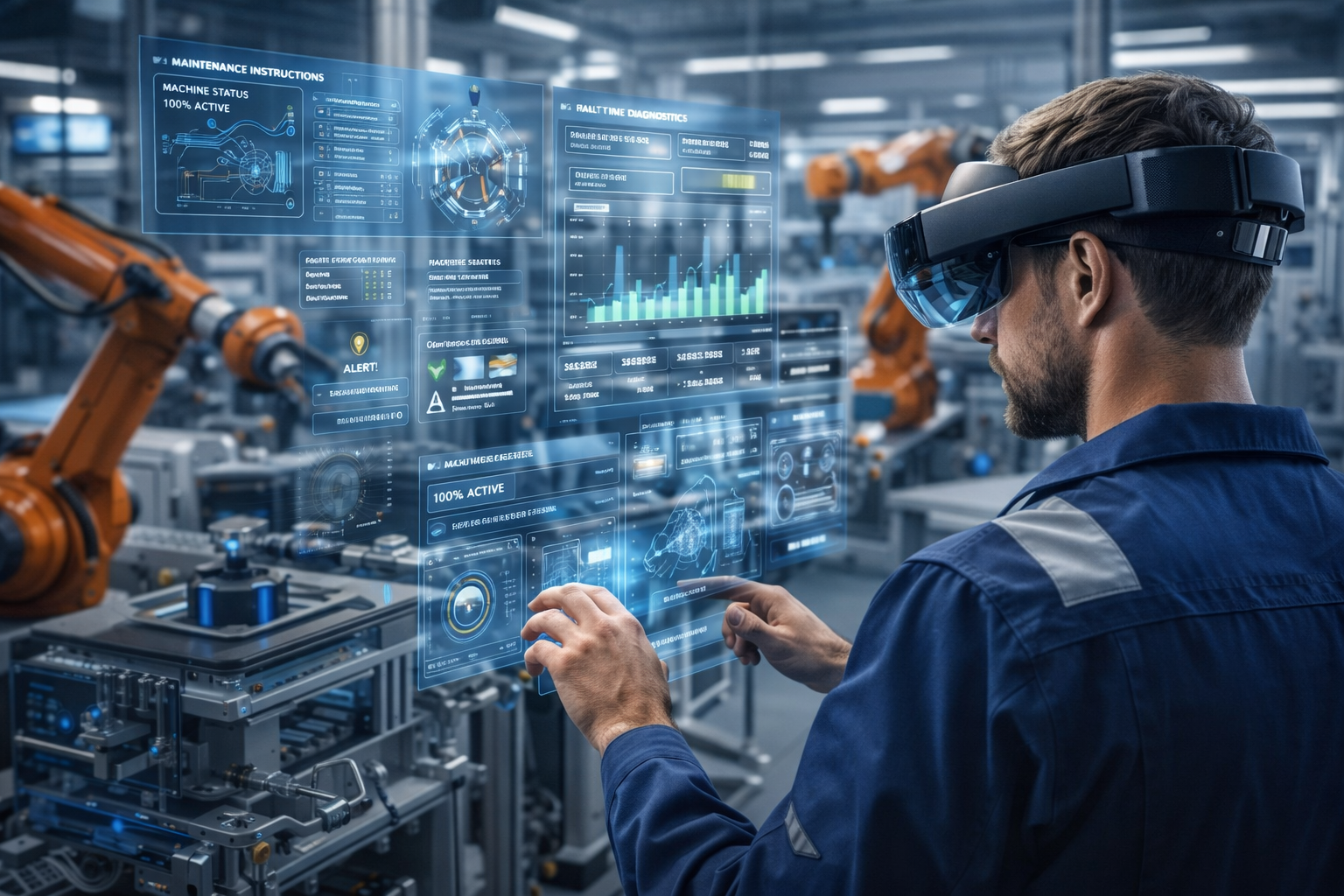
For example, engineers can use augmented reality glasses to view machine data while working, and trainees can practice tasks in virtual environments without risk.
Use in Engineering and Industry
In engineering, these technologies are used for design, testing, and maintenance. Virtual simulations allow engineers to test systems before building them. Augmented reality helps technicians see instructions directly on machines.
Factories use interactive dashboards and smart controls to monitor machines and improve productivity.
Role in Training and Learning
Immersive technology is widely used in training and education. Virtual training environments help workers learn complex tasks safely and quickly. This reduces training time and improves skill development.
Human-machine interaction tools make learning more engaging by allowing users to interact instead of just watching or reading.
Impact on Healthcare and Smart Systems
In healthcare, human-machine interaction allows doctors to control robotic tools with high accuracy. Immersive simulations are used for medical training and surgical planning.
Smart cities and transportation systems also rely on simple and interactive interfaces to manage traffic, energy, and public services efficiently.
Key Benefits for Businesses and Users
These technologies offer many benefits such as better user experience, improved safety, faster decision-making, and higher productivity. Machines become easier to operate, and users feel more confident using them.
Businesses save costs by reducing errors, improving training quality, and increasing operational efficiency.
Future Growth of Human-Machine Interaction and Immersive Tech
The future will focus on AI-powered interfaces, smart wearables, and more personalized experiences. Machines will better understand human behavior and respond more naturally.
Human-machine interaction and immersive technology will continue to play a major role in engineering, automation, healthcare, and digital transformation.
