🌟 Introduction
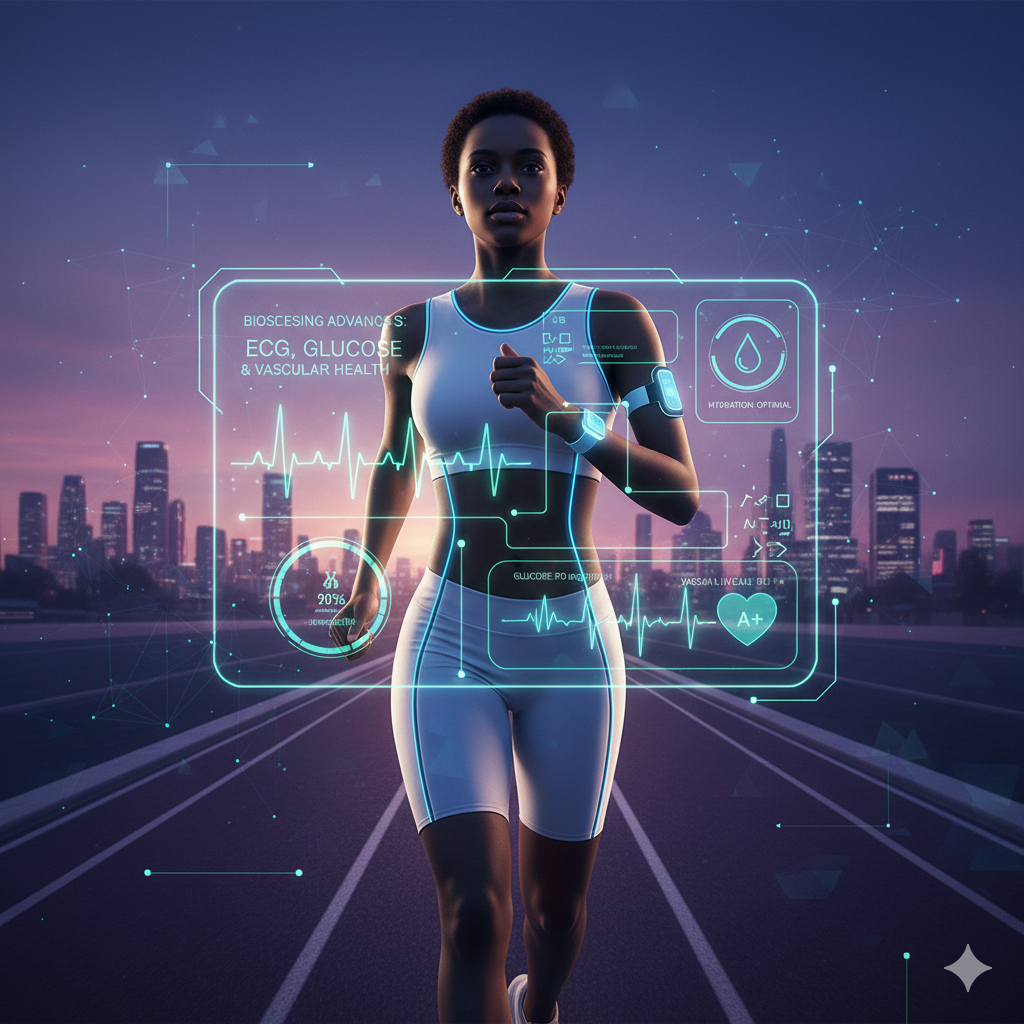
Smartwatches, fitness bands, and even smart rings get smarter each year. In the past, these gadgets tracked steps, calories, or heart rate. Now, biosensing technology allows them to measure advanced health indicators like ECG (heart rhythm) glucose (sugar levels), hydration (water balance), and vascular health (blood flow and arteries).
Put , your smartwatch or smart ring is becoming a mini health check-up tool helping you look after your body daily.
🫀 ECG (Heart Monitoring Made Easy)
What is ECG? An ECG, or electrocardiogram, shows your heart’s rhythm. It indicates whether your heart beats or has irregularities.
How wearables help: In the past, you needed to go to a clinic to get an ECG test. These days many smartwatches come with built-in ECG sensors. You can record your heart rhythm in seconds by putting your finger on the watch. This allows early detection of problems like irregular heartbeat (atrial fibrillation) and quick sharing of results with doctors.
👉 Why it matters: Keeping an eye on your heart can save lives by catching heart issues before they turn serious.
🍭 Glucose Tracking Without Needles
What is glucose tracking? Glucose is sugar in your blood. Keeping it in balance plays a key role in energy, and it’s crucial for people with diabetes.
How wearables help: In the past, people with diabetes had to prick their fingers to check blood sugar levels. But new wearables use non-invasive sensors that measure glucose levels through sweat, skin, or light technology.
👉 Why it matters: It simplifies life for diabetics and even helps non-diabetics grasp how food, exercise, and stress affect their blood sugar.
💧 Hydration Monitoring – Are You Drinking Enough Water?
Why staying hydrated is crucial: Many people fail to drink enough water each day. Not getting enough fluids can lead to fatigue, headaches, and lower productivity.
How smart gadgets lend a hand: Recent tech now monitors your water balance by examining perspiration or physical indicators. These devices can even prompt you to sip water when you need it most.
👉 Why this counts: This proves helpful for sports enthusiasts, fitness buffs, and those who work outdoors, as they tend to lose significant amounts of fluid during their activities.
🩸 Heart Health – Examining Blood Circulation and Arteries
What is vascular health? Vascular health describes the condition of your blood vessels (arteries and veins). Good blood flow plays a crucial role in heart health, brain function, and overall wellness.
How wearables help: Cutting-edge sensors in wearables now measure blood oxygen, blood flow efficiency, and artery flexibility. These markers can show early signs of heart problems, aging, or poor circulation.
👉 Why it matters: Spotting issues allows you to take preventive action through diet changes, exercise routines, or medical guidance.
🚀 Why These Biosensing Features Make a Difference
- Preventive Healthcare: Doctors can spot issues before they turn serious.
- Chronic Disease Support: Round-the-clock tracking helps people with diabetes, heart problems, or high blood pressure.
- Daily Lifestyle Improvement: Basic prompts about drinking water managing stress, or getting rest make life healthier.
Wearables aren’t just “fitness gadgets” anymore – they’re becoming health buddies that you wear on your wrist or finger and give you up-to-the-minute insights about your body.
✅ Final Thoughts
The future of health is tailor-made, and you can wear it. With body-sensing features like ECG, blood sugar checks, water level tracking, and blood vessel health scans, these gadgets give you insights similar to a doctor’s right at home.
Whether you’re an athlete, a busy professional, or someone dealing with a health issue, wearables have an impact on how we take care of ourselves daily.
