Introduction
Gaming is no longer just entertainment — it’s becoming an economy.
Blockchain gaming has introduced a powerful concept: players can truly own in-game assets and even earn real money while playing. This play-to-earn model is reshaping how gamers interact with digital worlds.
Projects like Axie Infinity and platforms such as Immutable have demonstrated how decentralized technology can create new income streams for players.
The line between gaming and investing is starting to blur.
What Is Blockchain Gaming
Traditional games store in-game items on centralized servers. Players may spend money on skins, weapons, or characters, but they don’t truly own them.
Blockchain gaming changes that.
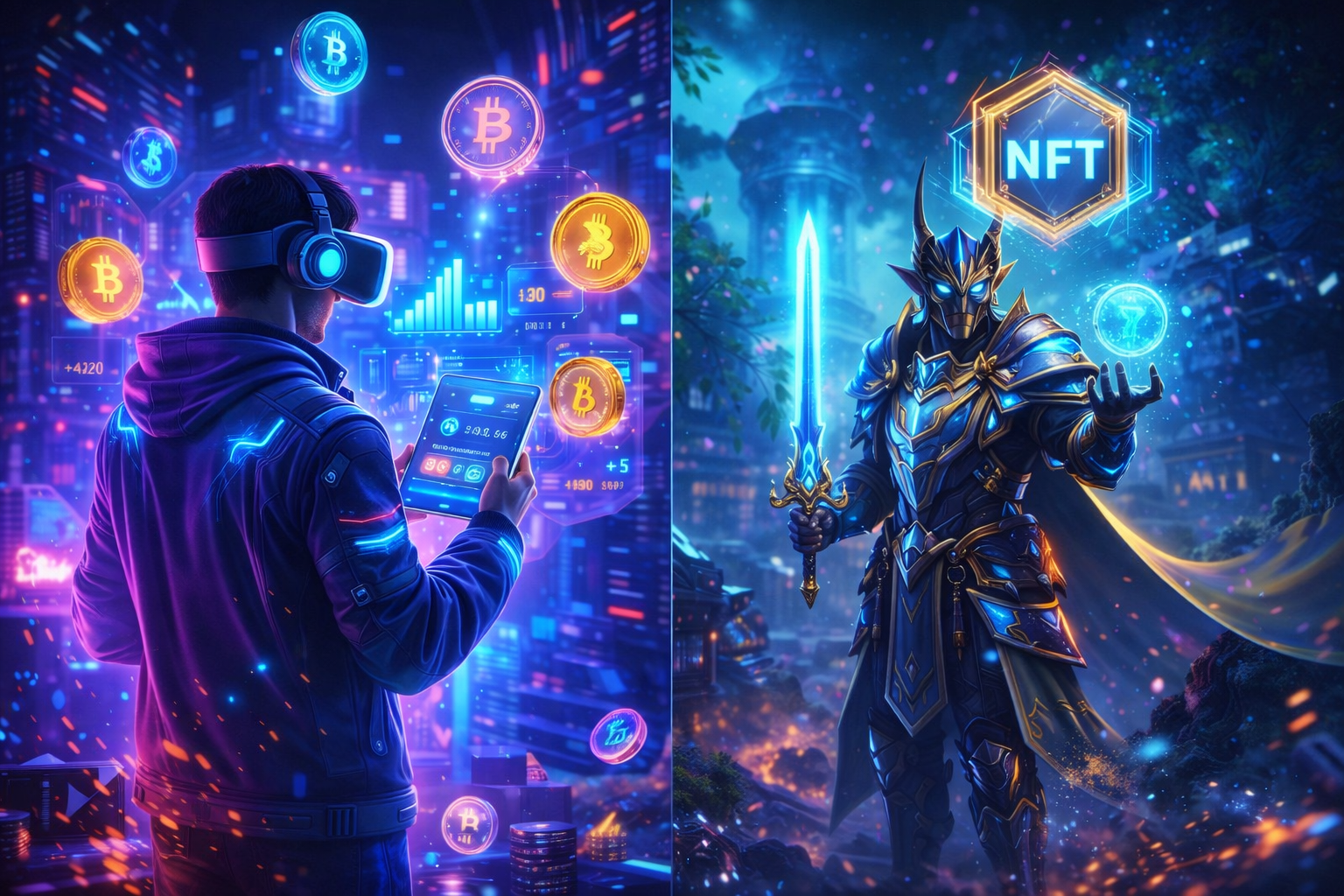
In Web3 games, assets are minted as NFTs on blockchain networks. This allows players to:
- Own their in-game characters and items
- Trade assets on marketplaces
- Transfer items between compatible platforms
- Earn tokens through gameplay
Ownership is recorded transparently on the blockchain, giving players real control.
How Play-to-Earn Works
Play-to-earn models reward players with cryptocurrency tokens for completing missions, battling opponents, or contributing to the ecosystem.
In Axie Infinity, players breed, train, and battle digital creatures to earn tokens that can be exchanged for real-world currency.
This model gained massive popularity in emerging markets, where some players treated it as a full-time income source.
While the hype has cooled, the concept continues to evolve.
The Role of NFTs in Gaming
Non-fungible tokens power digital scarcity.
NFTs allow developers to create unique in-game assets that can be bought, sold, and traded. Rare skins, weapons, and virtual land parcels become valuable collectibles.
For example, platforms like Immutable are building infrastructure to support scalable NFT-based gaming ecosystems.
This creates a decentralized marketplace where value is driven by community demand.
Challenges Facing Blockchain Gaming
Despite innovation, blockchain gaming faces several obstacles.
Token volatility can impact player earnings. High gas fees on some networks discourage small transactions. Additionally, regulatory uncertainty around crypto rewards remains a concern.
Developers are now focusing on sustainable tokenomics rather than short-term hype.
The next generation of blockchain games aims to prioritize gameplay quality alongside earning potential.
The Future of Web3 Gaming
The industry is shifting from simple earning models to immersive, AAA-quality blockchain games.
We may soon see:
- Cross-game asset interoperability
- AI-powered NPCs integrated with blockchain rewards
- Decentralized governance where players vote on game updates
- Integration with metaverse platforms
As infrastructure improves, blockchain gaming could become mainstream.
Conclusion
Blockchain gaming and play-to-earn models are redefining digital ownership and virtual economies.
While early hype cycles have stabilized, the core innovation — true asset ownership — remains powerful.
The future of gaming may not just be about playing. It may be about participating in a decentralized digital economy.
