Introduction
Fast delivery is no longer a luxury — it’s an expectation.
With the explosive growth of e-commerce and food delivery platforms, companies are under pressure to deliver faster while keeping costs low. The biggest challenge? The last mile — the final step of getting a package from a local hub to the customer’s doorstep.
This is where autonomous delivery robots are stepping in.
From small sidewalk bots carrying groceries to self-driving delivery vehicles navigating city streets, robotics is transforming urban logistics. Companies like Starship Technologies, Nuro, and Amazon are leading the charge.
The future of delivery might not involve a human driver at all.
What Are Autonomous Delivery Robots
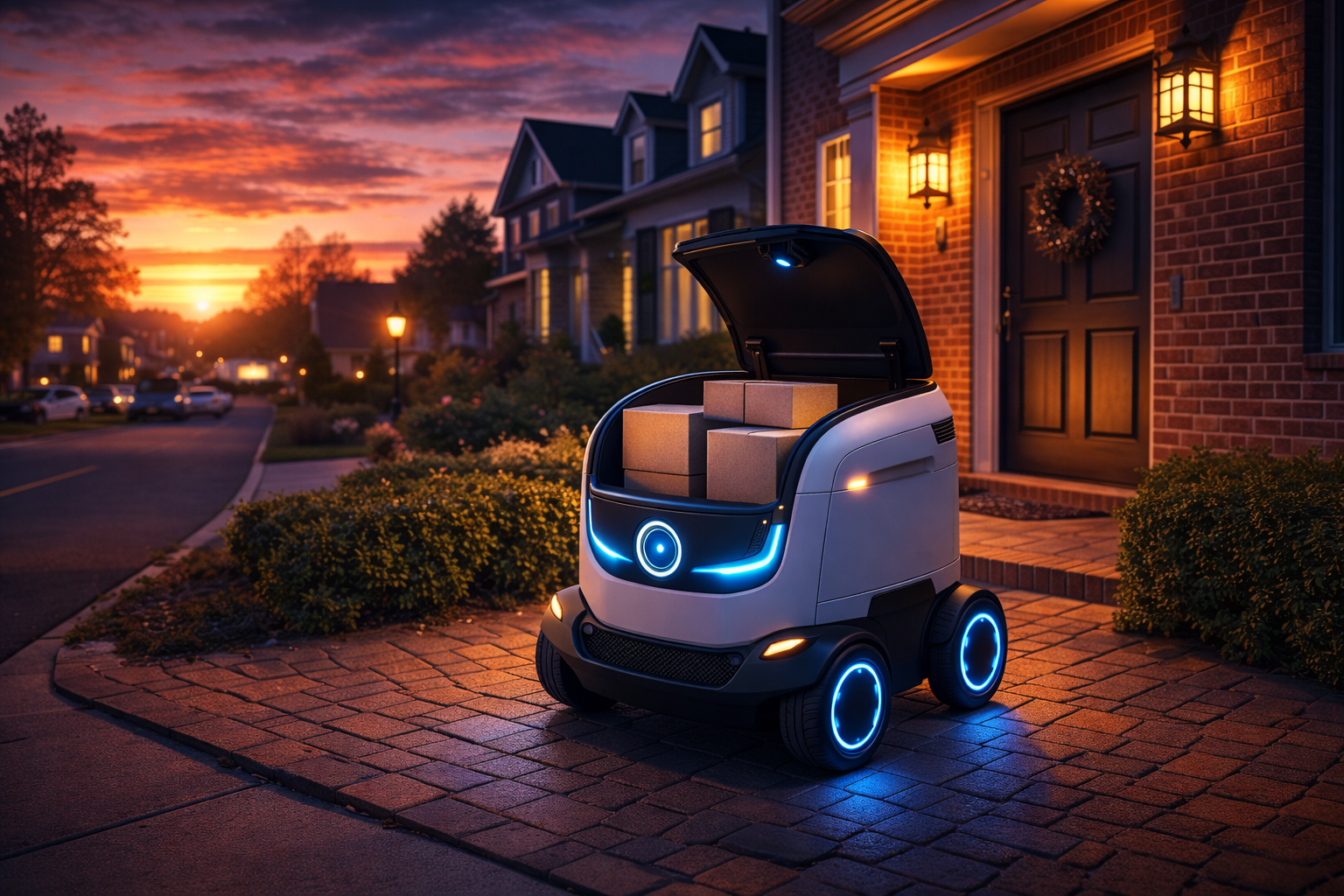
Autonomous delivery robots are self-driving machines designed to transport goods without human intervention.
They use a combination of:
Computer vision
Lidar sensors
GPS navigation
AI decision-making systems
These robots can detect pedestrians, avoid obstacles, cross streets safely, and deliver packages directly to customers.
Some operate on sidewalks, while others function as small autonomous road vehicles.
Why Last-Mile Delivery Is So Expensive
The last mile accounts for a major portion of shipping costs.
Traffic congestion, fuel prices, labor expenses, and failed delivery attempts all increase operational costs. In densely populated cities, this becomes even more complex.
Autonomous delivery robots reduce these expenses by:
Operating without drivers
Using electric power instead of fuel
Running continuously without shift limitations
Optimizing routes through AI algorithms
For businesses, this means faster and cheaper delivery.
Smart Cities Are the Perfect Testing Ground
Smart cities are integrating IoT systems, digital traffic monitoring, and intelligent infrastructure. This makes them ideal environments for robotic delivery.
Urban areas in countries like United States and Estonia have already piloted autonomous delivery services.
University campuses and tech-friendly neighborhoods are often early adopters because they provide controlled environments with high delivery demand.
As urban infrastructure becomes smarter, robotic delivery systems will integrate seamlessly with traffic systems and mapping networks.
How AI Powers Delivery Automation
Artificial intelligence is the core brain behind delivery robots.
AI systems analyze surroundings in real time, predict pedestrian movement, and adjust routes dynamically.
Machine learning allows robots to improve navigation after each trip.
Cloud connectivity enables fleet management, real-time tracking, and remote supervision.
The result is a highly efficient, data-driven logistics network.
Environmental Benefits of Robotic Delivery
Sustainability is becoming a major priority in urban planning.
Most autonomous delivery robots are electric. They reduce carbon emissions and lower noise pollution compared to traditional delivery vans.
By optimizing routes and reducing idle time, AI-powered delivery systems can significantly reduce traffic congestion.
Cities looking to lower their carbon footprint may increasingly adopt robotic delivery fleets.
Challenges and Regulatory Barriers
Despite rapid innovation, adoption is not without obstacles.
Regulations vary by country and city. Some regions restrict sidewalk robots or autonomous road vehicles.
Public safety concerns also exist. Cities must ensure robots can operate without endangering pedestrians.
Weather conditions like heavy rain or snow can impact performance.
There is also competition from drone delivery systems, which are being tested by companies like Zipline.
However, ground-based robots currently have fewer airspace restrictions and may scale faster in dense urban areas.
The Future of Urban Logistics
Autonomous delivery robots are likely to become common in cities within the next decade.
We may see:
Dedicated robotic delivery lanes
Smart lockers integrated with robotic fleets
AI-powered logistics hubs
Hybrid systems combining drones and ground robots
As technology improves and regulations evolve, robotic delivery will become more mainstream.
Consumers may soon receive packages from a small, friendly robot at their doorstep.
Conclusion
Autonomous delivery robots represent one of the most practical and commercially viable uses of robotics today.
They address real problems — high delivery costs, urban congestion, and environmental impact.
With strong investment from major tech companies and growing acceptance in smart cities, last-mile automation is accelerating rapidly.
The next time you order food or shop online, your delivery might arrive on wheels — without a driver.
The automation revolution is literally rolling through our streets.
