Introduction
Technology is moving beyond software and entering the real world through machines. A new concept called Physical AI is making this possible. It is the combination of artificial intelligence and robotics, allowing machines to think, learn, and interact with the physical world. Instead of only working with data on computers, AI can now control robots, machines, and devices that perform real tasks in industries. This technology is helping businesses automate work, improve productivity, and make operations safer.
What is Physical AI
Physical AI refers to the use of artificial intelligence inside physical machines such as robots, drones, autonomous vehicles, and smart industrial equipment. These machines use technologies like machine learning, sensors, and computer vision to understand their surroundings and make decisions.
Unlike traditional machines that follow fixed instructions, AI-powered machines can learn from data and improve their performance over time. This makes them more flexible and capable of handling complex tasks in real-world environments.
How AI and Robotics Work Together
Robots have been used in industries for many years, especially in manufacturing. However, traditional robots are usually programmed to perform the same task again and again. They cannot easily adapt to changes.
When artificial intelligence is added to robotics, machines become smarter. AI allows robots to recognize objects, understand their environment, and adjust their actions when conditions change. For example, computer vision helps robots identify items, while sensors allow them to detect movement or obstacles. Machine learning enables robots to analyze data and improve how they perform tasks.
How Industries Are Using Physical AI
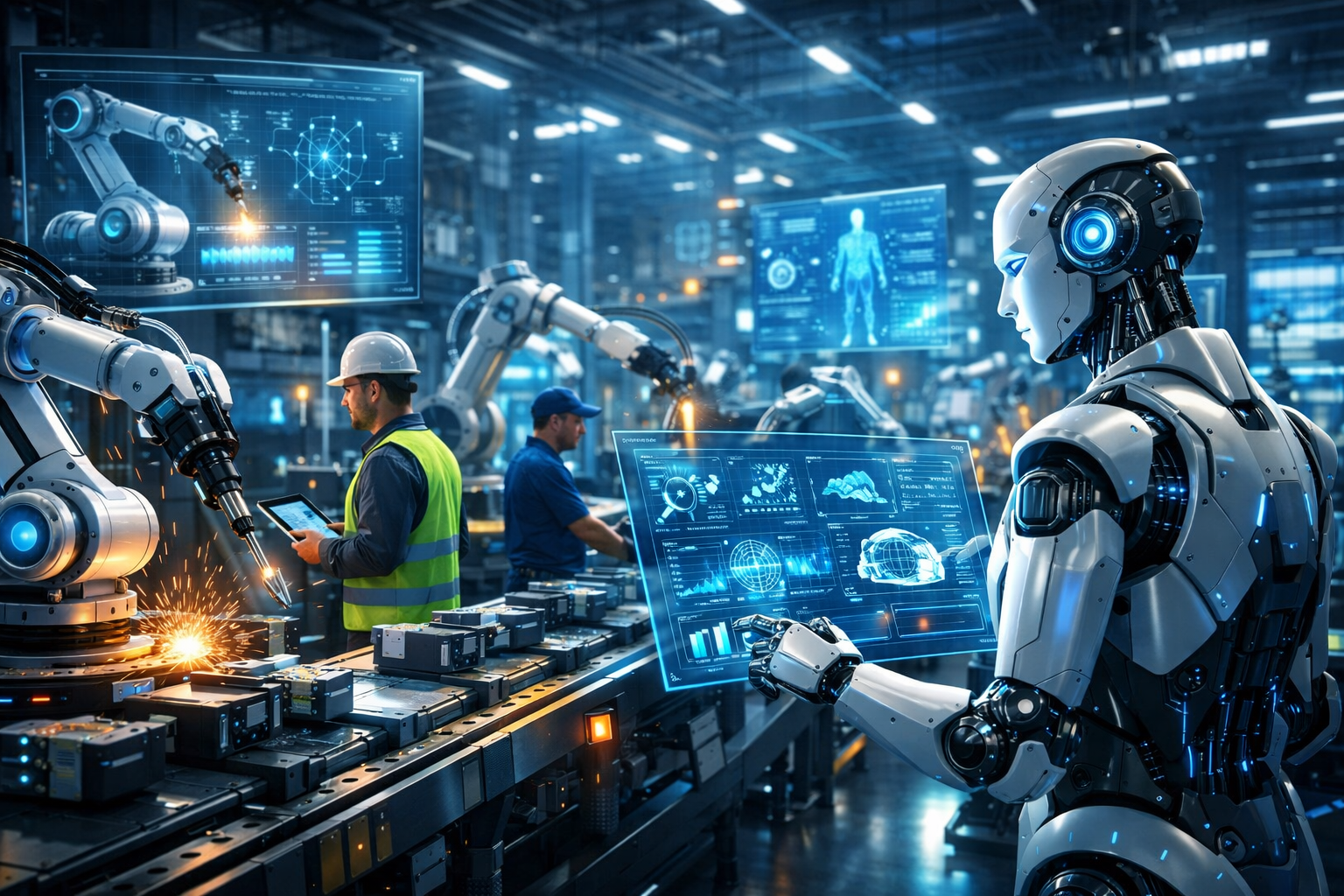
Many industries are already using Physical AI to improve their operations. In manufacturing, smart robots help assemble products, inspect quality, and manage production lines more efficiently.
In logistics and warehouses, autonomous robots move packages, organize inventory, and speed up order processing. Healthcare also benefits from robotic systems that assist doctors in performing precise surgeries and medical procedures.
Agriculture is another field where Physical AI is making a difference. Farmers use AI-powered machines to monitor crops, analyze soil conditions, and automate harvesting. These technologies help increase productivity and reduce manual labor.
Benefits of AI-Powered Robotics
The combination of AI and robotics offers many advantages for businesses. Robots can perform repetitive or dangerous tasks, which helps keep workers safe. They can also work continuously without fatigue, making production more efficient.
AI-powered machines can analyze data and improve their performance over time. This helps companies reduce errors, increase productivity, and save costs. As a result, many industries are investing in intelligent robotics systems.
Challenges and Concerns
Even though Physical AI offers many benefits, it also comes with challenges. Building intelligent robotic systems requires advanced technology, powerful computing systems, and large amounts of data.
Safety is also important, especially when robots work close to humans. Companies need to ensure that machines operate safely and reliably. Another concern is the impact on jobs, as increased automation may change the types of skills workers need in the future.
Future of Physical AI
The future of Physical AI looks very promising. With advancements in technologies like edge computing, faster internet connectivity, and better sensors, robots will become even more intelligent and capable.
In the coming years, we may see fully automated factories, smarter transportation systems, and advanced robotic assistants in many industries. As technology continues to evolve, Physical AI will play a major role in shaping the future of industrial automation.
Conclusion
Physical AI represents a major step forward in technology. By combining artificial intelligence with robotics, machines can interact with the real world in smarter ways. This technology is already improving efficiency in industries like manufacturing, healthcare, logistics, and agriculture.
As innovation continues, Physical AI will help businesses automate tasks, improve safety, and create new opportunities for human and machine collaboration.
