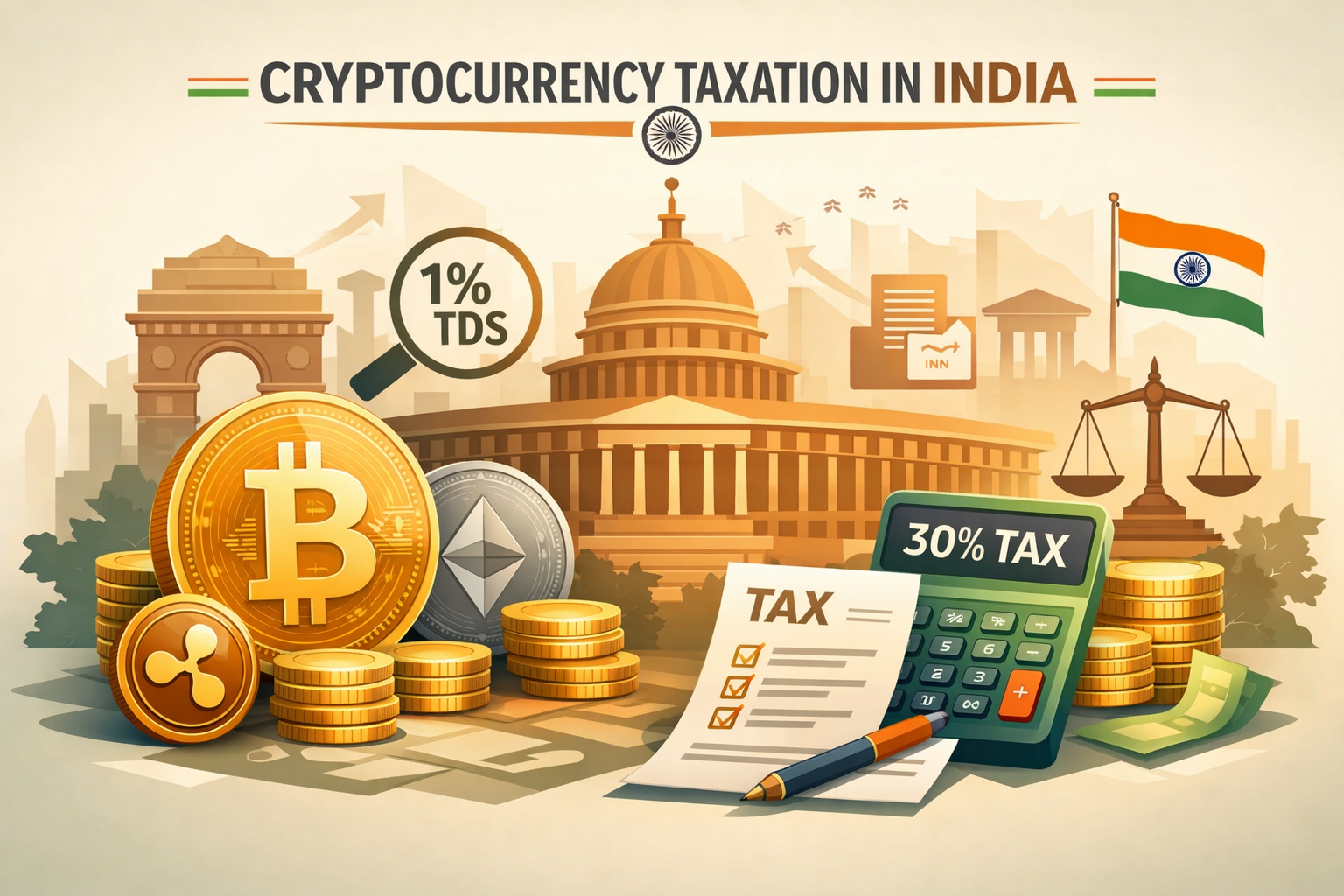
Cryptocurrency is becoming popular in India, but many people are still confused about how crypto tax works. If you trade Bitcoin, invest in altcoins, receive crypto as a gift, or earn from mining — you must pay tax on it.
This guide explains crypto taxation in India in very simple language so anyone can understand it.
What is Cryptocurrency Tax in India?
In India, cryptocurrency is called a Virtual Digital Asset (VDA) under the Income Tax Act. This means the government treats crypto like a taxable digital asset.
It is legal to buy and sell crypto in India, but any profit you make is taxable.
How Much Tax Do You Pay on Crypto?
If you earn profit from selling crypto, you must pay a flat 30% tax on the profit. On top of that, a 4% cess is added.
This 30% tax applies to:
- Selling cryptocurrency for profit
- Trading one crypto for another
- Using crypto to buy something
- Converting crypto into INR
No matter if you are a long-term investor or daily trader, the tax rate stays the same.
What is 1% TDS in Crypto?
The government also charges 1% TDS (Tax Deducted at Source) on crypto transactions above a certain limit.
This means:
- When you sell crypto, 1% of the transaction value is deducted.
- This amount is adjusted later when you file your income tax return.
TDS helps the government track crypto transactions.
Can You Adjust Crypto Losses?
This is very important.
If you make a loss in crypto:
- You cannot adjust that loss against salary or other income.
- You cannot carry forward the loss to the next year.
- You cannot reduce tax using trading expenses.
Only the purchase cost of crypto is allowed as a deduction.
How is Crypto Profit Calculated?
Crypto profit is simple to calculate.
Profit = Selling Price – Purchase Price
Then 30% tax is applied on that profit.
For example, if you buy crypto for ₹50,000 and sell it for ₹80,000, your profit is ₹30,000. You must pay 30% tax on ₹30,000.
Tax on Airdrops, Mining and Gifts
Crypto received through airdrops becomes taxable when you sell it.
Crypto earned through mining is also taxed when sold.
If someone gifts you crypto worth more than ₹50,000 and they are not your relative, it becomes taxable in your hands.
How to Report Crypto in Income Tax Return
While filing your Income Tax Return (ITR), you must report crypto income under the Schedule VDA section.
You should keep:
- Exchange transaction history
- Wallet details
- Purchase and sale records
- TDS statements
Keeping proper records helps avoid penalties.
What Happens If You Do Not Report Crypto Income?
If you do not report crypto profits:
- You may receive a notice from the Income Tax Department.
- Interest and penalties may apply.
- In serious cases, heavy fines can be charged.
It is always safer to report crypto income honestly.
Final Thoughts
Crypto taxation in India is strict but simple. The government charges a flat 30% tax on profits and 1% TDS on transactions. Losses cannot reduce your tax burden.
If you invest or trade in crypto, understanding these rules will help you stay compliant and avoid legal trouble.
