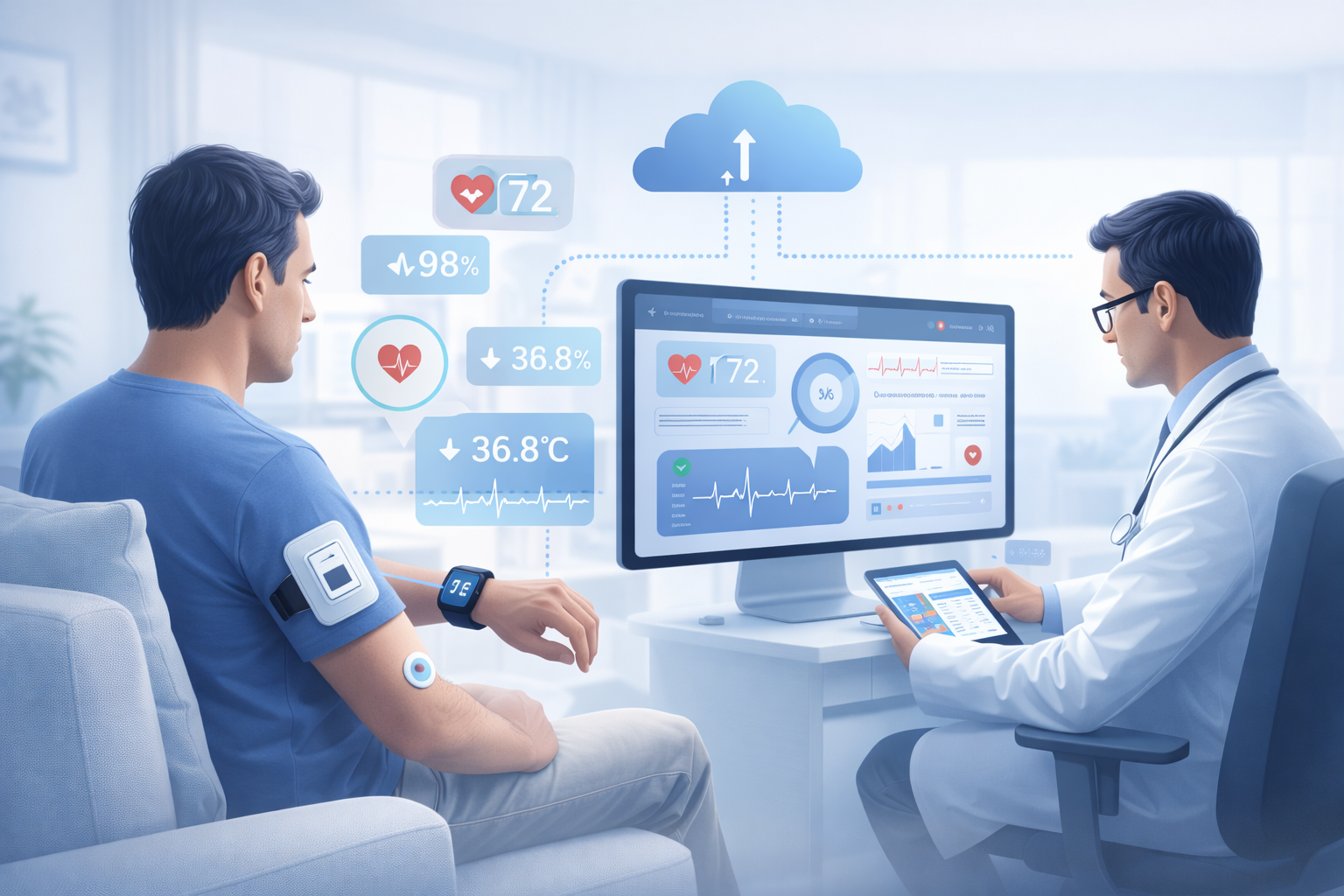
Wearable devices are changing how healthcare is delivered. Today, patients can stay at home while doctors monitor their health remotely. This approach improves comfort, saves time, and helps doctors detect health issues earlier. Wearables play a key role in making remote patient monitoring possible.
Meaning of Remote Patient Monitoring Wearables
Remote patient monitoring wearables are smart health devices worn on the body. They collect important health information and send it to doctors using the internet. These devices allow healthcare providers to monitor patients without requiring frequent hospital visits.
Common wearables include smartwatches, fitness bands, smart rings, and medical sensors.
How These Wearables Work
Wearable devices continuously track health data while a person goes about daily activities. The collected information is securely sent to cloud systems where doctors can review it.
If something unusual appears in the data, healthcare providers can take action quickly.
Types of Health Data Collected
Remote monitoring wearables can measure heart rate, sleep quality, physical activity, oxygen levels, body temperature, and stress levels.
Advanced devices can also record ECG readings, breathing patterns, and blood sugar levels.
Benefits for Patients and Doctors
Wearables help doctors monitor patients continuously instead of relying on occasional checkups. This improves early detection of health problems.
Patients benefit from fewer hospital visits, faster medical response, and the comfort of staying at home while receiving care.
Common Healthcare Uses
These wearables are widely used for managing chronic diseases, monitoring recovery after surgery, elderly care, and tracking heart conditions.
They are also useful for diabetes management, mental health monitoring, and long-term health observation.
Role of Artificial Intelligence in Monitoring
Artificial Intelligence helps analyze large amounts of health data collected by wearables. AI systems can identify patterns, detect risks early, and send alerts to doctors.
This makes healthcare more preventive and efficient.
Importance of Data Security and Privacy
Wearables handle sensitive health information, so protecting patient data is essential. Secure data storage, encryption, and controlled access help keep information safe.
Healthcare providers must follow strict privacy rules to ensure patient trust.
Challenges in Using Wearables
Some challenges include limited battery life, device accuracy, internet connectivity, and user comfort. Elderly patients may find technology difficult to use.
However, improvements in wearable design are making devices easier and more reliable.
Future of Wearables in Healthcare
Wearables for remote patient monitoring are becoming smarter and more advanced. Future devices will offer better predictions, real-time alerts, and personalized health insights.
These innovations will continue to improve remote healthcare services.
Final Thoughts
Wearables for remote patient monitoring are transforming healthcare by making it more accessible and patient-friendly. They help doctors provide better care while allowing patients to live independently.
This technology represents the future of smart and digital healthcare.
