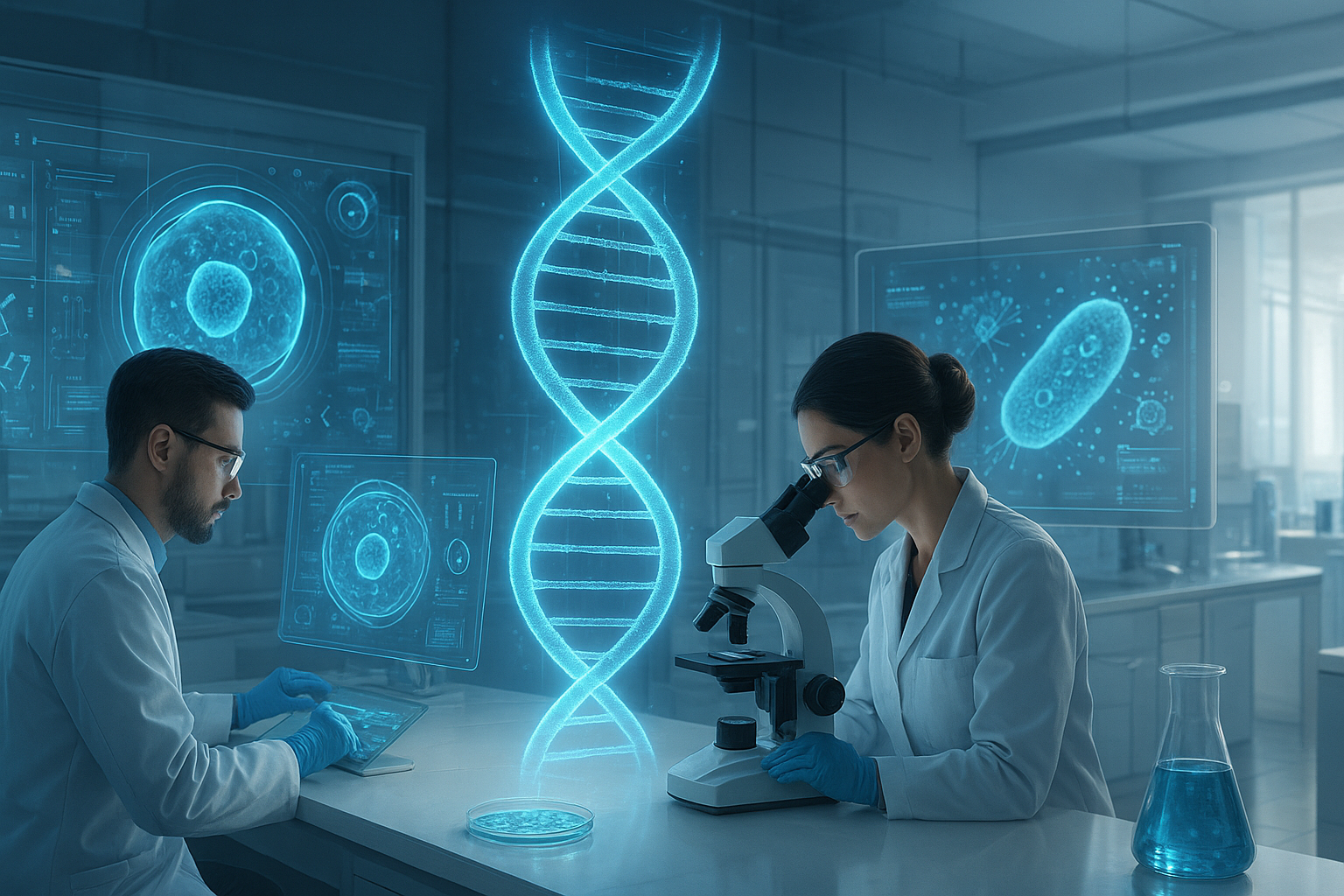
Bioengineering and synthetic biology are future technologies that incorporate engineering principles in the interaction with living organisms. These disciplines enable scientists and engineers to provide more efficient medical treatments, increase food production, as well as protect the environment. In simple terms, they give the human race the power to invent and enhance biological systems in an organized and beneficial way.
Basic Meaning of Bioengineering
Bioengineering deals with the use of technology to overcome problems related to life forms. It involves the combination of biology and engineering to invent the tools, machines, and systems that are compatible with human health and life. Some examples are implantable medical devices, artificial organs, and health monitoring gadgets.
Bioengineers are mainly concerned with advancing, securing, and rationalizing the biological systems.
Simple Explanation of Synthetic Biology
Synthetic biology is a division of bioengineering that deals with either reconstructing or creating new biological systems. Researchers can alter cells and genes so that they could function independently in the determined tasks, in a similar way as they would a machine.
As a matter of fact, synthetic biology could be the way to the production of the drug-making bacteria or the fast-growing and disease-free plants.
How Both Technologies Work Together
Bioengineering is the science of the methods and tools, while synthetic biology is the art of the biological functions. The combination or fusion of these two sets of technologies can grant unthinkable powers to people such as the fabrication of engineered-powered cells, the creation of tissues that have no origin in nature, and production of bio-materials that serve human needs.
This is what they refer to as the integration of these technologies that converts biology into something which engineers are able to construct, test, and enhance, just like other engineering systems.
Use in Healthcare and Medicine
In terms of bioengineering and synthetic biology, innovations in healthcare are possible. Some examples of their achievements are the inventions of artificial organs, the development of tissue engineering, generation of personalized treatments, and the creation of smart drug delivery systems.
On top of that, a good number of the healthcare solutions under medicines are also involved in vaccine production, disease diagnosis improvement, and new therapies development for cancer and other kinds of serious diseases.
Use in Agriculture and Food Production
The use of these technologies in agriculture makes it possible to produce relentless crops that would be able to survive not only diseases but also adverse weather conditions. The field of synthetic biology is very helpful in the design of plants and microorganisms that can be helpful in food production while still saving a lot of resources.
Moreover, some of the mentions here are also the use of alternative foods production from lab-grown meat and plant-based proteins.
Role in Environmental Protection
Bioengineering and synthetic biology are the two eco-warriors that try to balance the earth’s ecosystem. Scientists build the perfect pollutant-eating bacteria that can make water clean, break down garbage, and lower bad emission levels.
These jargons also work their charm to help with the production of renewable biofuels and materials that can be broken down naturally, thus offering less harm to the earth.
Challenges and Safety Concerns
However, these advancements are not without their issues too, which include definite safety problems. It is of utmost importance to be very cautious in the process of alteration of biological systems so that no negative impact is incurred.
In trying to address these issues, concern over moral safeguards, risks to health and well-being, and support from proper regulations are some of the key factors that will decide the fate of bioengineering and synthetic biology industries.
Future of Bioengineering and Synthetic Biology
One can foresee a bright future for these areas of studies. As more studies will be conducted, they will not only accelerate the progress of medicine but also assist in making industries less harmful to the environment and contribute to solving worldwide problems.
Innovation in the fields of bioengineering and synthetic biology is projected to open up new employment opportunities, new industries, and a new era of innovation.
Final Thoughts
Bioengineering and synthetic biology merge science and engineering to do good to life here on Earth. They definitely promise to be a great tool in the hands of a user who exercises caution and responsibility and they sure can be a major help in the making of a healthier, safer, and more sustainable world.
