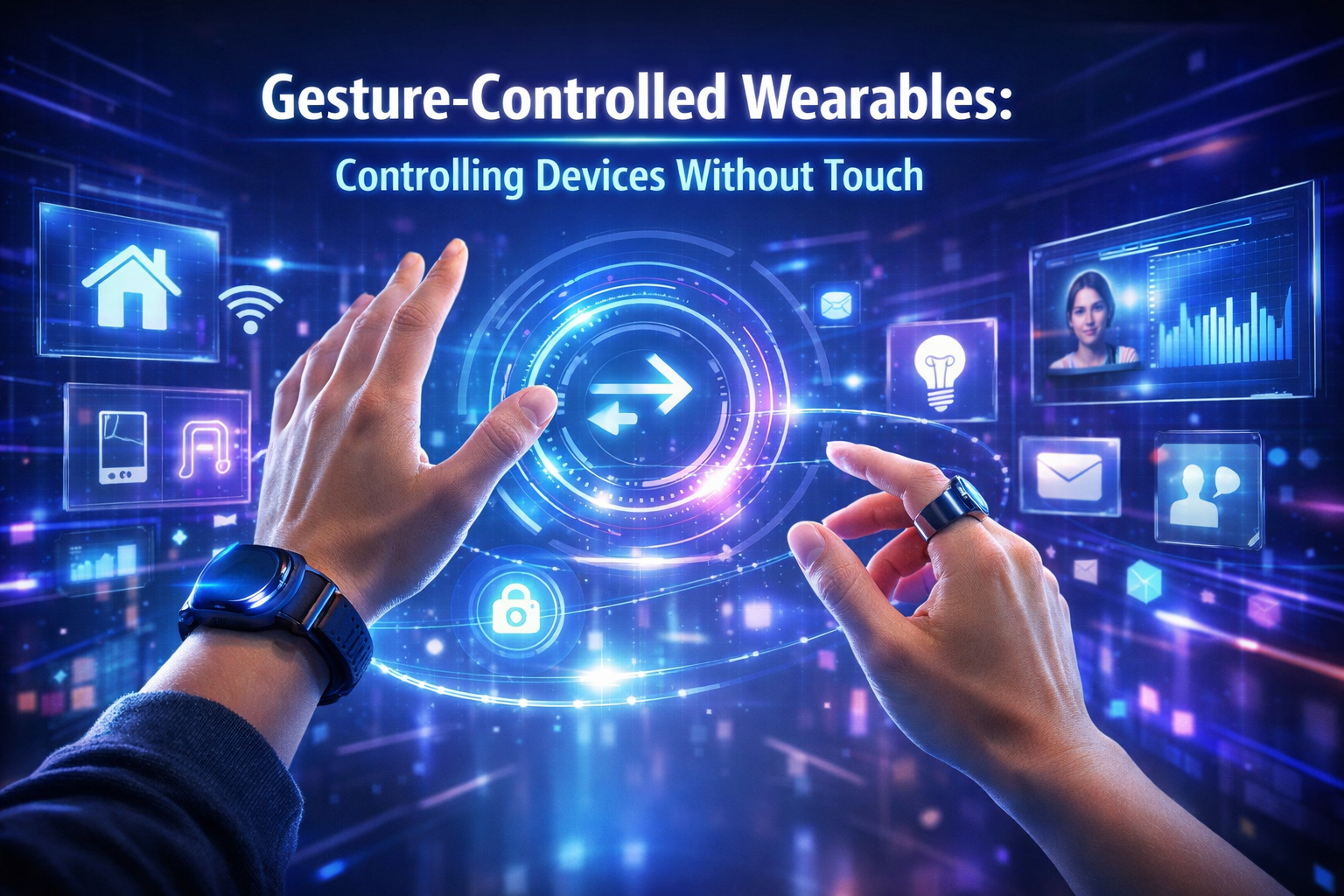
Technology is moving toward a future where we don’t always need to touch screens or press buttons. One of the most exciting innovations in wearable technology is gesture-controlled wearables. These devices allow people to control gadgets like smartphones, smart TVs, computers, and smart home devices using simple hand movements.
Instead of tapping on a screen, users can perform gestures such as waving a hand, moving fingers, or rotating their wrist to perform actions. This creates a more natural and convenient way to interact with technology.
What Are Gesture-Controlled Wearables
Gesture-controlled wearables are smart devices that can understand and respond to human hand movements. These devices are usually worn on the wrist, fingers, or arm, and they contain sensors that track motion and muscle activity.
When a user performs a gesture, the device detects the movement and converts it into a digital command. For example, a simple hand wave can skip a song, or a finger tap gesture can answer a call.
These wearables aim to make technology easier to control without constantly touching screens.
How Gesture-Controlled Wearables Work
Gesture wearables use different types of sensors to understand body movements. These sensors track how the hand, fingers, or wrist moves.
When a gesture is performed, the sensors collect the movement data. Then the device’s software analyzes that movement and understands what action the user wants to perform. Finally, the command is sent to a connected device such as a smartphone, laptop, or smart home system.
This process happens in just a fraction of a second, making the interaction feel smooth and natural.
Why Gesture-Controlled Wearables Are Useful
Gesture-controlled devices offer several advantages compared to traditional touch controls.
Hands-free convenience
Users can control devices without touching them. This is helpful when cooking, exercising, driving, or working.
Better hygiene
Since there is less physical contact with devices, gesture control can help reduce the spread of germs. This makes it especially useful in healthcare environments.
Faster interaction
Simple gestures can perform tasks much faster than navigating through menus or tapping multiple buttons.
Improved accessibility
Gesture control can help people with physical disabilities interact with technology more easily.
Where Gesture-Controlled Wearables Are Used
Gesture-based wearable technology is already being used in different industries and everyday situations.
Smart home control
Users can control lights, music systems, and other smart home devices using hand gestures.
Gaming and virtual reality
Gesture wearables allow players to interact naturally in virtual worlds without using traditional controllers.
Healthcare and medical environments
Doctors can view medical images or control equipment during surgery without touching a computer, helping maintain sterile conditions.
Business and presentations
Professionals can change slides, control media, or zoom into content during presentations using simple hand movements.
The Future of Gesture-Based Wearables
The future of gesture-controlled wearables looks very promising. As sensor technology and artificial intelligence improve, these devices will become more accurate and responsive.
In the coming years, gesture control may become a common feature in devices like smart glasses, smart rings, and advanced smartwatches. Instead of interacting with screens, people will control technology naturally through simple hand movements.
This shift could completely change the way humans interact with digital devices.
Conclusion
Gesture-controlled wearables are changing how people interact with technology. By allowing users to control devices with simple hand movements, these wearables create a more natural and convenient experience.
As wearable technology continues to grow, gesture-based control will likely become an important part of future gadgets. In the near future, controlling technology without touching it may become a normal part of everyday life.
