Introduction
Robots are no longer confined to factories behind safety cages. They are walking, talking, and working alongside humans.
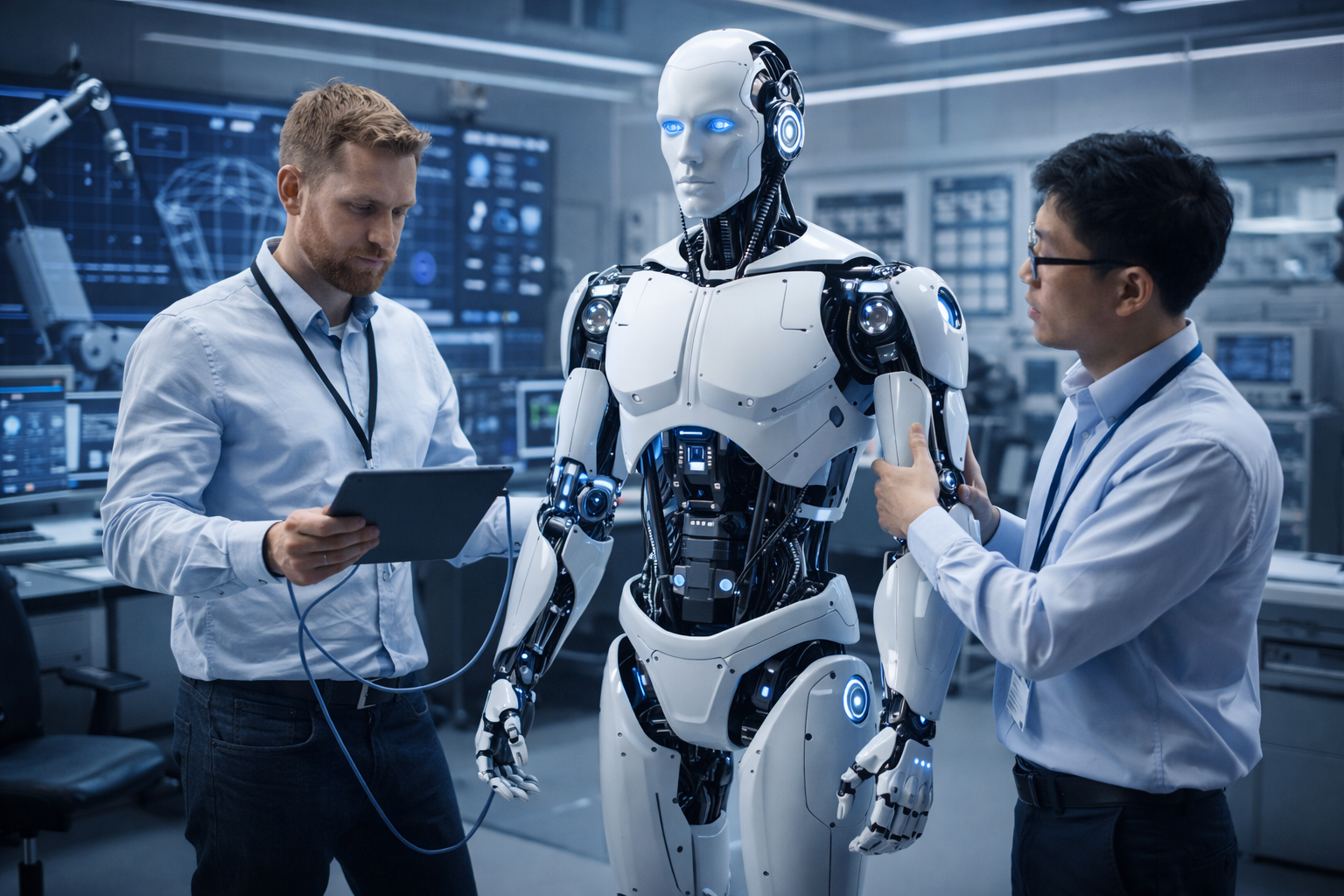
Humanoid robots are now entering warehouses, hospitals, and even offices. With rapid advancements in AI and robotics engineering, companies are building machines that look and move like humans.
Industry leaders like Tesla with its Optimus and Boston Dynamics are pushing boundaries faster than ever.
Welcome to the next phase of workplace automation.
What Makes Humanoid Robots Different
Traditional industrial robots perform repetitive tasks in fixed positions. Humanoid robots, on the other hand, are designed to adapt to human environments.
They can walk upstairs, pick up tools, carry objects, and interact using AI-powered vision systems. Their human-like form allows them to operate in spaces built for people — without requiring massive infrastructure changes.
This flexibility makes them incredibly valuable across industries.
AI Is the Brain Behind the Machine
Modern humanoid robots rely heavily on artificial intelligence.
Machine learning enables them to recognize objects, understand voice commands, and make decisions in real time. With computer vision and neural networks, these robots can safely navigate dynamic environments.
The Optimus, for example, is designed to handle repetitive and dangerous tasks, freeing humans to focus on creative and strategic work.
AI integration is turning robots from mechanical tools into intelligent assistants.
Industries Already Adopting Humanoid Robots
- Several sectors are exploring humanoid automation:
- Warehousing and logistics are using robots for picking and sorting tasks.
- Healthcare is experimenting with robotic assistants for patient monitoring and support.
- Manufacturing is upgrading from fixed robotic arms to adaptable humanoid systems.
- Retail may soon use robots for stocking shelves and assisting customers.
- As labor shortages increase globally, humanoid robots provide a scalable solution.
Concerns About Job Displacement
Whenever automation rises, job security becomes a major concern.
While robots may replace repetitive manual roles, they also create new opportunities in robotics maintenance, AI development, and system management.
History shows that technological revolutions shift jobs rather than eliminate them entirely. The key lies in reskilling and adapting to new roles created by automation.
The Road Ahead
Humanoid robots are still evolving. Current models are expensive and limited in deployment. However, as production scales and AI improves, costs are expected to drop.
In the next decade, we may see humanoid robots become as common as computers in offices.
The automation revolution is no longer science fiction — it is unfolding right now.
Conclusion
Humanoid robots represent a massive leap forward in automation and robotics. With AI at their core, these machines are stepping into human environments and transforming how industries operate.
While challenges remain, the future of work will likely involve collaboration between humans and intelligent machines.
The workplace is changing — and robots are becoming part of the team.
