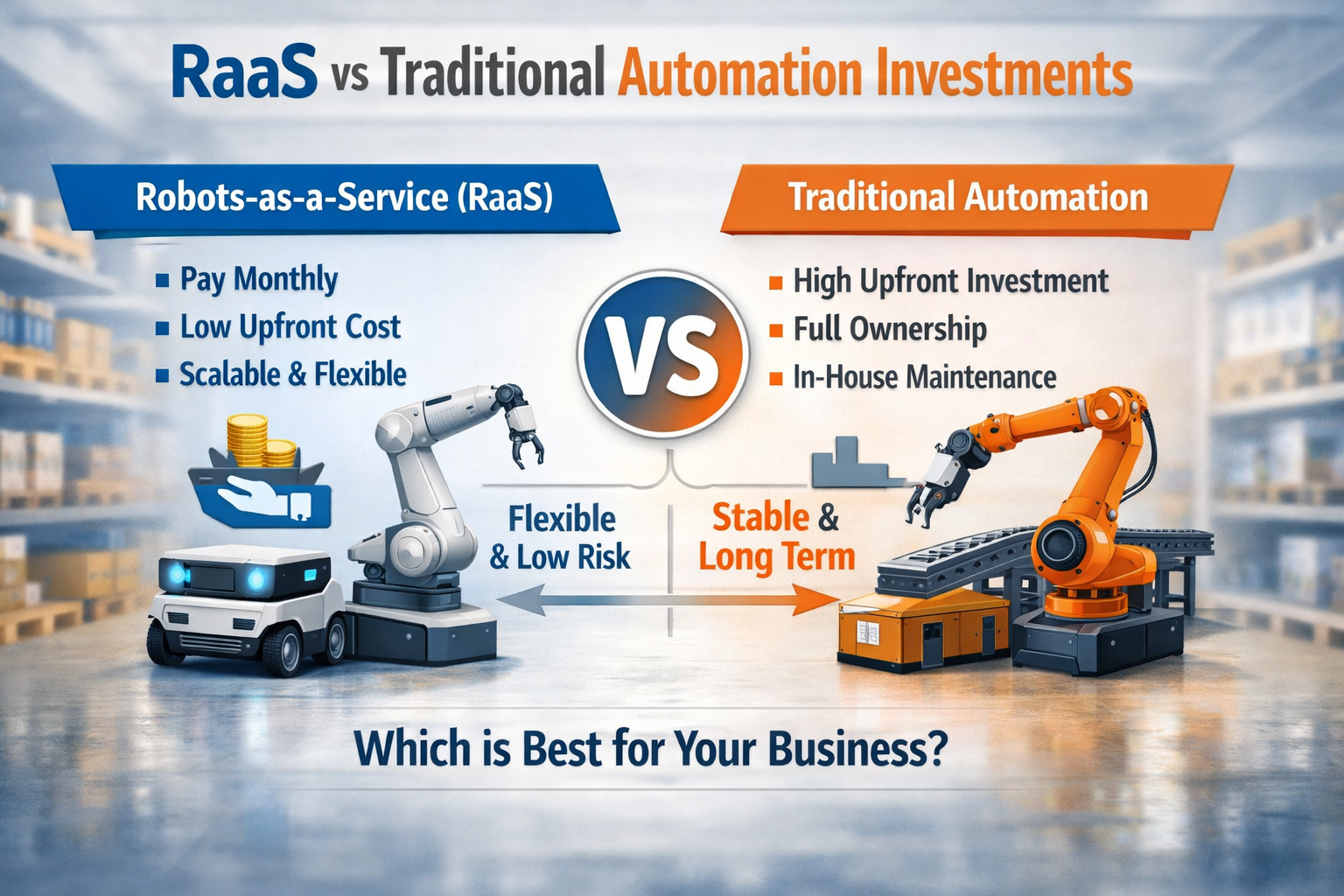
Automation is helping businesses work faster and smarter. Today, companies usually choose between Robots-as-a-Service (RaaS) and traditional automation investments. Both options improve productivity, but they work in very different ways. Understanding these differences makes it easier to choose the right solution.
Understanding Robots-as-a-Service (RaaS)
Robots-as-a-Service, or RaaS, allows businesses to use robots by paying a monthly or usage-based fee instead of buying them. The robot provider takes care of installation, maintenance, software updates, and technical support.
This model is popular because it removes the stress of owning and managing robots. Companies can start automation quickly without spending a large amount of money upfront. RaaS is widely used in warehouses, hospitals, retail stores, and fast-growing businesses.
Understanding Traditional Automation Investments
Traditional automation means buying robots and automation systems outright. The business owns the equipment and uses it for long-term operations. Maintenance, repairs, and system upgrades are handled by the company or an external service provider.
This approach is common in factories and manufacturing plants where automation needs stay the same for many years. Although the initial cost is high, traditional automation can be cost-effective over time for stable and continuous production.
Cost and Budget Planning
RaaS follows a subscription model, which makes costs predictable and easier to manage. Businesses pay regularly and avoid heavy upfront spending. This helps companies preserve cash and plan budgets more effectively.
Traditional automation requires a large initial investment. While ownership reduces ongoing fees, it can take years to recover the cost. Budget planning becomes more complex due to repair and upgrade expenses.
Flexibility and Scalability
RaaS offers high flexibility. Businesses can add or remove robots based on demand. This is useful for seasonal work, short-term projects, or business growth.
Traditional automation is less flexible. Once machines are installed, changing or expanding the system often requires additional investment and downtime.
Maintenance and Technical Responsibility
With RaaS, maintenance and technical support are included in the service. The provider ensures the robots stay updated and run smoothly, reducing the burden on the business.
Traditional automation places responsibility on the company. Skilled technicians are required to maintain systems, fix issues, and manage software updates, which increases operational effort.
Speed of Automation Deployment
RaaS allows faster deployment because robots are usually pre-configured and ready to use. Businesses can start seeing results in a short time.
Traditional automation takes longer to implement. Planning, installation, testing, and employee training can delay the start of operations.
Risk and Return on Investment
RaaS involves lower risk because businesses are not locked into long-term ownership. It is ideal for testing automation before making a bigger commitment.
Traditional automation carries higher risk due to the large initial investment. However, it can deliver strong returns when used continuously over many years.
Choosing the Right Automation Approach
RaaS is suitable for businesses that need flexibility, quick setup, and lower upfront costs. It works well for growing companies or those new to automation.
Traditional automation is better for businesses with stable operations and long-term automation needs. It offers full control and can be more economical over time.
The Future of Automation Strategies
Many businesses are now combining both models. They use RaaS for flexible or temporary tasks and traditional automation for core operations. This balanced approach allows companies to stay competitive while controlling costs and risks.
